THE CLASSIC COLLECTION✦Joan of ArcCLASSIC FREE BOOKS
Joan of Arc
Ronald Sutherland, Lord Gower
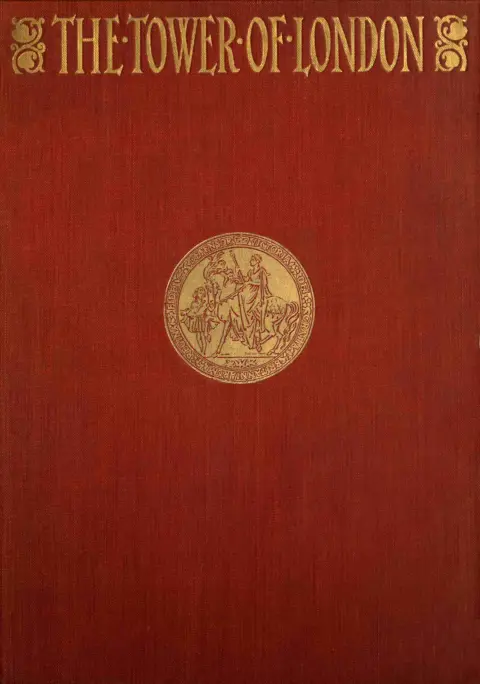
THE CLASSIC COLLECTION · 1902
"The Tower of London, (Vol. 2 of 2)" by Lord Ronald Sutherland Gower is a historical account written in the early 20th century. The work delves into the rich and often tumultuous history of the Tower of London, exploring notable prisoners, royal events, and key historical figures associated with this iconic fortress. This volume covers significant periods during the reigns of the Stuart kings, including the intrigues and conflicts of the political landscape of the time. The opening of the volume introduces the early years of King James I and his interactions with the Tower, highlighting the political machinations involving figures such as Sir Walter Raleigh and Lady Arabella Stuart. It recounts a series of conspiracies and imprisonments that took place within the Tower's walls, detailing the fraught relationship between James and various nobles, particularly regarding Arabella's claim to the throne. As the text unfolds, it paints a vivid picture of the societal tensions and personal tragedies that unfolded within this historic site, setting the stage for deeper explorations into the right relations and conflicts that would continue through successive reigns, leading into the turbulent times of Charles I and beyond.
Introduction adapted from the source catalogue; source summaries may be automatically generated.
Free to read · English · 66,657 words · No account needed
MAKE TIME FOR A GOOD BOOK
On by default. Untick to stop anonymous reading totals. Each page counts after 10 seconds in view. How this works.
Anonymous counting is on unless you have switched it off.
The first political prisoner to enter the Tower in the reign of George the Third was John Wilkes, the notorious member for Middlesex. On the 30th of April 1763, Wilkes was imprisoned in the Tower under a warrant signed by Lords Egremont and Halifax, the charge against him being, that he had written and published the North Briton newspaper, the forty-fifth number of which was styled “a most infamous and seditious libel.” Wilkes, however, was only kept for a week in the fortress, the Lord Chief-Justice (afterwards Lord Camden) deciding that the offence for which he was committed to prison, “was not an offence sufficient to destroy the privilege of a member of Parliament, that it was unconstitutional, illegal, and absolutely void.”
The next prisoners of note also made the acquaintance of the inside of the fortress indirectly through the Press. They were no less personages than the Lord Mayor of London, Sir Brass Crosby, and one of his Aldermen, Oliver, both members of Parliament. They had held a messenger to bail, who, under the Speaker’s warrant, had apprehended the printers of the London Evening Post, and had afterwards been charged by the arrested printer with assault and false imprisonment. The Lord Mayor and his Alderman attempted to justify themselves before the House of Commons by claiming the City privileges,[7] but, nevertheless, they were kept in durance vile in the Tower until the 23rd of July, when, Parliament being prorogued, they obtained their liberty, after a confinement of four months’ duration. Their liberation was regarded as a popular triumph, and celebrated with much rejoicing.
During the American War many of the Tower guns, and a quantity of the ammunition stored there, was sent across the Atlantic, and used against the so-called “rebellious colonists.”
In June 1780, that half-crazed fanatic, Lord George Gordon, was a prisoner in the Tower, charged with the instigation of the “No Popery” riots, which for a time had placed London in peril of mob-rule, and caused great loss of life and property by fire and pillage. After a trial which lasted twenty-one hours, Lord George was declared not guilty. A few years later, however, he was doomed to end his life in Newgate prison. At the same time that Lord George was a prisoner in the fortress, the Earl of Pomfret was committed there for having challenged the Duke of Grafton to fight a duel. In the following year a French spy, named Henry Francis de la Motte, was in the Tower on a charge of high treason. He was found guilty, and hanged at Tyburn on the 23rd of July. In 1794 the coalition between Pitt and the Whigs took place, and soon afterwards Pitt carried two Bills through Parliament, one of which was to the effect that mere writing, speaking, or preaching against the King’s authority was tantamount to treason; the other forbade all political meetings, unless advertised beforehand, and permitted their dispersal by any two justices of the peace. These very coercive measures over-reached themselves, and juries would not convict persons charged with offences under their clauses. Horne Tooke, “Parson Tooke,” as he was familiarly called, the celebrated wit, was the most brilliant of a set who desired more civil and religious liberty in England, and with this object they formed themselves into a society for the propaganda of their opinions, holding meetings, and making use of existing societies, clubs, and associations. Tooke, Jeremiah Joyce, a clergyman, and private secretary to Lord Stanhope, Thomas Hardy, a shoemaker, John Thelwall, Bonney, Richter, and Lovatt, were all arrested and placed in the Tower, and brought before the Privy Council on a charge of high treason. These so-called reformers were eight weeks in the fortress. At length the trials took place, Hardy being acquitted, to the great delight of the populace, the reformer shoemaker becoming the hero of the hour. Tooke was tried at the Old Bailey, and he also was acquitted, as were the rest of the prisoners. In 1798, Arthur O’Connor, the editor of the Press, an Irish Nationalist newspaper, with John Alley, John Burns, and James O’Coighley were placed in the fortress on a charge of maintaining a traitorous correspondence with the French Directory. O’Connor and his companions, it seems, had been entrusted by the Society of the United Irishmen with a mission to the French Directory in the month of March 1798, but on their way to Paris they were arrested at Margate by Bow Street runners, although they had bribed a fisherman with £150 to take them across the Channel. On their luggage being searched, uniforms, arms, and a large sum of money were found. They were immediately brought back to London, and lodged in separate prisons in the Tower, but the trial was held at Margate, and James O’Coighley, who seems to have been made the scapegoat, was hanged on Pennenden Heath. Lord Thanet, who was a friend of O’Connor’s, was present at the latter’s trial at Maidstone, and with him were Richard Brinsley Sheridan, Sir Francis Burdett, and Samuel Whitbread. During the trial O’Connor made a bolt for freedom, springing out of the dock, and forcing his way through the court; he almost succeeded in escaping. A free fight ensued, and in the melée Lord Thanet was arrested, and on the charge of aiding and abetting the prisoner O’Connor to escape, and with resisting the officers of the law, was sent off to the Tower. At his trial Lord Thanet remarked that, “he thought it only fair that O’Connor should have a run for it.” Lord Thanet was tried at the Court of King’s Bench in May 1799, and with him a barrister named Ferguson, who had also shown his sympathy with O’Connor during his trial. Both were found guilty. Lord Thanet was fined £1000, and sentenced to be imprisoned in the Tower for twelve months; Ferguson had to pay a fine of £500, and was ordered to be imprisoned in the King’s Bench prison. Sackville Tufton, Earl of Thanet, was the last peer who was imprisoned in the Tower.
Your reading position is saved on this browser. Take it to another device with a library code. Reading pages adapt to text, rather than matching a printed edition.
Ronald Sutherland, Lord Gower
BEHIND THE BOOK
This eBook is for the use of anyone anywhere in the United States and most other parts of the world at no cost and with almost no restrictions whatsoever. You may copy it, give it away or re-use it under the terms of the Project Gutenberg License included with this eBook or online at www.gutenberg.org. If you are not located in the United States, you will have to check the laws of the country where you are located before using this eBook. Read the source licence.
The original source file, including credits and licence, is retained by this library. Request an original-format copy at no charge. Please include the book title and Project Gutenberg identifier #68039.
KEEP YOUR CURIOSITY GOING
Cécile Tormay

Moritz Busch
John L. Ransom
Frances Wright
Cécile Tormay

Mabel Potter Daggett