THE CLASSIC COLLECTION✦The trail of the Golden HornCLASSIC FREE BOOKS
The trail of the Golden Horn
H. A. (Hiram Alfred) Cody
THE CLASSIC COLLECTION · 1919
"The Touch of Abner" by H. A. Cody is a novel written in the early 20th century. The story is centered around Abner Andrews, a rather humorous and outspoken countryman with simple yet profound thoughts on life, societal norms, and the struggles of rural living. As he interacts with various characters in his community, particularly concerning the well-being of orphans and the realities of poverty, the narrative unfolds his adventures and misadventures, driven by his charm, gall, and a hint of stubbornness. The opening of the novel introduces us to Abner at a town meeting discussing the establishment of an orphanage. His dramatic and impulsive pledge of a thousand dollars sparks reactions from the attendees, prompting debates about generosity and social responsibilities. Accompanied by his wife Tildy, Abner displays an unapologetic demeanor, questioning the sincerity of others' contributions to community causes. We get a glimpse of his character through his candid discussions with Tildy about their financial struggles, his humorous takes on society, and his sentimental connections to the orphans, indicating that while he often appeared foolish, there is wisdom and depth to his observations on human nature and societal norms. His character, laden with charm and comedic relief, sets the stage for what promises to be an engaging exploration of rural life's challenges and social commentary.
Introduction adapted from the source catalogue; source summaries may be automatically generated.
Free to read · English · 77,604 words · No account needed
MAKE TIME FOR A GOOD BOOK
On by default. Untick to stop anonymous reading totals. Each page counts after 10 seconds in view. How this works.
Anonymous counting is on unless you have switched it off.
"Good mornin', me beauties," he accosted. "How de yez like ye'r new quarters? Rather cramped, I admit, but yez'll be a darn sight more cramped than that before I'm through with yez. But if yez behave ye'rselves as decent rats should, mebbe yez'll have fine new quarters fer ye'r pranks, but not as wholesome, perhaps, as this hog-house."
He then went into his little workshop adjoining the woodhouse, and set earnestly to work. The sun creeping in through the dust-covered window found him giving the finishing touches to a stout tin-lined box.
"There, I guess that'll hold 'em," was his comment, as he stood and viewed his handiwork. "Them holes ought to let in enough air to keep 'em alive an' in good fightin' condition. Now fer some fun."
Jess came downstairs early, and hearing a peculiar noise in the workshop, went out to ascertain what was the matter. She was surprised to see her father tieing a thick cord about a strong wooden box. He was panting heavily, and the perspiration was streaming down his face. One of his fingers was bleeding, and he was muttering a strange conglomeration of words.
"For pity sakes! What are you doing?" Jess exclaimed. "And what have
you in that box?"
"Divils; that's what I've got."
"Devils!"
"Yep. Divils bottled up in rats. Three of 'em, an' they're straight
from hell."
"Oh, daddy, don't talk that way," Jess protested. "You make we shiver."
"Shiver, eh? Guess ye'd shiver in earnest if ye had one of them critters at ye. Ye'd think there was a two-foot icicle slippin' down ye'r spine. Look at that!" and Abner held out his damaged finger.
"What, did the rats do that?"
"Sure. Git me a rag, will ye, and tie it up? Then I must be off."
"Where are you going, daddy?"
"To look fer ye'r mother, of course."
"But where?"
"Guess I'll go to town first. I want to take them rats along. Mebbe the Dimocks know somethin' about Tildy. They'll know, anyway, what's happened to that chafer an' the car."
After the finger had been carefully bandaged, Abner went to the barn, harnessed Jerry, hitched him to the wagon, and drove up to the back door. Jess watched her father with considerable curiosity as he placed the box in the bottom of the wagon.
"What in the world are you going to do with those rats?" she enquired.
"Jist a little tradin', that's all."
"But I never heard of people trading in rats, daddy."
Your reading position is saved on this browser. Take it to another device with a library code. Reading pages adapt to text, rather than matching a printed edition.
H. A. (Hiram Alfred) Cody
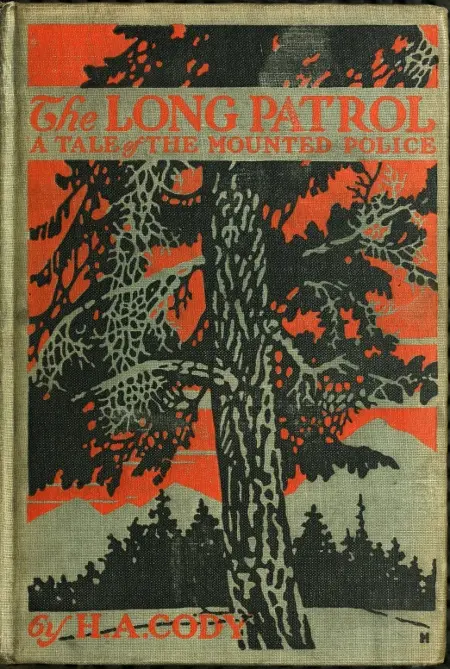
H. A. (Hiram Alfred) Cody
H. A. (Hiram Alfred) Cody
H. A. (Hiram Alfred) Cody
BEHIND THE BOOK
This eBook is for the use of anyone anywhere in the United States and most other parts of the world at no cost and with almost no restrictions whatsoever. You may copy it, give it away or re-use it under the terms of the Project Gutenberg License included with this eBook or online at www.gutenberg.org. If you are not located in the United States, you will have to check the laws of the country where you are located before using this eBook. Read the source licence.
The original source file, including credits and licence, is retained by this library. Request an original-format copy at no charge. Please include the book title and Project Gutenberg identifier #53604.
KEEP YOUR CURIOSITY GOING
Coulson Kernahan

Maurice Baring
Frances Wright
Cécile Tormay

Frederic Jesup Stimson

W. H. P. (William Henry Pope) Jarvis