THE CLASSIC COLLECTION✦The trail of the Golden HornCLASSIC FREE BOOKS
The trail of the Golden Horn
H. A. (Hiram Alfred) Cody
THE CLASSIC COLLECTION · 1919
"The Touch of Abner" by H. A. Cody is a novel written in the early 20th century. The story is centered around Abner Andrews, a rather humorous and outspoken countryman with simple yet profound thoughts on life, societal norms, and the struggles of rural living. As he interacts with various characters in his community, particularly concerning the well-being of orphans and the realities of poverty, the narrative unfolds his adventures and misadventures, driven by his charm, gall, and a hint of stubbornness. The opening of the novel introduces us to Abner at a town meeting discussing the establishment of an orphanage. His dramatic and impulsive pledge of a thousand dollars sparks reactions from the attendees, prompting debates about generosity and social responsibilities. Accompanied by his wife Tildy, Abner displays an unapologetic demeanor, questioning the sincerity of others' contributions to community causes. We get a glimpse of his character through his candid discussions with Tildy about their financial struggles, his humorous takes on society, and his sentimental connections to the orphans, indicating that while he often appeared foolish, there is wisdom and depth to his observations on human nature and societal norms. His character, laden with charm and comedic relief, sets the stage for what promises to be an engaging exploration of rural life's challenges and social commentary.
Introduction adapted from the source catalogue; source summaries may be automatically generated.
Free to read · English · 77,604 words · No account needed
MAKE TIME FOR A GOOD BOOK
On by default. Untick to stop anonymous reading totals. Each page counts after 10 seconds in view. How this works.
Anonymous counting is on unless you have switched it off.
"Put me down fer a thousand."
These words drawled slowly forth produced an immediate effect, and caused fifty people to straighten suddenly up and look enquiringly around. The reporter of The Live Wire gave one lightning glance toward the speaker, and then began to write rapidly upon his pad lying before him. The chairman, too, was visibly affected. He leaned forward, and searched the room with his small squinting eyes.
"Did I hear aright?" he asked. "Did someone say 'a thousand?'"
At once a man in the back row started to rise, but was pulled quickly down by a woman sitting at his side.
"Let go my coat-tails, Tildy," he whispered.
"But, Abner, are you crazy?"
"Crazy, be hanged! Leave me alone, can't ye?"
"Oh, it's you, Mr. Andrews, is it?" the chairman remarked.
"Yes, it's me all right."
"And you wish to give one thousand dollars?"
"That's what I said."
"Well, then, will you please step forward and sign your name?"
"Oh, that feller waggin' the pen kin do it better'n me. Jist tell him to put Abner Andrews, of Ash Pint, down fer a thousand."
"But we would prefer to have your own signature," the chairman insisted. "It is always customary in cases such as this."
"Are ye afraid that I'll back out, an' won't pay?"
"No, not at all, Mr. Andrews. But, you see, it's more business-like to get your name in your own handwriting. We shall make an exception, though, in your case if you so earnestly desire it."
"Now ye're shoutin'."
"Doing what?"
"Shoutin'; talkin' sense. Don't ye git me?"
"H'm, I see," and the chairman leaned his elbow upon the table and gently stroked his chin with the fingers of his right hand. "I didn't understand you at first, as I am not accustomed to such expressions."
"But ye understand the meanin' of a thousand dollars, don't ye?"
"Indeed, I do, Mr. Andrews, and what is more, I wish to thank you very heartily. I am sure that all here to-night feel most grateful to you for your generosity."
"Oh, I don't want ye'r gratitude, an' as fer as I kin see, it's worth
darn little."
"Abner! Abner!" the voice at his side chided. "What are you saying?"
"Didn't ye hear, Tildy? Where's ye'r ears?" and Abner turned slightly toward his protesting wife. "I was merely remarkin' that the gratitude of this gatherin' of men an' women is worth darn little. Now, d'ye hear?"
"How do you make that out, Mr. Andrews?" the chairman sharply questioned. "Such a statement demands an explanation."
"Hear! Hear!" came from several.
Your reading position is saved on this browser. Take it to another device with a library code. Reading pages adapt to text, rather than matching a printed edition.
H. A. (Hiram Alfred) Cody
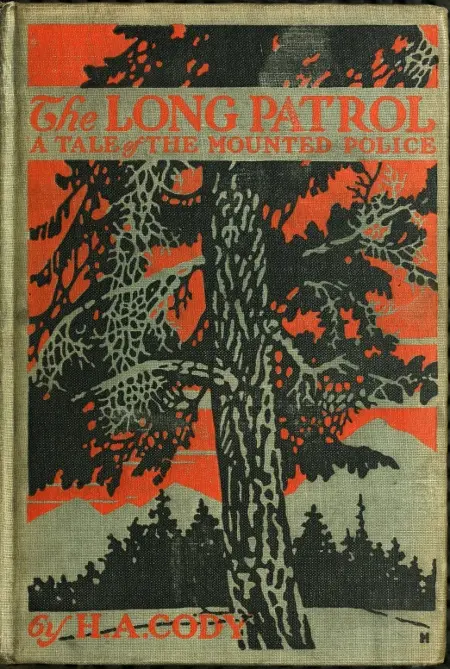
H. A. (Hiram Alfred) Cody
H. A. (Hiram Alfred) Cody
H. A. (Hiram Alfred) Cody
BEHIND THE BOOK
This eBook is for the use of anyone anywhere in the United States and most other parts of the world at no cost and with almost no restrictions whatsoever. You may copy it, give it away or re-use it under the terms of the Project Gutenberg License included with this eBook or online at www.gutenberg.org. If you are not located in the United States, you will have to check the laws of the country where you are located before using this eBook. Read the source licence.
The original source file, including credits and licence, is retained by this library. Request an original-format copy at no charge. Please include the book title and Project Gutenberg identifier #53604.
KEEP YOUR CURIOSITY GOING
Coulson Kernahan

Maurice Baring
Frances Wright
Cécile Tormay

Frederic Jesup Stimson

W. H. P. (William Henry Pope) Jarvis