THE CLASSIC COLLECTION✦The trail of the Golden HornCLASSIC FREE BOOKS
The trail of the Golden Horn
H. A. (Hiram Alfred) Cody
THE CLASSIC COLLECTION · 1919
"The Touch of Abner" by H. A. Cody is a novel written in the early 20th century. The story is centered around Abner Andrews, a rather humorous and outspoken countryman with simple yet profound thoughts on life, societal norms, and the struggles of rural living. As he interacts with various characters in his community, particularly concerning the well-being of orphans and the realities of poverty, the narrative unfolds his adventures and misadventures, driven by his charm, gall, and a hint of stubbornness. The opening of the novel introduces us to Abner at a town meeting discussing the establishment of an orphanage. His dramatic and impulsive pledge of a thousand dollars sparks reactions from the attendees, prompting debates about generosity and social responsibilities. Accompanied by his wife Tildy, Abner displays an unapologetic demeanor, questioning the sincerity of others' contributions to community causes. We get a glimpse of his character through his candid discussions with Tildy about their financial struggles, his humorous takes on society, and his sentimental connections to the orphans, indicating that while he often appeared foolish, there is wisdom and depth to his observations on human nature and societal norms. His character, laden with charm and comedic relief, sets the stage for what promises to be an engaging exploration of rural life's challenges and social commentary.
Introduction adapted from the source catalogue; source summaries may be automatically generated.
Free to read · English · 77,604 words · No account needed
MAKE TIME FOR A GOOD BOOK
On by default. Untick to stop anonymous reading totals. Each page counts after 10 seconds in view. How this works.
Anonymous counting is on unless you have switched it off.
As neither Abner nor Mrs. Andrews made any reply, Belle looked keenly into their faces, thinking that perhaps they were offended. Great was her surprise to see tears stealing slowly down Mrs. Andrews' cheeks. She brushed them hurriedly away, but not before Belle had seen her emotion.
"Oh, Mrs. Andrews, I didn't mean to offend you," Belle explained. "I'm afraid I have hurt your feelings. I thought you would understand. I am so sorry."
In reply, Mrs. Andrews threw her arms about the girl's neck, and began to weep, a most unusual thing for her.
"You dear good girl," she sobbed. "You have not offended us. But I am completely overcome by your kindness."
Abner turned his face away and softly hummed, "When Bill Larkins made his money." Belle touched him gently on the arm.
"Are you offended, Mr. Andrews?" she asked.
Abner swung suddenly around, and there was a mistiness in his eyes.
"Offended!" he repeated. "I'm not offended one bit, but I have a queer, creepy feelin', which I haven't had since the first time I saw Jess, when she was put in me arms as a tiny little mite. Why, I nearly blubbered right out, an' me a big strong man at that! Jist think of it!"
"I am so glad that you're not offended," Belle replied. "And if you feel as you say you do, then everything is all right."
"Why, I couldn't help feelin' any other way. Guess them peaceful spirits of mine must be hoverin' round by the appearance of things. Billy didn't think so, though, this afternoon, did he?"
"Oh, I forgot all about that man," and Belle looked around, as if she
expected to see him.
"He couldn't have made much impression on ye, eh?" and Abner's eyes twinkled. "He's got it bad, Billy has; but I guess he won't commit suicide yit awhile."
"Where did he go to, anyway?" Belle asked. "He didn't come to the
house, did he?"
"Should say not. I had a quiet little interview with him down on the shore. I had a heart to heart talk with him; told him that he was in danger of injurin' the morals of the kids, an' that 'distance lends enchantment,' as old Parson Shaw uster to say."
"Was he willing to go?"
"Willin'! Well, he wasn't overly anxious at first, but he soon changed his mind, let me tell ye that. When he saw that me warlike ancestors were gittin' busy, an' that they were inspirin' me, he more'n took the hint, an' lit out. Ye won't have no more bother with him, Belle. If ye do, jist let me know; that's all ye have to do."
Your reading position is saved on this browser. Take it to another device with a library code. Reading pages adapt to text, rather than matching a printed edition.
H. A. (Hiram Alfred) Cody
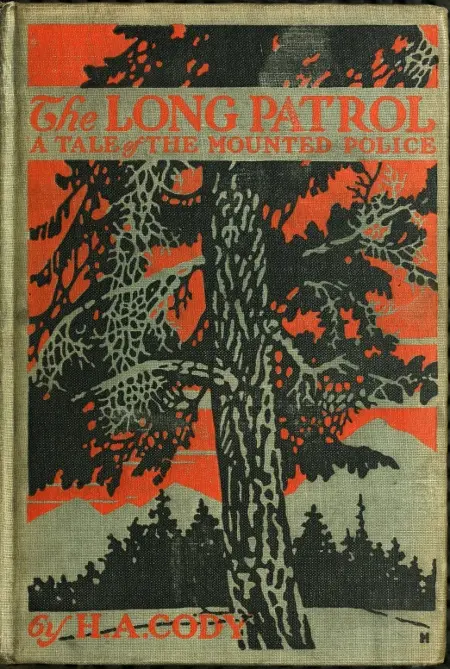
H. A. (Hiram Alfred) Cody
H. A. (Hiram Alfred) Cody
H. A. (Hiram Alfred) Cody
BEHIND THE BOOK
This eBook is for the use of anyone anywhere in the United States and most other parts of the world at no cost and with almost no restrictions whatsoever. You may copy it, give it away or re-use it under the terms of the Project Gutenberg License included with this eBook or online at www.gutenberg.org. If you are not located in the United States, you will have to check the laws of the country where you are located before using this eBook. Read the source licence.
The original source file, including credits and licence, is retained by this library. Request an original-format copy at no charge. Please include the book title and Project Gutenberg identifier #53604.
KEEP YOUR CURIOSITY GOING
Coulson Kernahan

Maurice Baring
Frances Wright
Cécile Tormay

Frederic Jesup Stimson

W. H. P. (William Henry Pope) Jarvis