THE CLASSIC COLLECTION✦The trail of the Golden HornCLASSIC FREE BOOKS
The trail of the Golden Horn
H. A. (Hiram Alfred) Cody
THE CLASSIC COLLECTION · 1919
"The Touch of Abner" by H. A. Cody is a novel written in the early 20th century. The story is centered around Abner Andrews, a rather humorous and outspoken countryman with simple yet profound thoughts on life, societal norms, and the struggles of rural living. As he interacts with various characters in his community, particularly concerning the well-being of orphans and the realities of poverty, the narrative unfolds his adventures and misadventures, driven by his charm, gall, and a hint of stubbornness. The opening of the novel introduces us to Abner at a town meeting discussing the establishment of an orphanage. His dramatic and impulsive pledge of a thousand dollars sparks reactions from the attendees, prompting debates about generosity and social responsibilities. Accompanied by his wife Tildy, Abner displays an unapologetic demeanor, questioning the sincerity of others' contributions to community causes. We get a glimpse of his character through his candid discussions with Tildy about their financial struggles, his humorous takes on society, and his sentimental connections to the orphans, indicating that while he often appeared foolish, there is wisdom and depth to his observations on human nature and societal norms. His character, laden with charm and comedic relief, sets the stage for what promises to be an engaging exploration of rural life's challenges and social commentary.
Introduction adapted from the source catalogue; source summaries may be automatically generated.
Free to read · English · 77,604 words · No account needed
MAKE TIME FOR A GOOD BOOK
On by default. Untick to stop anonymous reading totals. Each page counts after 10 seconds in view. How this works.
Anonymous counting is on unless you have switched it off.
"I thought you were a pack of robbers," Mrs. Andrews moaned. "Get a light, quick; I'm afraid I've killed one of the boys."
As Abner turned toward the kitchen a light suddenly illumined the darkness. Jess was coming, carrying a lamp in her hand, closely followed by Belle. Both girls were clad in their dressing-gowns, and their faces were white with fear.
"Daddy, daddy, what is the matter?" Jess asked.
"Look out, there, ye'll let that lamp fall," Abner warned. "Give it to me. My, ye're tremblin' all over."
"Oh, tell me what has happened," Jess pleaded. "Is anybody killed?"
"Sounds like somethin's dyin'," Abner replied, as he took the lamp from the girl's trembling hand and turned the light upon the shed. As he did so he saw a peculiar sight. Lying on the floor, with her back to the wall, was his wife, with an expression of misery depicted upon her face. On each side of her was a little boy, hopelessly entangled in the bed-clothes, and with wide staring eyes, filled with wonder and terror. Near by he saw three other little chaps also awake, and watching all that was taking place.
"What's the meaning of this?" Abner demanded. "An' what's all that water doin' on the floor? There's as much there as there is on me an' down me neck."
Mrs. Andrews made no reply. She seemed to be greatly overcome. At once Jess stooped down and put her arms around her mother's shoulders.
"Mother dear, are you sick?" she asked. "Let me help you up. Something dreadful must have happened. Come into the kitchen."
Breathing heavily and moaning, Mrs. Andrews was rescued from her lowly position, assisted into the kitchen, and placed upon a chair.
"I'm afraid I'm dying," the woman moaned. "I never had such a fright in all my life. It was worse than the auto."
"She's luney," Abner remarked. "Her brain's turned. Better git the smellin'-salts, Jess; they'll bring her to."
"My brain's not turned," was the emphatic and unexpected protest. "You're luney yourself, Abner Andrews, and everybody knows it. What do you mean by prowling about the house at this time of night, scaring people out of their wits?"
"An' what do people mean by sleepin' in the woodshed?" Abner retorted. "How did I know ye was there with a hull bunch of kids."
"They're some of yours, though, Abner. I have as much right to bring children into this house as you have. You needn't think that you run this place."
Abner was about to make a strong sarcastic reply, when he suddenly thought of his peaceful ancestors, and checked himself just in time.
Your reading position is saved on this browser. Take it to another device with a library code. Reading pages adapt to text, rather than matching a printed edition.
H. A. (Hiram Alfred) Cody
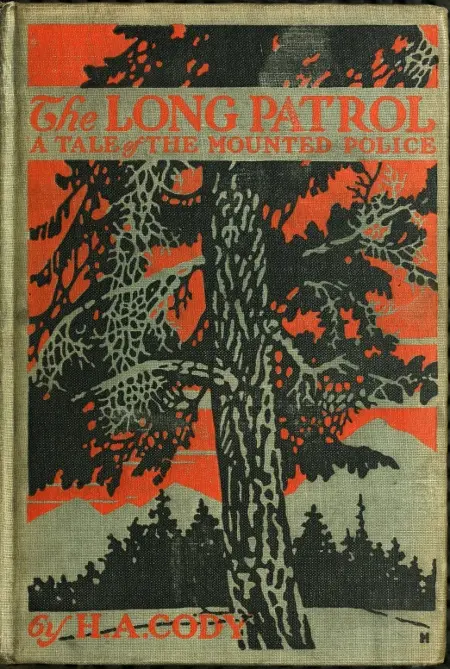
H. A. (Hiram Alfred) Cody
H. A. (Hiram Alfred) Cody
H. A. (Hiram Alfred) Cody
BEHIND THE BOOK
This eBook is for the use of anyone anywhere in the United States and most other parts of the world at no cost and with almost no restrictions whatsoever. You may copy it, give it away or re-use it under the terms of the Project Gutenberg License included with this eBook or online at www.gutenberg.org. If you are not located in the United States, you will have to check the laws of the country where you are located before using this eBook. Read the source licence.
The original source file, including credits and licence, is retained by this library. Request an original-format copy at no charge. Please include the book title and Project Gutenberg identifier #53604.
KEEP YOUR CURIOSITY GOING
Coulson Kernahan

Maurice Baring
Frances Wright
Cécile Tormay

Frederic Jesup Stimson

W. H. P. (William Henry Pope) Jarvis