THE CLASSIC COLLECTION✦The Star of IndiaCLASSIC FREE BOOKS
The Star of India
Edward Sylvester Ellis
THE CLASSIC COLLECTION · 1877
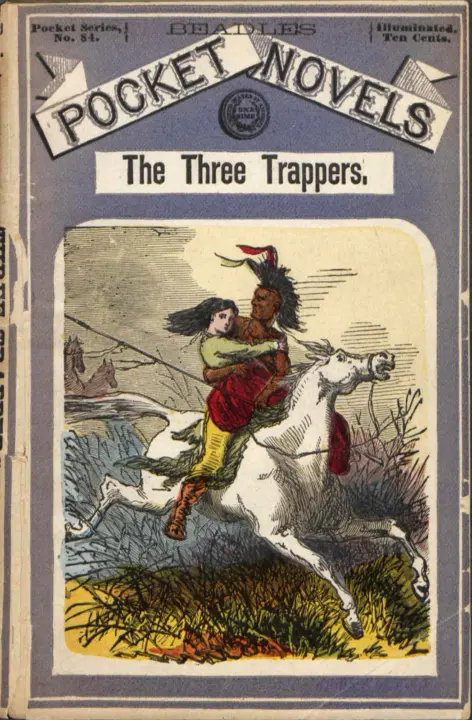
"The Three Trappers; or, The Apache Chief's Ruse" by Seelin Robins is a novel written in the late 19th century. The story follows Fred Wainwright, a young hunter navigating the dangers of the American frontier as he encounters hostile Comanche Indians and seeks refuge with a pair of seasoned trappers, George Harling and Ward Lancaster. This narrative is poised to delve into themes of survival, camaraderie, and the adventures that come with trapping and exploring the untamed landscapes of the West. The opening of the novel introduces Fred Wainwright as he experiences a tense moment while surveying the prairie, fearing an impending encounter with Comanche Indians. After a successful but narrow escape from his pursuers, he inexplicably falls into the company of two friendly trappers who offer him refuge. The narrative then shifts to illustrate the personalities of these trappers, setting the stage for a deeper exploration of their adventures together and the challenges they face while navigating through hostile territories, including potential confrontations with the Apache tribe and the fortuitous encounter with an emigrant party. As relationships begin to develop, particularly with the mention of a mysterious young woman, the story hints at emotional entanglements alongside the physical challenges of frontier life.
Introduction adapted from the source catalogue; source summaries may be automatically generated.
Free to read · English · 28,166 words · No account needed
MAKE TIME FOR A GOOD BOOK
On by default. Untick to stop anonymous reading totals. Each page counts after 10 seconds in view. How this works.
Anonymous counting is on unless you have switched it off.
“I swan, if I let go of my revolver,” muttered Swipes, as he shoved the weapon as far as possible down his pantaloons pocket.
The Apaches now came forward, and seated themselves upon the ground, placing themselves in a semi-circle, while the circle was completed by a dozen of the emigrants, including the hunters, Swipes taking good care to occupy the centre of the Caucasian line, so as to be as far away as possible from the American.
At this juncture, Mr. Bonfield whispered to Lancaster, who was sitting next to him, that the chief or leader was the same fellow who had visited their camp alone, about a week before. He was now painted and bedaubed, with the evident intention of concealing his identity, but Mr. Bonfield was sure he recognized him. When finally he opened his mouth, and spoke, the last atom of doubt was removed.
Lancaster nodded his head to signify that he understood what it all
meant.
At this point, the chief uttered an exclamation, spoke several words, and lit a large ornamented pipe. The trapper immediately replied.
“Can you understand him?” inquired Mr. Bonfield.
“Yes; he speaks the Apache tongue.”
“What did he say?”
“He announced himself as Cherouka, mighty chief of the Apaches, and that he was our friend, which you know is the thunderingest lie ever told.”
Cherouka took a few whiffs at the pipe, passed it to his neighbor, who imitated him, and in this manner it passed the entire circuit, including the white men. This was an official declaration of friendship, but it deceived no one.
The way being now opened, Cherouka recognizing Lancaster, as his “man,” addressed his words to him, while the trapper responded promptly and unmistakably. The language, as a matter of course was all “Greek” to the emigrants, who could only gain a knowledge of its meaning, when their guide chose to enlighten them.
The first remark of the Apache was a repetition of his friendship, and his best wishes for the safe advance of the party “toward the setting sun.” This was “chaff” and was so understood by him who comprehended the words, who replied in the usual diplomatic manner, returning the hypocritical professions, and seeking to draw the real meaning from the crafty Apache.
But it seemed impossible to get any word from Cherouka, explanatory of his true object in thus visiting a camp of people, between whom and his own kindred it was generally understood, the most implacable enmity existed. This fact convinced the shrewd guide, that the whole thing was a ruse to cover some hidden design.
Your reading position is saved on this browser. Take it to another device with a library code. Reading pages adapt to text, rather than matching a printed edition.
Edward Sylvester Ellis
Edward Sylvester Ellis
Edward Sylvester Ellis
Edward Sylvester Ellis
BEHIND THE BOOK
This eBook is for the use of anyone anywhere in the United States and most other parts of the world at no cost and with almost no restrictions whatsoever. You may copy it, give it away or re-use it under the terms of the Project Gutenberg License included with this eBook or online at www.gutenberg.org. If you are not located in the United States, you will have to check the laws of the country where you are located before using this eBook. Read the source licence.
The original source file, including credits and licence, is retained by this library. Request an original-format copy at no charge. Please include the book title and Project Gutenberg identifier #66309.
KEEP YOUR CURIOSITY GOING
Coulson Kernahan

Maurice Baring
Frances Wright
Cécile Tormay

Frederic Jesup Stimson

W. H. P. (William Henry Pope) Jarvis