THE CLASSIC COLLECTION✦A dead man’s diaryCLASSIC FREE BOOKS
A dead man’s diary
Coulson Kernahan
THE CLASSIC COLLECTION · 1899
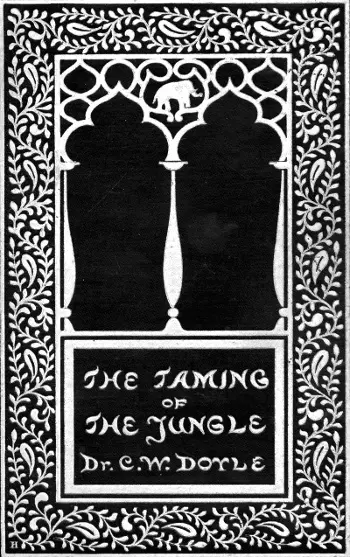
"The Taming of the Jungle" by C. W. Doyle is a fictional narrative likely written in the late 19th century. This book offers an exploration of life in the Terai region of India, focusing on the culture and complexities of its inhabitants, particularly the Kumaon Padhans. Central characters include Ram Deen, a mail-cart driver, and Biroo, a young boy who faces various challenges and adventures in the jungle setting. The opening of the narrative introduces readers to the Padhans, a simple and migratory people who live in harmony with the rustic and wild beauty of their environment. Ram Deen shares a gripping story around a fire, detailing his personal struggle with a debt to a local shopkeeper, leading to acts of desperation that culminate in tragedy and vengeance. This sets the stage for a tale marked by themes of survival, justice, and the harsh realities of jungle life, while also hinting at the deeper societal issues and rich cultural backdrop that will unfold throughout the story.
Introduction adapted from the source catalogue; source summaries may be automatically generated.
Free to read · English · 33,117 words · No account needed
MAKE TIME FOR A GOOD BOOK
On by default. Untick to stop anonymous reading totals. Each page counts after 10 seconds in view. How this works.
Anonymous counting is on unless you have switched it off.
The Commissioner of Kumaon had arrived at Kaladoongie in the course of his winter tour of inspection, and the same evening Joti Prshad, his butler, sat beside the Thanadar on a charpoi and smoked with metropolitan ease amidst the awe-struck notables of the jungle village.
Ram Deen alone was not abashed, and puffed his hookah unconcernedly, although Joti Prshad told many wonderful things of the sahiblogue, and spoke concerning the doings of the great world of Naini Tal during the greater rains.
Joti Prshad was a small man, and Ram Deen's blase mood galled his sense of superiority; it was but right that he should snub this exasperatingly cool villager.
"Thanadar ji," he began, "thou and I know that nowhere in Hindoostan is there such greatness assembled as at Naini Tal during the Greater Barsat."
"Men say that the governor-general still goeth to Simla, but, doubtless, the sirdar knoweth best," said Ram Deen.
"The Lat-sahib, indeed, goeth to Simla, but those with him be mere karanis (clerks), and shopkeepers, and half-castes. 'Tis plain thou hast not seen Naini Tal, coach-wan."
"The Terai sufficeth me, Joti Prshad."
"They say," piped Goor Dutt, the little bullock driver, "that the mem-sahibs at Naini Tal bare their shoulders and bosoms and dance with strange men. Toba, toba!"
This being an indisputable fact, and one to which Joti Prshad had never reconciled himself, the latter did not speak, and the diversion thus made by the byl-wan was felt by all to be in Ram Deen's favor.
Taking advantage of the silence of Joti Prshad, Ram Deen went on: "The people of Naini Tal come and go, but the children of the Terai never forget their mother. What sayest thou, Thanadar ji?"
"'Tis even so, brothers," said the Thanadar, with the gravity of one who is in authority and under the stress of weighing his words.
As they evidently waited for him to proceed, the Thanadar continued: "The jungle is our father and our mother, and the huldoo trees our near kin, O my brothers; and we who have once seen the beauty of the morning in the jungle, and the rye-fields laughing in the clearings in the winter, may not live elsewhere."
"Ay, Thanadar ji," said Ram Deen; "and, moreover, the senses of those who live in bazaars are asleep as with bhang, and they cannot see nor hear the wonders of God."
A general "humph" of assent followed Ram Deen's speech.
Your reading position is saved on this browser. Take it to another device with a library code. Reading pages adapt to text, rather than matching a printed edition.
BEHIND THE BOOK
This eBook is for the use of anyone anywhere in the United States and most other parts of the world at no cost and with almost no restrictions whatsoever. You may copy it, give it away or re-use it under the terms of the Project Gutenberg License included with this eBook or online at www.gutenberg.org. If you are not located in the United States, you will have to check the laws of the country where you are located before using this eBook. Read the source licence.
The original source file, including credits and licence, is retained by this library. Request an original-format copy at no charge. Please include the book title and Project Gutenberg identifier #35644.
KEEP YOUR CURIOSITY GOING
Coulson Kernahan

Maurice Baring
Frances Wright
Cécile Tormay

Frederic Jesup Stimson

W. H. P. (William Henry Pope) Jarvis