
Last letters from the living dead man
David Patterson (Spirit) Hatch
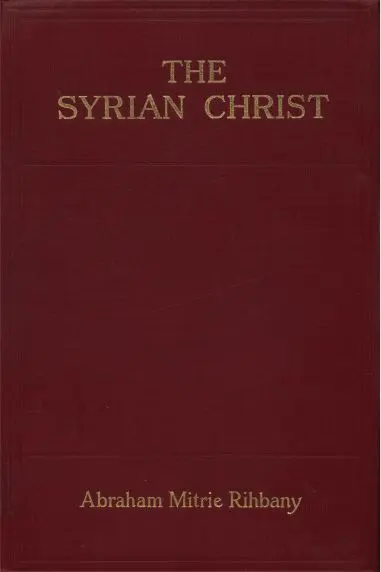
THE CLASSIC COLLECTION · 1916
"The Syrian Christ" by Abraham Mitrie Rihbany is a reflective work written in the early 20th century. This book explores the life and teachings of Jesus Christ from an Oriental perspective, aiming to provide readers, particularly those in the West, with insights into the cultural and social contexts of his time. It endeavors to bridge the gap between Eastern and Western understandings of spirituality, emphasizing the richness of the Oriental background that shaped many biblical narratives. The opening of the text introduces the author's intentions and background, as he seeks to offer an intimate view of Christ's life, explaining that his insights are drawn from personal experience as a Syrian born in close proximity to Jesus' birthplace. Rihbany reflects on how the customs, language, and social values of contemporary Syria illuminate biblical stories, presenting the idea that understanding these elements is crucial to truly grasping the spiritual teachings of Christ. The initial chapters set the stage for a nuanced discussion, leading the reader through culturally specific interpretations of familiar Biblical narratives while highlighting the enduring significance of these stories.
Introduction adapted from the source catalogue; source summaries may be automatically generated.
Free to read · English · 73,596 words · No account needed
MAKE TIME FOR A GOOD BOOK
On by default. Untick to stop anonymous reading totals. Each page counts after 10 seconds in view. How this works.
Anonymous counting is on unless you have switched it off.
Psalms v: 7, p. 38; viii: 3-4, p. 31; xviii: 2-3, p. 245; xix, p. 36; xix: 1-2, p. 32; xix: 9, 11, p. 86; xx: 22, p. 39; xxiii, pp. 73, 295; xxiii: 1, p. 297; xxiii: 3, pp. 302, 303; xxiii: 4, pp. 305, 309; xli: 9, p. 193; xliv: 14, p. 141; xlvi: 1-2, p. 245; li, p. 73; lxi: 3, p. 241; lxxx: 8-9, 14-15, p. 281; cix: 8-13, pp. 92, 93; cxix: 71-72, p. 245; cxxviii: 3, p. 281; cxxix: 5-8, p. 88; cxxx: 1, 6, p. 387; cxxxix: 1-6, p. 82; cxlv: 16, p. 195; cxlvii: 4-5, p. 33.
Rom. vi: 13, p. 120; ix: 1, p. 168; ix: 13, p. 99; xii: 1, p. 168; xii:
19, p. 91.
Ruth ii: 4, p. 88.
1 Sam. xx: 27-29, p. 235.
2 Sam. x: 4-5, p. 172.
Sol. ii: 10-14, pp. 352, 353; iv: 1-3, p. 353; vii: 1-9, p. 353.
1 Thess. iii: 6, p. 64.
Zeph. i: 4-5, p. 276.
Birth, of Jesus, 12; a miracle, 20; attitude of Syrian mind toward, 20-25; attitude of American mind toward, 22, 24; of man-child, 27-29; customs at, 28. See Nativity.
Blood Covenant, the, 160.
Books on the East, 10.
Borrowing and lending, 122-24, 215.
Bosom, in the translation of the Bible, 267.
Bread, unleavened, 150; not to be eaten until errand is known, 191, 192; considered to possess mystic sacred significance, 193; the "life-giver, " 194; offering of, 194; of life, Christ, 194; "our daily bread, " 196, 197; the Oriental's attitude toward, is religious, 197; the process of mixing, 198-200; the process of baking, 200-02; bought by weight, 203; always eaten with a sense of sacredness, 237, 238; carried on a journey, 250, 251; does not mould in Syria, 251.
Bread and salt, 191-95, 238.
Bûrghûl, an article of food, 402.
Burning pit, the, 201.
Burying-places in the East, 370, 371.
"Business success, " 53.
Cakes of the Bible, 374-76.
Cameleers, 260-63, 265.
Camels, caravans of, 259, 260; the watering of, 261, 262; riding on,
262, 263.
Caravans, 259, 260.
Carnivals, 233.
Carob tree, the, 158, 159.
Carrying children on the shoulder, 389-91.
Chaff, 379.
Childlessness, evidence of divine disfavor, 20, 23.
Children, a heritage from the Lord, 23, 24; presentation of, at the temple, 37; owe obedience to both mother and father, 335, 336; carrying on the shoulder, 389-91.
Christ. See Jesus.
Christian Church. See Church.
Christians, oaths of, 170, 171; Syrian, of the Semitic stock, have had little to do with the development of creeds, 404; creed of the Palestinian, 406.
Christmas, 41.
Christmas carol, 41, 45.
Church, spoken of as the vine which God has planted, 281; the origin and the expansion and organization of, 405; division of, 407, 408.
Churches, of Syria, 407, 408; the Greek and the Latin, 407; the Roman Catholic and the Greek Orthodox, 408.
Clarke, Adam, and Jesus pilgrimage to Jerusalem, 49; on the parable of the treasure hid in the field, 161, 162.
Clocks in Syria, 277 n.
Clothing made at home in Syria, 363.
Coat and cloak, the words, 121, 253.
Cock crow, 397-99.
Coin, lost, parable of the, 152-55.
Coming of the Son of man, the, 400-03.
Conception, attitude of the Syrian mind toward, 20-25; attitude of the American mind toward, 23, 24.
Constantinople, 405, 407.
Corruption, fermentation considered to be, 151, 152.
Couches, reclining on, 227-30; sleeping on, 271, 272.
Courtesy, example of Oriental, 370-73.
Creed-makers of Christendom, 128.
Creeds, 403, 404, 407, 409, 410.
Crier from the housetop, 273, 274.
Critics, of the Bible, 41, 119, 128; of Paul and Christianity, 328;
higher, 408.
Crowds, 222-24.
Crowing of the cock, 397-99.
Your reading position is saved on this browser. Take it to another device with a library code. Reading pages adapt to text, rather than matching a printed edition.
BEHIND THE BOOK
This eBook is for the use of anyone anywhere in the United States and most other parts of the world at no cost and with almost no restrictions whatsoever. You may copy it, give it away or re-use it under the terms of the Project Gutenberg License included with this eBook or online at www.gutenberg.org. If you are not located in the United States, you will have to check the laws of the country where you are located before using this eBook. Read the source licence.
The original source file, including credits and licence, is retained by this library. Request an original-format copy at no charge. Please include the book title and Project Gutenberg identifier #40285.
KEEP YOUR CURIOSITY GOING
David Patterson (Spirit) Hatch

David Patterson (Spirit) Hatch

David Patterson (Spirit) Hatch
John L. Ransom

Herman W. Mudgett

Harriet Monroe