THE CLASSIC COLLECTION✦An outlaw’s diary: the CommuneCLASSIC FREE BOOKS
An outlaw’s diary: the Commune
Cécile Tormay
THE CLASSIC COLLECTION · 1900
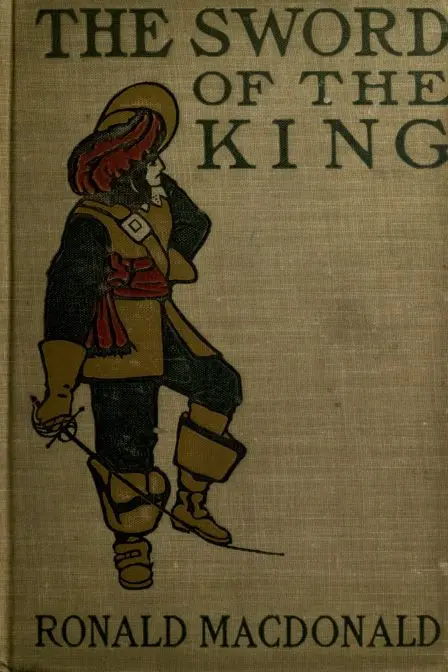
"The Sword of the King" by Ronald MacDonald is a historical novel written in the late 19th century. The story is narrated by Philippa Drayton, who reflects on her childhood and the pivotal moments that shaped her understanding of love, duty, and bravery within the familial and political turmoil of her time. Central to the narrative is her relationship with Master Edward Royston, which evolves against the backdrop of the English Civil War and its aftermath. The opening of the novel introduces us to Philippa Drayton, who begins recollecting a childhood memory that highlights her bond with Master Edward Royston when they were young. As a five-year-old, Philippa is rescued by Ned during a troublesome moment with her nurse, sparking a friendship that grows into affection over the years. Their interactions reveal the innocence and charm of childhood, but also hint at the underlying political tensions of the time. As the opening progresses, we delve into Philippa’s family history and relationship dynamics while setting the stage for the complicated events that will unfold due to their intertwined lives amidst the backdrop of staunch royalist loyalties and the repercussions of war.
Introduction adapted from the source catalogue; source summaries may be automatically generated.
Free to read · English · 84,750 words · No account needed
MAKE TIME FOR A GOOD BOOK
On by default. Untick to stop anonymous reading totals. Each page counts after 10 seconds in view. How this works.
Anonymous counting is on unless you have switched it off.
Now all this day I had been keeping the house, at my father's strict command, he being most solicitous that for their safety none of his household should meet with the gang of cutthroats he knew to be then in the village. Being thus cut off from news, we had no knowledge of what was toward, conjecturing, however, some wickedness from the sound of those three musket-shots that I have mentioned.
About nine o'clock of the evening, then, I went to my chamber, sad, indeed, and anxious for the fate of the Drayton folk, and with many a shudder of horror as the things I had heard tell of that regiment, called at one time of Tangier, at another, Queen Catharine's, came unwelcome to my mind. And I remember that, as I put off my clothes, I marvelled how a woman high and gently born as that lady of Portugal could take pleasure to have such men bear her name. But, with all my perturbation, my mood was mild and peaceful to what it had been had I known at whom those same shots had been fired. Yet was there on my spirit a sense of unrest, and (as it seems to me now, perhaps in the light of after knowledge) of foreboded evil that would in no manner let me sleep. So it was that, about half an hour after I had bidden good-night to my father and Mr. Telgrove, I extinguished my one candle, and, it being a warm but clouded night, sat at the open window in my night-robe, trying idly to bring my eyes to pierce the darkness, and as idly considering when I was like again to see Ned. Here I sat, but for how long a period of time I know not. Yet I do remember that I heard all those sounds that indicate the closing in of night and sleep over a great house. And last came the drawing of bolts and setting of bars below, and the slow and halting step of my father's ascent of the stairs, and, with the closing of his chamber door, a stillness as of the grave was over all things. I thought it was such a stillness as I had never known; and then there grew upon my spirit (or, at least, it now seems to me that it was so) a foreknowledge that something, I knew not what, but something--something--something was coming out from this silence to break it. And with a slowly growing horror I did then fall to speculating upon the nature of this so certain interruption; would it be some ghastly vision of another world, or a cry of wrath, or some more horrible scream of terror? As one grown suddenly cold I arose from my seat by the window, with a shudder at the creatures of my imagination, gently drew to the casement, and got into my bed, as I should have done an hour, perhaps, before. But I found there no refuge from the silence that should be broke, but was not. And this sense of loneliness brought me in mind of the forgotten duty of prayer, so that I was quickly again out of my bed and on my knees by its side, hoping, childlike, great solace to my oppression of spirit. And then it came,--not the solace, but the breaking of the silence. And, though it was not such as I had looked for, being but the slight click of a pebble upon the glass of my window, yet did it send, as they say, my heart into my throat, and my whole body was a-tremble, as it had been a harpstring overstrained. It is a thing for which I can never to the day of my death sufficiently thank the goodness of God, that my terror took from me the voice in which I would have cried aloud upon the house. And so I gasped for breath, and clutched the clothes of the bed in a fear quite out of reason; and had I been upon my feet instead of my knees, 't is sure I could not have kept them. And then I heard the jingle of a bridle and the thud of an impatient hoof falling soft upon the sod, so that even in my passion of fear I knew it was under my window, or I had not heard it, for the grass was soft with the rain that fell at sunset. Upon that strange thoughts of our bugbear Kirke and of those devils that he ruled crept in my mind; but surely, I thought, my father's good affections to the throne should protect us; and, some movement of curiosity stirring in my breast to combat its army of terrors, I made shift to creep with knees and hands to the window, whence, with caution raising myself and peering through the lower panes, I espied dimly the shape of a man standing beside his horse. Thereupon, perchance having seen the whiteness of face, hand, or sleeve at the window, though the light was almost none, the man below uttered that whimsical little whistle of three notes that was a signal and warning of childhood to me, and I knew it was Ned. And my joy was so great that I forgot the hour, the place, the strangeness in him to come to my chamber window, and the unseemliness of my attire. Indeed I thought but of him as I gently flung back the casement, and cried, but softly: "Ned, dear Ned, is it indeed thou?"
Your reading position is saved on this browser. Take it to another device with a library code. Reading pages adapt to text, rather than matching a printed edition.
BEHIND THE BOOK
This eBook is for the use of anyone anywhere in the United States and most other parts of the world at no cost and with almost no restrictions whatsoever. You may copy it, give it away or re-use it under the terms of the Project Gutenberg License included with this eBook or online at www.gutenberg.org. If you are not located in the United States, you will have to check the laws of the country where you are located before using this eBook. Read the source licence.
The original source file, including credits and licence, is retained by this library. Request an original-format copy at no charge. Please include the book title and Project Gutenberg identifier #59873.
KEEP YOUR CURIOSITY GOING
Cécile Tormay

Moritz Busch
Coulson Kernahan
John L. Ransom

Maurice Baring
Frances Wright