THE CLASSIC COLLECTION✦An outlaw’s diary: the CommuneCLASSIC FREE BOOKS
An outlaw’s diary: the Commune
Cécile Tormay
THE CLASSIC COLLECTION · 1900
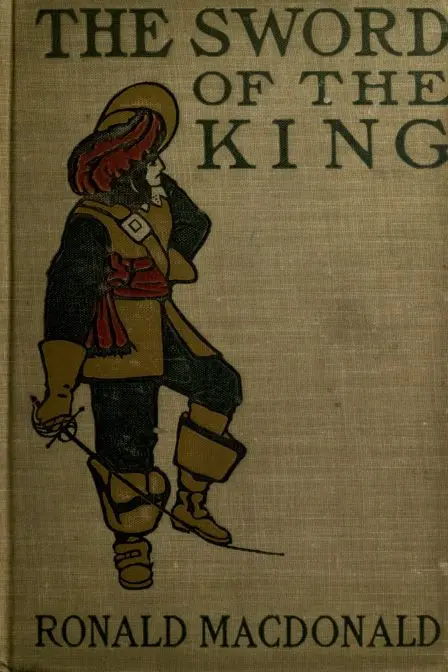
"The Sword of the King" by Ronald MacDonald is a historical novel written in the late 19th century. The story is narrated by Philippa Drayton, who reflects on her childhood and the pivotal moments that shaped her understanding of love, duty, and bravery within the familial and political turmoil of her time. Central to the narrative is her relationship with Master Edward Royston, which evolves against the backdrop of the English Civil War and its aftermath. The opening of the novel introduces us to Philippa Drayton, who begins recollecting a childhood memory that highlights her bond with Master Edward Royston when they were young. As a five-year-old, Philippa is rescued by Ned during a troublesome moment with her nurse, sparking a friendship that grows into affection over the years. Their interactions reveal the innocence and charm of childhood, but also hint at the underlying political tensions of the time. As the opening progresses, we delve into Philippa’s family history and relationship dynamics while setting the stage for the complicated events that will unfold due to their intertwined lives amidst the backdrop of staunch royalist loyalties and the repercussions of war.
Introduction adapted from the source catalogue; source summaries may be automatically generated.
Free to read · English · 84,750 words · No account needed
MAKE TIME FOR A GOOD BOOK
On by default. Untick to stop anonymous reading totals. Each page counts after 10 seconds in view. How this works.
Anonymous counting is on unless you have switched it off.
Mr. Bentinck soon returned, and not long after him came Ned with his guard, which, in obedience to a sign from the Prince, halted at the door, where they stood impassive with drawn swords.
"Come hither, sir," said His Highness; and Ned approaching, I saw that, although the passion was burnt out of him, and his face was worn and haggard, he still met with an eye unsubdued the glance of the man on whom his fate depended.
"Mr. Royston," said the Prince, "I have heard all this midnight mystery. 'T is a brave tale, which, in my thinking, clears all therein involved of wicked design. But no tale, be it never so true, clears you, Mr. Royston, from the great fault of aiding my enemy there to escape. You know what in war-time is the law of military discipline. Have you anything to say, Mr. Royston, before this matter be ended?"
And Ned looked him straight in the eyes, and answered him with a very
gentle fearlessness.
"I have little to say, Your Highness," he said; "and nothing of contention. One thing only I ask, if Your Highness mean to push the matter to extremity. Since I have never shown fear, I would die, if it please you, rather by bullet than the--the cord. Then, sire," he went on,--and this was the sole occasion upon which I did hear Captain Royston use to the Prince before his coronation the regal form of address,--"then, sire, shall I take with me no grudging to you."
Here following a little silence, I had much ado, for all my growing belief that the Prince did mean well by us all, to keep back the sobs that rose in my throat and caught at my breathing. And then came my lover's voice again. "I have failed in my duty. I had just drawn on the seeming lad that was the companion of my watch, because he would not let me follow the priest. He crossed swords with me, and I struck him in the neck,"--and here, I thought, His Highness's eyes lighted curiously upon me, and I grew warm with blushing as I thought of the black patch of plaister upon my bosom,--"and then I learned that it was no blood of man that I had drawn, but the drops fell from the soft flesh of a woman. And more I found that fatal night--that the woman was she that I did love well when she was but a little maid no higher than my sword-hilt,"--and here the man's hand went to his side, but found nothing,--"the sword, God's truth! that I must not wear! And then I learned why she would have the popish fellow escape. He was her brother, and she loved him, even as both did love the great old name. And I? I loved the maid, even the more that I had hurt her. And the man swore--not by his order, nor by his heretic bishop of Rome, but on his honorable lineage as a gentleman of England, to do you nor yours further hurt of any kind till his foot was set once more in France. It was hard to see so pretty a maid weep; harder, when the tears fell from eyes that had already forgiven the wound. Moreover, Your Highness, I did put faith in the man. Papist that he was, yet did he bear himself so as none could doubt his worth. I do but ask that, before I bear my punishment, the master I have ever served in a love hedged about with reverence and awe will put faith in my word that I had no will to wrong him, or to fail, as it seems fail I did, in the service that was due."
Your reading position is saved on this browser. Take it to another device with a library code. Reading pages adapt to text, rather than matching a printed edition.
BEHIND THE BOOK
This eBook is for the use of anyone anywhere in the United States and most other parts of the world at no cost and with almost no restrictions whatsoever. You may copy it, give it away or re-use it under the terms of the Project Gutenberg License included with this eBook or online at www.gutenberg.org. If you are not located in the United States, you will have to check the laws of the country where you are located before using this eBook. Read the source licence.
The original source file, including credits and licence, is retained by this library. Request an original-format copy at no charge. Please include the book title and Project Gutenberg identifier #59873.
KEEP YOUR CURIOSITY GOING
Cécile Tormay

Moritz Busch
Coulson Kernahan
John L. Ransom

Maurice Baring
Frances Wright