THE CLASSIC COLLECTION✦An outlaw’s diary: the CommuneCLASSIC FREE BOOKS
An outlaw’s diary: the Commune
Cécile Tormay
THE CLASSIC COLLECTION · 1900
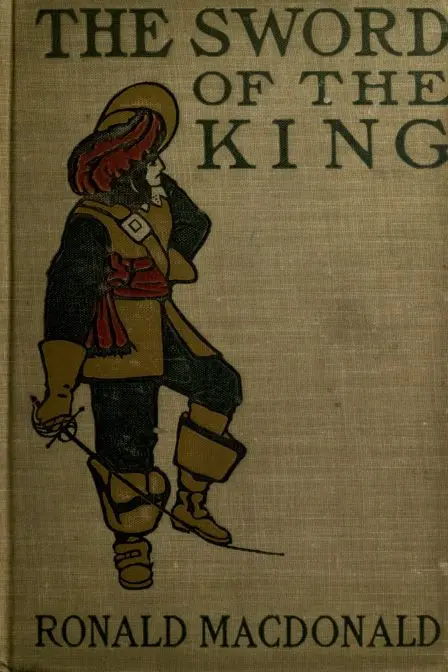
"The Sword of the King" by Ronald MacDonald is a historical novel written in the late 19th century. The story is narrated by Philippa Drayton, who reflects on her childhood and the pivotal moments that shaped her understanding of love, duty, and bravery within the familial and political turmoil of her time. Central to the narrative is her relationship with Master Edward Royston, which evolves against the backdrop of the English Civil War and its aftermath. The opening of the novel introduces us to Philippa Drayton, who begins recollecting a childhood memory that highlights her bond with Master Edward Royston when they were young. As a five-year-old, Philippa is rescued by Ned during a troublesome moment with her nurse, sparking a friendship that grows into affection over the years. Their interactions reveal the innocence and charm of childhood, but also hint at the underlying political tensions of the time. As the opening progresses, we delve into Philippa’s family history and relationship dynamics while setting the stage for the complicated events that will unfold due to their intertwined lives amidst the backdrop of staunch royalist loyalties and the repercussions of war.
Introduction adapted from the source catalogue; source summaries may be automatically generated.
Free to read · English · 84,750 words · No account needed
MAKE TIME FOR A GOOD BOOK
On by default. Untick to stop anonymous reading totals. Each page counts after 10 seconds in view. How this works.
Anonymous counting is on unless you have switched it off.
"Indeed, Mistress Drayton," he replied, speaking with a gentleness well-nigh tender, "I do hope he may." And with that he turned from me as if to rejoin His Highness. But I summoned all my daring to make a plea yet more fully feminine, being much emboldened thereto by the softness of his last words.
"Mr. Bentinck, Mr. Bentinck," I whispered eagerly, and he turned again. "Captain Royston and I were to be wed, if--if--" said I, and could say no more.
"Ah," said he, "if what?"
"If you--if His Highness destroy us not utterly," I replied. "Grant us your aid, Mr. Bentinck." And into these words I put, I do suppose, much prayerfulness of face, voice, and gesture. For he looked a moment very kindly on the clasped hands and streaming eyes that begged his help.
"Do not weep, mistress," he said. "You shall have all I may give," and so turned his back upon me.
And here the Prince came a little toward me. "It is truly a tale of romance, Sir Michael," he said. "Here was I vainly seeking the serpent, and, lo! there is none but Eve." And then to me: "Come hither, Mistress Eve," he said. So I went over to him, and made before him a courtesy very deep and humble. "I do like you better thus, child," he went on, "than booted and spurred. Is this a true history that I hear?"
"So please Your Highness," I answered, "'t is true as the Gospel."
"How so?" he asked, smiling. "You have not heard it."
"But it was my father," said I, "that told it."
At which reply the Prince appeared much pleased, for, addressing himself to Mr. Bentinck: "'T is indeed a pious family," he remarked, "and such mutual faith can hardly go with treason. And, on my conscience, William," he went on, "the tale has an appearance." Then, to my father: "If all this be true, Sir Michael, you are much abused."
"How that, Your Highness?" asked the old man.
"By a son," said the Prince, "departing from the faith of his
fathers."
"It is between him and his Maker," replied Sir Michael, with a touch
of pride.
"And by me," continued His Highness, "departing from the courtesy incumbent upon princes. Does that stand in the same awful arbitrament, Sir Michael?"
"If Your Highness do me right," said my father, "'t is between us
two, and shall go no further."
"That is kindly said, sir," answered the Prince. "So, if this be all true--as it must be, if you have not all the art of deceiving the most naturally in the world--I must needs fling pardon broadcast, eh?"
Your reading position is saved on this browser. Take it to another device with a library code. Reading pages adapt to text, rather than matching a printed edition.
BEHIND THE BOOK
This eBook is for the use of anyone anywhere in the United States and most other parts of the world at no cost and with almost no restrictions whatsoever. You may copy it, give it away or re-use it under the terms of the Project Gutenberg License included with this eBook or online at www.gutenberg.org. If you are not located in the United States, you will have to check the laws of the country where you are located before using this eBook. Read the source licence.
The original source file, including credits and licence, is retained by this library. Request an original-format copy at no charge. Please include the book title and Project Gutenberg identifier #59873.
KEEP YOUR CURIOSITY GOING
Cécile Tormay

Moritz Busch
Coulson Kernahan
John L. Ransom

Maurice Baring
Frances Wright