THE CLASSIC COLLECTION✦An outlaw’s diary: the CommuneCLASSIC FREE BOOKS
An outlaw’s diary: the Commune
Cécile Tormay
THE CLASSIC COLLECTION · 1900
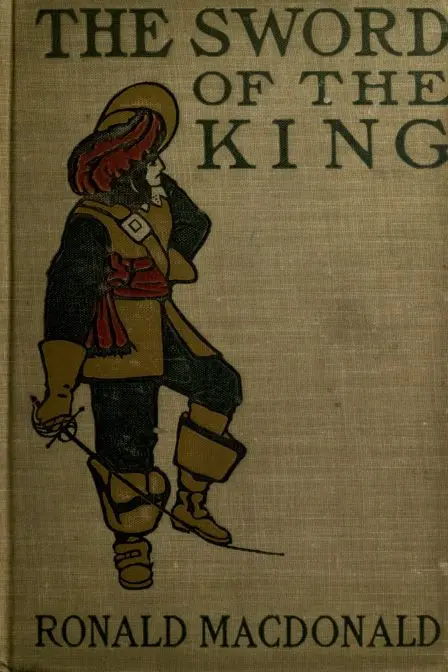
"The Sword of the King" by Ronald MacDonald is a historical novel written in the late 19th century. The story is narrated by Philippa Drayton, who reflects on her childhood and the pivotal moments that shaped her understanding of love, duty, and bravery within the familial and political turmoil of her time. Central to the narrative is her relationship with Master Edward Royston, which evolves against the backdrop of the English Civil War and its aftermath. The opening of the novel introduces us to Philippa Drayton, who begins recollecting a childhood memory that highlights her bond with Master Edward Royston when they were young. As a five-year-old, Philippa is rescued by Ned during a troublesome moment with her nurse, sparking a friendship that grows into affection over the years. Their interactions reveal the innocence and charm of childhood, but also hint at the underlying political tensions of the time. As the opening progresses, we delve into Philippa’s family history and relationship dynamics while setting the stage for the complicated events that will unfold due to their intertwined lives amidst the backdrop of staunch royalist loyalties and the repercussions of war.
Introduction adapted from the source catalogue; source summaries may be automatically generated.
Free to read · English · 84,750 words · No account needed
MAKE TIME FOR A GOOD BOOK
On by default. Untick to stop anonymous reading totals. Each page counts after 10 seconds in view. How this works.
Anonymous counting is on unless you have switched it off.
"How much does he know?" I asked, trembling as I spoke.
"I cannot tell," answered Ned. "But to tell him all in this mood will but harm you and yours; perhaps lead to Philip's capture, and yet do me no service. He will never pass over this one thing,--that I did let your brother go. And he will know that soon enough, telling or none."
And here the door opening again, we were perforce silent. I could hear His Highness's last few words to the sentry, spoken in a tongue I took to be Dutch, because I did not understand it, but, among them occurring the names Schomberg, Bentinck, De Rondiniacque, I guessed he had summoned those gentlemen to attend him. Then His Highness returned into the chamber, and for a while we stood silent, regarding one another as the footsteps of the sentry died away down the gallery.
At last Royston would have spoken. "Your Highness--" he began.
But the Prince interrupted him. "Be silent," he said, "and wait."
So in silence we waited, but how long I do not know. At length came M. de Rondiniacque, to be soon followed by Count Schomberg and Mr. Bentinck. These two had, it appeared, resumed their clothes in haste, and concealed the disorder of their attire each in long horse-cloaks, even as His Highness had done. And in these three stern figures of Prince, soldier, and statesman, close wrapped to the chin in dark and twisted folds of cloth, there was, I thought, an awful likeness to the bench of judges that sat in Hades.
When the last had entered, the Prince thus addressed the three: "It seems, gentlemen, that in the master of this house I have an enemy."
At which point Mr. Bentinck, without at all staying the flow of the Prince's words, ejaculated a deep and guttural "Ah!" as one finding but what he had looked for.
"I therefore purpose, gentlemen, to question Captain Royston in your presence, and thereafter to take your censures in the matter of bringing him to fitting military trial for treason."
"I am no traitor to Your Highness, nor to any man," cried Royston,
with blunt indignation.
"That we shall soon see, I believe," said His Highness. "Did you not appoint yourself this night, with my consent, the innermost guard of my person?"
"I did," answered Royston.
"Then where is the prisoner; he that called himself priest?" asked the Prince, turning on him a gaze that called to my mind tales I had read of the Inquisitors of Spain, so piercing and ruthless was it.
"He is escaped!" replied poor Ned.
"By your aid?" asked the Inquisitor.
Your reading position is saved on this browser. Take it to another device with a library code. Reading pages adapt to text, rather than matching a printed edition.
BEHIND THE BOOK
This eBook is for the use of anyone anywhere in the United States and most other parts of the world at no cost and with almost no restrictions whatsoever. You may copy it, give it away or re-use it under the terms of the Project Gutenberg License included with this eBook or online at www.gutenberg.org. If you are not located in the United States, you will have to check the laws of the country where you are located before using this eBook. Read the source licence.
The original source file, including credits and licence, is retained by this library. Request an original-format copy at no charge. Please include the book title and Project Gutenberg identifier #59873.
KEEP YOUR CURIOSITY GOING
Cécile Tormay

Moritz Busch
Coulson Kernahan
John L. Ransom

Maurice Baring
Frances Wright