THE CLASSIC COLLECTION✦Inkle and Yarico: An opera, in three actsCLASSIC FREE BOOKS
Inkle and Yarico: An opera, in three acts
George Colman
THE CLASSIC COLLECTION · 1791
"The Surrender of Calais: A Play, in Three Acts" by George Colman is a historical play written in 1791. Set during the Siege of Calais in 1346-47, this work blends tragedy and comedy against the backdrop of Edward III's campaign during the Hundred Years War. With music composed by Samuel Arnold, it became the most popular production of the season at London's Theatre Royal, Haymarket, capturing audiences with its dramatic portrayal of this pivotal medieval conflict.
Introduction adapted from the source catalogue; source summaries may be automatically generated.
Free to read · English · 15,490 words · No account needed
MAKE TIME FOR A GOOD BOOK
On by default. Untick to stop anonymous reading totals. Each page counts after 10 seconds in view. How this works.
Anonymous counting is on unless you have switched it off.
A Hall, in the House of JOHN de VIENNE.
Enter JULIA and O'CARROL.
Julia. Now, O'Carrol; what is the time of day?
O'Carrol. Fait, Lady Julia, we might have called it a little past breakfast time, formerly; but since the fashion of eating has been worn out in Calais, a man may be content to say it bears hard upon ten. Och! if clocks were jacks now, time would stand still; and the year would go down, for the want of winding up every now and then.
Julia. Saw you my father this morning?
O'Carrol. You may say that.
Julia. How looked he, O'Carrol?
O'Carrol. By my soul! Lady Julia, that old father of yours, and master of mine, is a gallant gentleman. And gallantly he bears himself. For certain, and so he ought; being a Knight of Burgundy, and Governor of Calais; but if I was Governor just now, to be sure I should not like to take a small trip from Calais, one morning, just to see what sort of a knight I was in Burgundy.
Julia. Who has he in his company?
O'Carrol. Why, madam, why--now dare not I tell who, for fear of offending her.--Company? Why, to be sure I have been in his company:--for want of finer acquaintance, madam, he was e'en forced to put up, half an hour, with an humble friend.
Julia. Poor fool! thy words are shrewder than thy meaning.
How many crowd the narrow space of life
With those gay, gaudy flowers of society,
Those annuals, call'd acquaintance; which do fade
And die away, ere we can say they blosom;
Mocking the idle cultivator's care,
From year to year; while one poor slip of friendship,
Hardy, tho' modest, stands the winter's frost,
And cheers its owner's eye with evergreen!
O'Carrol. Troth, lady, one honest potatoe in a garden is worth an hundred beds of your good-for-nothing tulips. Oh! 'tis meat and drink to me to see a friend! and, truly 'tis lucky, in this time of famine, to have one in the house to look at, to keep me from starving. Little did I think, eight years ago, when I came over among fifty thousand brave boys--English, Irish, and else,--to fight under King Edward, who now lies before Calais here, that I should find such a warm soul towards me in a Frenchman's body;--especially when the business, that brought me, was to help to give his countrymen a beating.
Julia. Thy gratitude, O'Carrol, has well repaid the pains my father
took in preserving thee.
Your reading position is saved on this browser. Take it to another device with a library code. Reading pages adapt to text, rather than matching a printed edition.
George Colman
George Colman
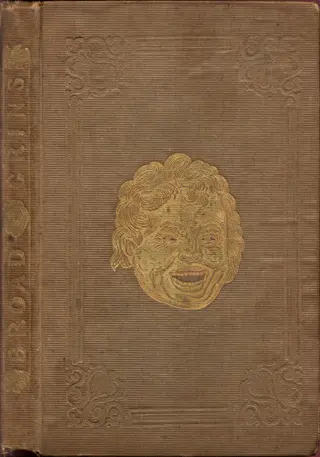
George Colman
George Colman
BEHIND THE BOOK
This eBook is for the use of anyone anywhere in the United States and most other parts of the world at no cost and with almost no restrictions whatsoever. You may copy it, give it away or re-use it under the terms of the Project Gutenberg License included with this eBook or online at www.gutenberg.org. If you are not located in the United States, you will have to check the laws of the country where you are located before using this eBook. Read the source licence.
The original source file, including credits and licence, is retained by this library. Request an original-format copy at no charge. Please include the book title and Project Gutenberg identifier #36607.
KEEP YOUR CURIOSITY GOING
Cécile Tormay

Moritz Busch
Coulson Kernahan
John L. Ransom

Maurice Baring
Frances Wright