THE CLASSIC COLLECTION✦The haunts of menCLASSIC FREE BOOKS
The haunts of men
Robert W. (Robert William) Chambers
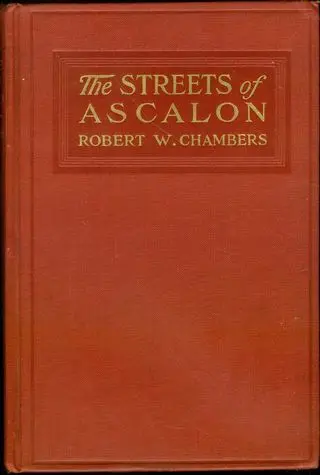
THE CLASSIC COLLECTION · 1912
"The Streets of Ascalon: Episodes in the Unfinished Career of Richard Quarren" by Robert W. Chambers is a novel written in the early 20th century. This work chronicles the life and social entanglements of Richard Quarren, a young man navigating the complexities and distractions of upper-class society in New York City. The theme centers around Quarren's struggles with financial instability and the influence of a glamorous yet superficial social circle that threatens to derail his ambitions. The opening of the novel introduces readers to Quarren's world through a casual gathering of friends at their residence, humorously dubbed the "Irish Legation." Here, his friends Lacy and O'Hara express their concern for Quarren's careless attitude towards finance as they prepare for a tea visit from two women, one of whom is the recently widowed and captivating Strelsa Leeds. The conversation reveals the dynamics of male camaraderie while highlighting Quarren's carefree nature and the growing apprehension of his friends regarding his social choices. The dialogue sets the stage for exploring Quarren’s character and foreshadows his impending relationship with Strelsa, marking the beginning of deeper interpersonal conflicts and societal critiques.
Introduction adapted from the source catalogue; source summaries may be automatically generated.
Free to read · English · 107,952 words · No account needed
MAKE TIME FOR A GOOD BOOK
On by default. Untick to stop anonymous reading totals. Each page counts after 10 seconds in view. How this works.
Anonymous counting is on unless you have switched it off.
"Don't dream of it, old fellow. Everything is doing nicely. My respects to the fair. By-the-bye--anything in my line up there?"
Quarren laughed:
"I'm afraid not, Dankmere."
"Very well," said the Earl, airily. "I'm not worrying now, you know.
Good-bye, old sport!"
And he rang off.
Quarren meeting Molly in the hall said:
"I think I'd better leave this afternoon. Dankmere is messing matters."
"Are you going to run away?" she said in a low voice, glancing sideways at Strelsa who had just passed them wearing her riding habit.
"Run away," he repeated, also lowering his voice. "From whom?"
"From Langly Sprowl."
He shrugged and looked out of the window.
"It is running away," insisted his pretty hostess. "You have a chance
I think."
"Not the slightest."
"You are wrong. Strelsa wept in her sleep all night. How does that
strike you?"
"Not over me," he said grimly; but added: "How do you know she did?"
"Her maid told mine," admitted Molly shamelessly. "Now if you are going to criticise my channels of information I'll remind you that Richelieu himself----"
"Oh, Molly! Molly! What a funny girl you are!" he said, laughing. "You're a sweet, loyal little thing, too--but there's no use--" His face became expressionless, almost haggard--"there's no use," he repeated under his breath.
Slowly, side by side, they walked out to the veranda, her hand resting lightly just within the crook of his arm, he, absent-mindedly filling his pipe.
"Strelsa likes you," she said.
"With all the ardour and devotion of a fish," he returned, coolly.
"Rix?"
"What?"
"Do you know," said Molly, thoughtfully, "she is a sort of a fish. She has the emotions of a mollusc as far as your sex is concerned. Some women are that way--more women than men would care to believe.... Do you know, Ricky, if you'll let us alone, it is quite natural for us to remain indifferent to considerations of that sort?"
She stood watching the young fellow busy with his pipe.
"It's only when you keep at us long enough that we respond," she said. "Some of us are quickly responsive; it takes many of us a long while to catch fire. Threatened emotion instinctively repels many of us--the more fastidious among us, the finer grained and more delicately nerved, are essentially reserved. Modesty, pride, a natural aloofness, are as much a part of many women as their noses and fingers----"
"What becomes of modesty and pride when a girl marries for money?" he
asked coolly.
"Some women can give and accept in cold blood what it would be impossible for them to accord to a more intimate and emotional demand."
Your reading position is saved on this browser. Take it to another device with a library code. Reading pages adapt to text, rather than matching a printed edition.
Robert W. (Robert William) Chambers
Robert W. (Robert William) Chambers

Robert W. (Robert William) Chambers
Robert W. (Robert William) Chambers
BEHIND THE BOOK
This eBook is for the use of anyone anywhere in the United States and most other parts of the world at no cost and with almost no restrictions whatsoever. You may copy it, give it away or re-use it under the terms of the Project Gutenberg License included with this eBook or online at www.gutenberg.org. If you are not located in the United States, you will have to check the laws of the country where you are located before using this eBook. Read the source licence.
The original source file, including credits and licence, is retained by this library. Request an original-format copy at no charge. Please include the book title and Project Gutenberg identifier #35233.
KEEP YOUR CURIOSITY GOING
Coulson Kernahan

Maurice Baring
Frances Wright
Cécile Tormay

Frederic Jesup Stimson

W. H. P. (William Henry Pope) Jarvis