THE CLASSIC COLLECTION✦An outlaw’s diary: the CommuneCLASSIC FREE BOOKS
An outlaw’s diary: the Commune
Cécile Tormay
THE CLASSIC COLLECTION · 1902
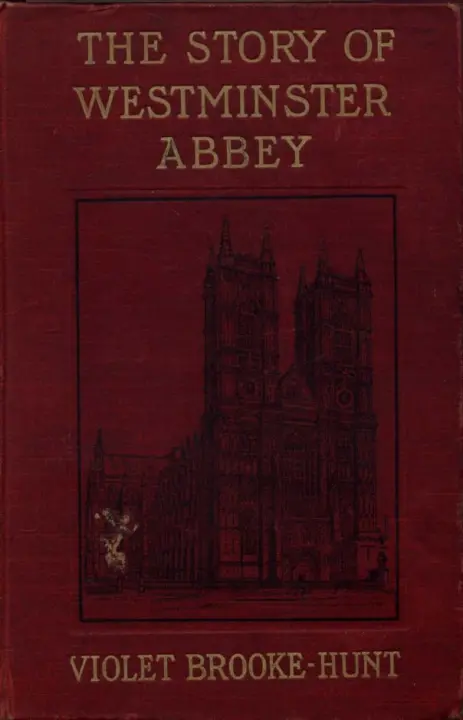
"The Story of Westminster Abbey" by Violet Brooke-Hunt is a historical account written in the early 20th century. This work delves into the rich history of Westminster Abbey, exploring its foundations, the builders, and the notable figures buried within its walls. The narrative aims to make the Abbey, a significant symbol of English heritage, more accessible and familiar to readers of all ages. The opening of the book introduces Geoffrey, a boy who has traveled and learned extensively about the Abbey and expresses a desire to document its stories so that others can understand its historical significance. Inspired by his own journey, Geoffrey feels that Westminster Abbey serves as a living textbook of England's history, filled with monuments and memories. Violet Brooke-Hunt sets out to weave together tales from the Abbey’s past, aiming to engage readers, especially young audiences, with themes of exploration, heritage, and the interconnectedness of history and personal identity. Thus, the introduction serves both as a prologue to the Abbey’s storied legacy and as a heartfelt urging to appreciate the cultural landmarks that define England.
Introduction adapted from the source catalogue; source summaries may be automatically generated.
Free to read · English · 93,380 words · No account needed
MAKE TIME FOR A GOOD BOOK
On by default. Untick to stop anonymous reading totals. Each page counts after 10 seconds in view. How this works.
Anonymous counting is on unless you have switched it off.
Henry VIII. came to the throne with splendid opportunities. He was gifted far above the average: his manners were genial and taking; he could talk many languages; he was devoted to sport, a good musician, an admirable wrestler; fond of amusement, but fond also of more serious things; and the people were prepared to love their King Hal, for he was in every way a contrast to his father, who had never won their affections. Henry was a strong man, who resolved to be no puppet in the hands of any party or minister. Yet it was his will which ruined his character, for it was a will entirely bent on gaining its own ends, unchecked by any sense of duty, untouched by any appeal to high or noble motives. What he desired he must have, and all that stood in his way must be swept aside: he would spare no one who thwarted him; nothing weighed in the balance against the gratification of his own whims and fancies.
You will remember that he was not the eldest son of Henry VII. His brother Arthur, Prince of Wales, had died in 1501, a few months after he had married Katherine, the Infanta of Spain, and chiefly because the idea was at first strongly opposed, Henry made up his mind to marry his widowed sister-in-law. When he came to the throne, he at once carried out his will in this matter, and brushed aside all the objections that were raised on account of the close relationship existing between the two. The marriage took place at Greenwich, and the double coronation followed at Westminster on Midsummer Day in the year 1509, "amid all the rejoicings in the world." Katherine made a beautiful queen, dressed in white with cloth of gold, her long hair hanging down to her feet, and little dreamt any of those who cheered her on her way of all that was to spring out of that marriage, for Henry seemed to be the most devoted of husbands. In 1511 their son was born, and had such an elaborate christening that he took a cold from which he never recovered. "His soul returned to among the Holy Innocents of God," says a Westminster manuscript, and we are told how "the queen made much lamentation, but by the king's persuasion she was at last comforted." The baby prince was certainly buried in the Abbey, though exactly where is unknown. But his death, unimportant as it must have seemed at the moment to those who took part in the funeral, had in reality a deep significance. Henry was incapable of loving any one for long, and as he began to grow weary of Katherine, he made it a grievance that her other child was a daughter and not a son. Furthermore, he argued to himself that he had done wrong in marrying his brother's widow, so that the death of his son was the sign of God's wrath, and then he began to devise how he could dissolve his marriage with her, to wed instead her fascinating maid of honour, Anne Boleyn. Only the Pope could grant him the divorce that he desired, and accordingly Henry sent his all-powerful favourite, Wolsey, to Rome to get this consent. But the Pope, much as he feared Henry, feared the Emperor Charles V., the nephew of Queen Katherine, much more, and Wolsey, on his side, was anxious not to offend the Pope, as his ambition was to succeed him, so it all ended in his going back to Henry without having the desired permission. Henry was furious, and Wolsey, disgraced, died broken-hearted. The king's next step was to defy the Pope, and to send round to all the ministers in Europe, asking them whether in their opinion his marriage with Katherine had been a legal one. But their answer in almost every case was the opposite answer to what Henry had determined on, and their opposition only increased his determination, till at last, urged thereto by Thomas Cromwell, Wolsey's successor in his favour, he took the bold step of declaring that he himself was the head of the Church in England, the defender of the faith, and that therefore the Pope had no power to forbid the divorce. He was clever enough to know that for many a long day the independent spirit of the English nation had rebelled against the power of the Pope in the land; that the revival of learning had set men thinking for themselves; that the teaching of Luther and the other reformers had prepared the way for a great change in England, and that he could count on his Parliament to support him in declaring himself supreme head of the Church in this land. Thus whilst pretending to cleanse and purify the Church, and reform the many errors which had crept in, Henry really was true to his general policy of sweeping out of the way any obstacle to his wishes. The Pope had opposed him, so from henceforward he would deprive the Pope of all authority in England. He divorced Katherine, and married Anne Boleyn, while those few men who refused to go against their conscience by declaring the king to be in the right on this question of his marriage, when they felt him to be in the wrong, did so at the cost of their lives.
Your reading position is saved on this browser. Take it to another device with a library code. Reading pages adapt to text, rather than matching a printed edition.
BEHIND THE BOOK
This eBook is for the use of anyone anywhere in the United States and most other parts of the world at no cost and with almost no restrictions whatsoever. You may copy it, give it away or re-use it under the terms of the Project Gutenberg License included with this eBook or online at www.gutenberg.org. If you are not located in the United States, you will have to check the laws of the country where you are located before using this eBook. Read the source licence.
The original source file, including credits and licence, is retained by this library. Request an original-format copy at no charge. Please include the book title and Project Gutenberg identifier #55373.
KEEP YOUR CURIOSITY GOING
Cécile Tormay

Moritz Busch
John L. Ransom
Frances Wright
Cécile Tormay

Mabel Potter Daggett