THE CLASSIC COLLECTION✦An outlaw’s diary: the CommuneCLASSIC FREE BOOKS
An outlaw’s diary: the Commune
Cécile Tormay
THE CLASSIC COLLECTION · 1902
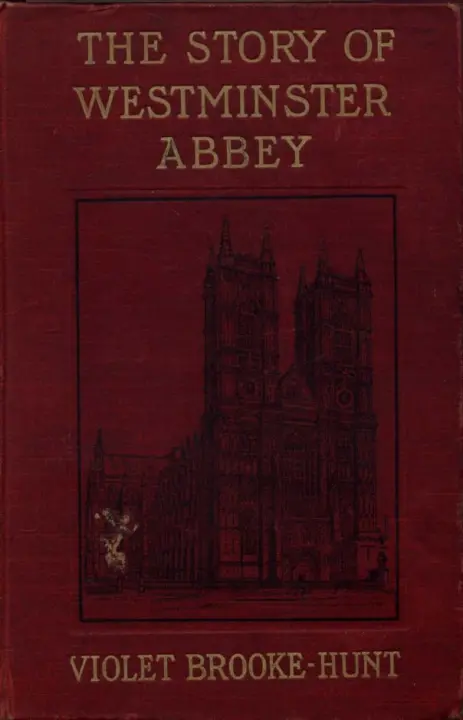
"The Story of Westminster Abbey" by Violet Brooke-Hunt is a historical account written in the early 20th century. This work delves into the rich history of Westminster Abbey, exploring its foundations, the builders, and the notable figures buried within its walls. The narrative aims to make the Abbey, a significant symbol of English heritage, more accessible and familiar to readers of all ages. The opening of the book introduces Geoffrey, a boy who has traveled and learned extensively about the Abbey and expresses a desire to document its stories so that others can understand its historical significance. Inspired by his own journey, Geoffrey feels that Westminster Abbey serves as a living textbook of England's history, filled with monuments and memories. Violet Brooke-Hunt sets out to weave together tales from the Abbey’s past, aiming to engage readers, especially young audiences, with themes of exploration, heritage, and the interconnectedness of history and personal identity. Thus, the introduction serves both as a prologue to the Abbey’s storied legacy and as a heartfelt urging to appreciate the cultural landmarks that define England.
Introduction adapted from the source catalogue; source summaries may be automatically generated.
Free to read · English · 93,380 words · No account needed
MAKE TIME FOR A GOOD BOOK
On by default. Untick to stop anonymous reading totals. Each page counts after 10 seconds in view. How this works.
Anonymous counting is on unless you have switched it off.
The desire of Abou Ben Adhem that his name might be handed on as one "who loved his fellow-men" would form a fitting epitaph not only to those great-hearted workers in the cause of humanity whom the Abbey has delighted to honour--William Wilberforce, the liberator of the slave, and David Livingstone, the missionary and explorer in Darkest Africa--but also to those others who toiled with them in the same great cause of freedom, and whose claims to the grateful recollection of the nation are recorded only by monuments--Granville Sharp, Jonas Hanway, Zachary Macaulay, Fowell Buxton, and Anthony Astley Cooper, Earl of Shaftesbury. A few words first about one of these latter, Granville Sharp, for he it was who became the pioneer of that noble band who never ceased from their labours till they had freed the slave on British territory.
He was only a linen-draper's assistant, afterwards becoming a clerk in the Ordnance Office; but the monotony of his work never allowed monotony or narrowness to enter his life. His heart was responsive to every high claim, and difficulties only meant to him obstacles to be overcome. Courage, energy, and determination were his watchwords. His brother was a doctor in Mincing Lane, who saw poor people free of charge, and among his patients was a negro called Jonathan Strong, who had been brought to London by his master, a lawyer, from Barbadoes, only to be turned out into the streets friendless and homeless when he fell ill. Dr. Sharp treated him so successfully that he became quite well, and Granville Sharp found him a situation with a chemist, which he kept for some years, until one day he was seen and recognised by his old employer, who finding him well and active had him seized, and kept in custody until he could be shipped off to the West Indies. Jonathan, in despair, thought of Granville Sharp, and appealed to him for protection. Sharp at once went to the Lord Mayor, who gave judgment that the man had been wrongfully seized and held without a warrant, and ordered him to be at once set at liberty. But then arose an unlooked-for difficulty. Jonathan's late master had sold him, and his new owner appeared with the bill of sale, claiming his property and declaring he had been robbed. Then came the question as to whether the traffic in slaves which went on openly, especially in London and Liverpool, was lawful or not. Was a slave free when he reached England, or could he be seized and compelled to go back? The lawyers declared that no English law protected the slave. Granville Sharp refused to believe it. During the next few years he spent every hour of his spare time in studying the law; in wading through masses of dry Acts; in sorting, sifting, verifying, and quoting, though more than one friendly lawyer assured him that all his work was a useless waste of time. But the result of his labours surprised them as much as it cheered the heart of Granville Sharp, for it proved that "there was nothing in any English law or statute which could justify the enslaving of others." He at once published a plain, clear pamphlet which he called "The Injustice of Tolerating Slavery in England;" and further than that, certain in the justice of his cause, he went down, armed with a writ of Habeas Corpus, to Gravesend, where he had been told of a captured negro who was being taken back by force. He found the wretched man chained to the mainmast, but after a fierce struggle he got possession of him and returned with him in triumph to London. He did much the same in the case of another negro called James Somerset, whose owner promptly brought the matter before Lord Chief-Justice Mansfield, who declared the question to be so important and doubtful a one that he must take the opinion of the judges upon it. A very lengthy trial followed. At last the court gave the opinion, that every man in England had a right to his liberty unless he had broken the law; that the power to seize or claim a slave in England had never been acknowledged by the law, and that therefore Somerset was free. It was the first great step towards a more far-reaching freedom, and it was mainly won by the careful, devoted study of Granville Sharp, whose pamphlet had made a great impression on the Lord Chief-Justice. The next step was to found a society for the Abolition of Slavery, and to this flocked a number of men, chiefly Quakers, who banded themselves together with most steadfast determination never to cease from their labours until Parliament had declared all traffic in slaves to be illegal in every part of the British Empire. This was a gigantic undertaking, for British merchants dealt largely in slaves, and they were so powerful a body that it was certain the Government would shrink from opposing them. But this little band of religious, earnest, chivalrous men had the strength which comes from the conviction that theirs was a righteous cause destined in the end to triumph over every obstacle. One of their number was William Wilberforce, a young and a delicate-looking man, who when only twenty years of age had been elected as member for Hull, with no powerful support except what he derived from his own personal influence and his independent character. In London he soon made his mark. Pitt became his greatest friend, and in society he was made much of, so full was he of wit and charm; while in addition to his many other gifts, he was an excellent singer. But fascinating and absorbing as was the life into which he was then thrown, it did not satisfy him. Even while he stood on a height, he caught the glimpse of the height that is higher, the which having once seen, no true man can rest until he has attained it. As the vision unfolded itself before his eyes Wilberforce became a changed man, so much so that for a time it was believed by his friends that he would leave public life and go quietly to the country. But his vision, instead of narrowing down his conception of duty, broadened it out. "To shut myself up," he said to his mother, "would merit no better name than desertion. It would be flying from the post in which I have been placed, and I could not look for the blessing of God upon my retirement."
Your reading position is saved on this browser. Take it to another device with a library code. Reading pages adapt to text, rather than matching a printed edition.
BEHIND THE BOOK
This eBook is for the use of anyone anywhere in the United States and most other parts of the world at no cost and with almost no restrictions whatsoever. You may copy it, give it away or re-use it under the terms of the Project Gutenberg License included with this eBook or online at www.gutenberg.org. If you are not located in the United States, you will have to check the laws of the country where you are located before using this eBook. Read the source licence.
The original source file, including credits and licence, is retained by this library. Request an original-format copy at no charge. Please include the book title and Project Gutenberg identifier #55373.
KEEP YOUR CURIOSITY GOING
Cécile Tormay

Moritz Busch
John L. Ransom
Frances Wright
Cécile Tormay

Mabel Potter Daggett