THE CLASSIC COLLECTION✦An outlaw’s diary: the CommuneCLASSIC FREE BOOKS
An outlaw’s diary: the Commune
Cécile Tormay
THE CLASSIC COLLECTION · 1902
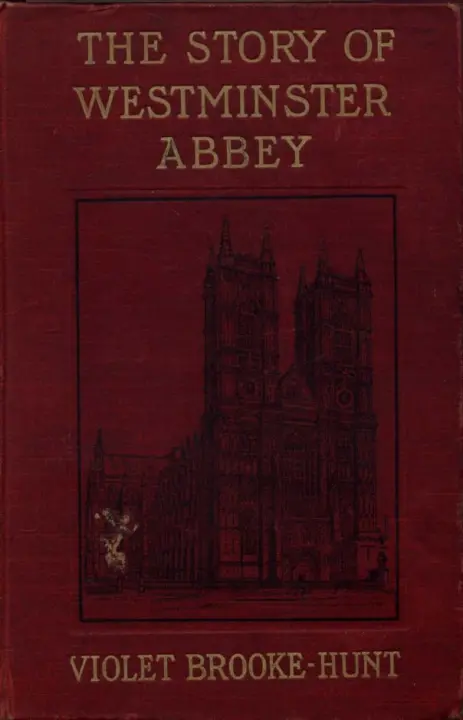
"The Story of Westminster Abbey" by Violet Brooke-Hunt is a historical account written in the early 20th century. This work delves into the rich history of Westminster Abbey, exploring its foundations, the builders, and the notable figures buried within its walls. The narrative aims to make the Abbey, a significant symbol of English heritage, more accessible and familiar to readers of all ages. The opening of the book introduces Geoffrey, a boy who has traveled and learned extensively about the Abbey and expresses a desire to document its stories so that others can understand its historical significance. Inspired by his own journey, Geoffrey feels that Westminster Abbey serves as a living textbook of England's history, filled with monuments and memories. Violet Brooke-Hunt sets out to weave together tales from the Abbey’s past, aiming to engage readers, especially young audiences, with themes of exploration, heritage, and the interconnectedness of history and personal identity. Thus, the introduction serves both as a prologue to the Abbey’s storied legacy and as a heartfelt urging to appreciate the cultural landmarks that define England.
Introduction adapted from the source catalogue; source summaries may be automatically generated.
Free to read · English · 93,380 words · No account needed
MAKE TIME FOR A GOOD BOOK
On by default. Untick to stop anonymous reading totals. Each page counts after 10 seconds in view. How this works.
Anonymous counting is on unless you have switched it off.
Thirteen years before, another young man had entered Parliament, Charles James Fox, the brilliant, excitement-loving son of Lord Holland. After Eton and Oxford he had been sent abroad to complete his education, but so great were his follies and extravagances, that his father had to firmly summon him home. This mandate, we are told, "he obeyed with great reluctance," and he seems to have gone back with an extensive wardrobe of clothes in the latest and most costly fashions, leaving behind him enormous debts in every town he had visited.
Lord Holland, who flattered himself that he had studied the world and human nature with great attention and success, decided that a seat in the House of Commons would best steady this irrepressible young man, and provide him with occupation and ambition, so, though he was only nineteen, and therefore legally not entitled to become a member, he was duly elected, the Speaker, by wilful or accidental oversight, offering no opposition. He too from the first delighted the House as a speaker, for he was fresh, forcible, and graceful, with a great personal charm of manner and an entire absence of conceit, and no one gave a more cordial welcome to Pitt than he did, little dreaming in how short a time this young man would be his lifelong and his successful rival. Rockingham, who had succeeded North as Prime Minister, died suddenly in 1782, and from every point of view Fox appeared to be the man who ought to have succeeded him. But the King cordially disliked Fox, and sent instead for Lord Shelburne. Fox, ever impetuous and hasty, refused to serve under him, and Shelburne turned to Pitt, who thus at the age of twenty-three became Chancellor of the Exchequer and leader of the House of Commons. A year later Lord Shelburne resigned, and the Premiership was offered to Pitt, an honour greater perhaps than any honour ever offered to a young man of twenty-four. He declined it; the Duke of Portland accepted it; and Fox became leader in the House of Commons, with what seemed to be a strong coalition Government at the back of him. For the moment the Whigs were all-powerful, and against them stood Pitt, who refused to be a member of any coalition, with a handful of men who had belonged to the old Chatham party. No one hated the present arrangement more than the King, and before long he saw an opportunity of crushing it. Fox, chiefly by his own magnetic influence, had carried a bill concerning India through the Commons, but the Lords, influenced by the King, threw it out, whereupon he dismissed the Government, and persuaded Pitt to accept the office of Prime Minister. Never before had such a state of things prevailed. The Premier was a youth of twenty-four, with a majority of two to one against him in the House of Commons! Whatever he brought forward was defeated. Fox used all his eloquence against him, and over and over again he was put in an impossible position. Pitt, Lord Rosebery has told us, was never young. Certainly, at this crisis, his patience, his caution, his firmness, and his cool judgment would have done credit to a statesman of half a century's experience. He did not make a mistake, and gradually he won the country to his side. Before many months were over, Parliament was dissolved; an election had taken place; and Pitt came back into power with a large majority. For seventeen years he remained in office. Nothing could have been greater than the contrast between him and his strenuous opponent Fox, who was the most impulsive, genial, and lovable of men; extravagant in every direction, in his likes, his hates, and his sympathies; easily stirred and able to pour forth a torrent of passionate eloquence; living always in the excitement and impulses of the moment, with never a thought for the morrow. Pitt, on the contrary, was cool and thoughtful. He stood, as it were, aloof from all the world, though on the rare occasions when he unbent, he was full of charm. "Smiles were not natural to him," said a contemporary. "He is," said Wilberforce, who unfeignedly admired him, even though he could not always follow him, "one of the most public-spirited and upright men I ever knew." And he was called upon to guide the ship of State through troubled waters. It was his task to raise the money in payment of the American war bill, for a debt of about twenty millions stared him in the face. Then he had to face more than the usual amount of difficulty with Ireland, where the celebrated Dublin Parliament which Henry Grattan, its brilliant leader, had forced Fox to agree to, proved itself so unable to cope with the task undertaken, that riots and disturbances broke out in every quarter. Pitt believed that only one solution was possible, namely, that instead of a separate Parliament at Dublin, the Irish members with the Scotch should sit at Westminster, and in the year 1799 he brought in the Act of Union, which was carried during the next session, in spite of a strong speech against it by Grattan, who was dragged from his sick-room for the occasion. Pitt had also to contend with a restless wave which swept over England, the result of the French Revolution. But though the young minister was always ready for reform, he would have nothing to do with violent changes or with revolution, neither was he afraid to bring in such measures as seemed likely to repress the revolutionary spirits in England. The French leaders, not content with having executed their king and queen, and having waged war on Austria, when that country moved to rescue the luckless Austrian princess, now Queen Marie Antoinette, went to the further length of declaring that every country not agreeing with the doctrines of the Revolution was to be regarded as an enemy, and was to be forced into war. For some while Pitt managed to hold the English people from plunging into the conflict. He was altogether a peace minister. But public opinion was too strong for him; the old hatred of France was there, and the events of the last few years had fanned it into life. Pitt had to bow to the will of the nation, though it was the French who finally declared war in 1793 by an attack on Holland, after which England could no longer stand aloof, though Fox, in his hot-headed way, declared that in his opinion we had no right to demand the withdrawal of French troops from the Netherlands. From that time until the day of victory at Waterloo in 1815, the fight between England and France continued with more or less intensity.
Your reading position is saved on this browser. Take it to another device with a library code. Reading pages adapt to text, rather than matching a printed edition.
BEHIND THE BOOK
This eBook is for the use of anyone anywhere in the United States and most other parts of the world at no cost and with almost no restrictions whatsoever. You may copy it, give it away or re-use it under the terms of the Project Gutenberg License included with this eBook or online at www.gutenberg.org. If you are not located in the United States, you will have to check the laws of the country where you are located before using this eBook. Read the source licence.
The original source file, including credits and licence, is retained by this library. Request an original-format copy at no charge. Please include the book title and Project Gutenberg identifier #55373.
KEEP YOUR CURIOSITY GOING
Cécile Tormay

Moritz Busch
John L. Ransom
Frances Wright
Cécile Tormay

Mabel Potter Daggett