THE CLASSIC COLLECTION✦An outlaw’s diary: the CommuneCLASSIC FREE BOOKS
An outlaw’s diary: the Commune
Cécile Tormay
THE CLASSIC COLLECTION · 1902
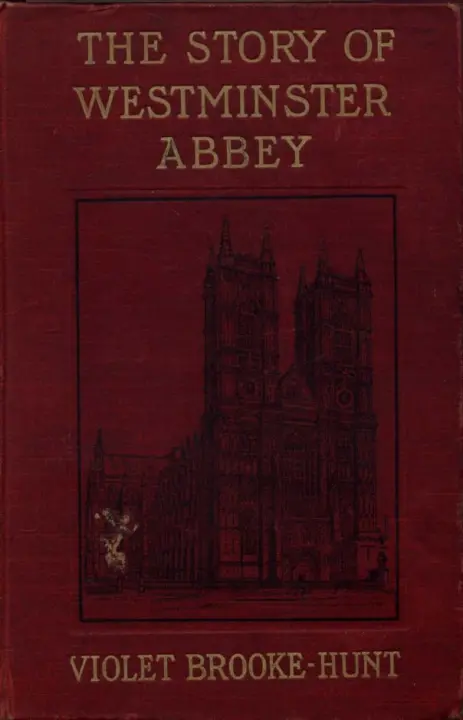
"The Story of Westminster Abbey" by Violet Brooke-Hunt is a historical account written in the early 20th century. This work delves into the rich history of Westminster Abbey, exploring its foundations, the builders, and the notable figures buried within its walls. The narrative aims to make the Abbey, a significant symbol of English heritage, more accessible and familiar to readers of all ages. The opening of the book introduces Geoffrey, a boy who has traveled and learned extensively about the Abbey and expresses a desire to document its stories so that others can understand its historical significance. Inspired by his own journey, Geoffrey feels that Westminster Abbey serves as a living textbook of England's history, filled with monuments and memories. Violet Brooke-Hunt sets out to weave together tales from the Abbey’s past, aiming to engage readers, especially young audiences, with themes of exploration, heritage, and the interconnectedness of history and personal identity. Thus, the introduction serves both as a prologue to the Abbey’s storied legacy and as a heartfelt urging to appreciate the cultural landmarks that define England.
Introduction adapted from the source catalogue; source summaries may be automatically generated.
Free to read · English · 93,380 words · No account needed
MAKE TIME FOR A GOOD BOOK
On by default. Untick to stop anonymous reading totals. Each page counts after 10 seconds in view. How this works.
Anonymous counting is on unless you have switched it off.
Blow, who died and was buried opposite to Purcell in 1708, was considered by his fellow-musicians "to be the greatest master in the world for the organ, especially in his voluntaries, which he played gravely and seriously." The inscription on his grave declares "that his musical compositions are a far nobler monument to his memory than any that can be raised to him," and on the open music-book below is given the Gloria from his fine Jubilate in C major.
William Croft succeeded Blow as organist, and most of his musical compositions were written for special occasions; as, for example, his anthem, "I will give thanks," which was produced after the famous Blenheim victory. He, too, was of a lovable, kindly disposition, and the inscription on his monument ends thus quaintly: "He emigrated to the Heavenly Choir, with that Concert of Angels, for which he was better fitted, adding his Hallelujah. Awake up my glory! Awake lute and harp! I myself will awake right early."
Half a century later, that prince among musicians, George Frederick Handel, was buried in the Poets' Corner. Though not of English birth or upbringing, he had become an English subject, and had found a warm welcome in the hearts of the English people. From babyhood he had shown the bent of his mind. Even his toys were tiny trumpets, horns, and Jew's harps, much to the annoyance of his kind old father, the well-known doctor in the German town of Halle, who thought this craze of George Frederick's should be forcibly put a stop to, and who decreed therefore, that "there was to be no more jingling, neither was he to go into houses where music was practised."
The boy was outwardly submissive, but the longing within was too strong for him. Somehow he got possession of an old clavichord, one of those muffled instruments on which musical monks could practise without disturbing the brethren, and this he smuggled up to a garret in the roof of the house, where, with storks to bear him company, he played away to his soul's content. It was in utter ignorance of all this, that Dr. Handel took the little boy with him once, when summoned to attend the Court at Sache-Weisseufels, where the reigning duke delighted in learning, art, and music. Naturally, George Frederick found his way to the organ-loft, where the good-natured organist lifted him up, for he was but seven, that he might touch the notes. To his surprise, the child began to play with a practised hand, and with so much style, that the Grand Duke, who heard him, sent for the doctor and begged him not further to thwart such a genius. So from this time forward the boy was allowed to study seriously, under the enthusiastic organist of the Liebfrauen Kirche in Halle, who taught him to play the harpsichord, the organ, the violin, the hautboy, and other instruments, besides the art of counterpoint. When, after years of study, he came to England, where Purcell's death had made a blank not yet filled up, he was received with open arms, his fame having preceded him. At once he was engaged to write an opera for the Queen's Theatre, and having discovered a libretto which greatly pleased him, a stirring story of the Crusades, his ideas poured forth so fast and so easily, that in a fortnight he had completed the work, and his "Rinaldo" was soon the rage of the season. Although Handel held the post of Kapellmeister to the Elector of Hanover, and had only been given leave of absence for a "reasonable time," he could not tear himself away from London, so well did he like the place and the people.
Your reading position is saved on this browser. Take it to another device with a library code. Reading pages adapt to text, rather than matching a printed edition.
BEHIND THE BOOK
This eBook is for the use of anyone anywhere in the United States and most other parts of the world at no cost and with almost no restrictions whatsoever. You may copy it, give it away or re-use it under the terms of the Project Gutenberg License included with this eBook or online at www.gutenberg.org. If you are not located in the United States, you will have to check the laws of the country where you are located before using this eBook. Read the source licence.
The original source file, including credits and licence, is retained by this library. Request an original-format copy at no charge. Please include the book title and Project Gutenberg identifier #55373.
KEEP YOUR CURIOSITY GOING
Cécile Tormay

Moritz Busch
John L. Ransom
Frances Wright
Cécile Tormay

Mabel Potter Daggett