THE CLASSIC COLLECTION✦An outlaw’s diary: the CommuneCLASSIC FREE BOOKS
An outlaw’s diary: the Commune
Cécile Tormay
THE CLASSIC COLLECTION · 1902
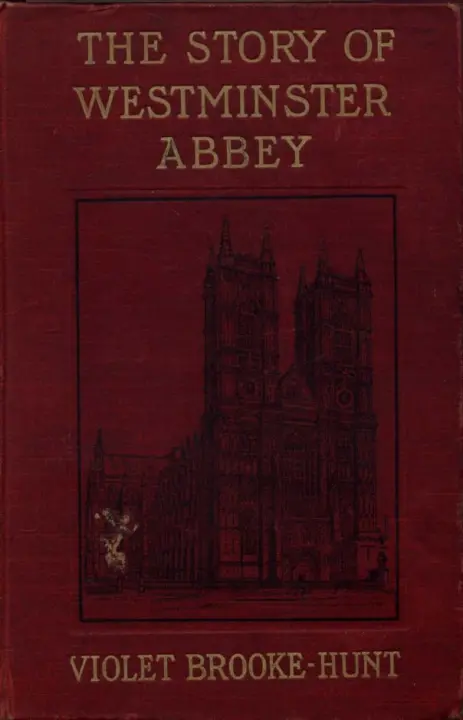
"The Story of Westminster Abbey" by Violet Brooke-Hunt is a historical account written in the early 20th century. This work delves into the rich history of Westminster Abbey, exploring its foundations, the builders, and the notable figures buried within its walls. The narrative aims to make the Abbey, a significant symbol of English heritage, more accessible and familiar to readers of all ages. The opening of the book introduces Geoffrey, a boy who has traveled and learned extensively about the Abbey and expresses a desire to document its stories so that others can understand its historical significance. Inspired by his own journey, Geoffrey feels that Westminster Abbey serves as a living textbook of England's history, filled with monuments and memories. Violet Brooke-Hunt sets out to weave together tales from the Abbey’s past, aiming to engage readers, especially young audiences, with themes of exploration, heritage, and the interconnectedness of history and personal identity. Thus, the introduction serves both as a prologue to the Abbey’s storied legacy and as a heartfelt urging to appreciate the cultural landmarks that define England.
Introduction adapted from the source catalogue; source summaries may be automatically generated.
Free to read · English · 93,380 words · No account needed
MAKE TIME FOR A GOOD BOOK
On by default. Untick to stop anonymous reading totals. Each page counts after 10 seconds in view. How this works.
Anonymous counting is on unless you have switched it off.
And yet this "rugged old giant," as he has been called, provided for them all, and for many others who came and went at their will, and who grumbled if everything was not exactly to their liking. As his bodily sufferings increased, he nerved himself to face the end with a touchingly childlike confidence. His thoughts wandered back to his wife. "We have been parted thirty years," he said. "Perhaps she is now praying for me. God help me. God, Thou art merciful, hear my prayers, and enable me to trust in Thee." Years before, when wandering about the dark aisles with Goldsmith, he had pointed to the sleeping figures around, saying, "And our names may perhaps be mixed with theirs." So now he was delighted when, in answer to his question, he was told that he would be buried in Westminster Abbey. "Do not give me any more physic," he asked the doctor at the very last; "I desire to render up my soul to God unclouded."
His funeral was a very quiet one, in great contrast to Garrick's, but his executors felt that "a cathedral service with lights and music" would have been too costly; as it was, the Dean and Chapter charged high fees, and the expenses came to more than two hundred pounds. But Boswell assures us that a "respectable number of his friends attended," and though the Abbey holds many a greater name than that of Samuel Johnson, few that sleep there carried a braver, kindlier heart throughout a life of constant suffering.
Richard Brinsley Sheridan was the son of an actor and manager who had been driven from Ireland, his native country, by a series of misfortunes, and forced to earn his living in England as a teacher of elocution. Want of money, endless debts, a wonderful power of spending freely with an entire absence of forethought, characterised the Sheridan family, and young Richard was brought up on those very happy-go-lucky principles. He was sent to Harrow, where his tutor said, "The sources of his infirmities were a scanty and precarious allowance from the father;" and when he left school, a handsome, brilliant, careless boy of seventeen the state of the family purse made any further education out of the question. His father had settled in Bath, and here Richard made the acquaintance of that beautiful girl and wonderful singer, Elizabeth Lindley "the link between an angel and a woman," as an Irish bishop called her, whose father also taught music and gave concerts in Bath. She was very unhappy, as her relations wished to force her into a marriage with a rich but elderly gentleman whom she disliked, and in her despair she confided her troubles to Richard Sheridan, the one among her many admirers to whom she had given her heart. To make a long story short, the young couple fled together "on a matrimonial expedition," as the London Chronicle worded it; and in spite of all opposition they married, and took up their abode in London, near Portman Square. Though neither of them had any private fortune, Sheridan refused to allow his wife to sing in public. This action of his was warmly discussed by Dr. Johnson's friends, some of whom said that as the young gentleman had not a shilling in the world, he was foolishly delicate or foolishly proud. The Doctor, however, applauded him roundly. "He is a brave man. He resolved wisely and nobly. Would not a gentleman be disgraced by having his wife singing publicly for him? No, sir, there can be no doubt here." But Sheridan had another surprise in store for his friends, and suddenly it became known that he had written a play called "The Rivals," with which the manager of Covent Garden Theatre was entranced, a light, fresh comedy, bearing on fashionable life in Bath. It was produced, and in spite of its many faults, chiefly arising from its having been written in such hot haste, it made a reputation for its author, which prepared the way for his great triumph two years later, when he brought out "The School for Scandal," still the most popular of English comedies. With it he leapt into fame, and though barely twenty-five, he became the man whose name was in everybody's mouth. With characteristic airiness and vagueness in money matters, he took upon himself the responsible duties of manager to Drury Lane Theatre after Garrick retired, and brilliant though he was, his recklessness and want of any business habits, soon brought about a serious state of chaos and rebellion there. This, however, seemed to disturb him but little, and he turned his attention to politics; for at the Literary Club he had made many political friends, including Fox, and he proposed going into Parliament as an independent member, though he believed that "either ministry or opposition would be happy to engage him." He found a seat at Stafford, and freely promised employment in Drury Lane Theatre to those who voted for him; while the necessary money for the election, which of course Sheridan did not possess, was provided by a gentleman in return for a share in the Opera House. His first speech was not a success, but though disappointed he was not daunted.
Your reading position is saved on this browser. Take it to another device with a library code. Reading pages adapt to text, rather than matching a printed edition.
BEHIND THE BOOK
This eBook is for the use of anyone anywhere in the United States and most other parts of the world at no cost and with almost no restrictions whatsoever. You may copy it, give it away or re-use it under the terms of the Project Gutenberg License included with this eBook or online at www.gutenberg.org. If you are not located in the United States, you will have to check the laws of the country where you are located before using this eBook. Read the source licence.
The original source file, including credits and licence, is retained by this library. Request an original-format copy at no charge. Please include the book title and Project Gutenberg identifier #55373.
KEEP YOUR CURIOSITY GOING
Cécile Tormay

Moritz Busch
John L. Ransom
Frances Wright
Cécile Tormay

Mabel Potter Daggett