THE CLASSIC COLLECTION✦An outlaw’s diary: the CommuneCLASSIC FREE BOOKS
An outlaw’s diary: the Commune
Cécile Tormay
THE CLASSIC COLLECTION · 1902
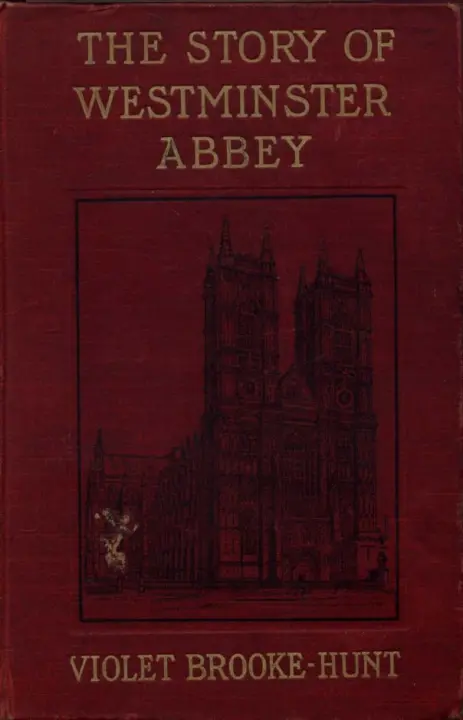
"The Story of Westminster Abbey" by Violet Brooke-Hunt is a historical account written in the early 20th century. This work delves into the rich history of Westminster Abbey, exploring its foundations, the builders, and the notable figures buried within its walls. The narrative aims to make the Abbey, a significant symbol of English heritage, more accessible and familiar to readers of all ages. The opening of the book introduces Geoffrey, a boy who has traveled and learned extensively about the Abbey and expresses a desire to document its stories so that others can understand its historical significance. Inspired by his own journey, Geoffrey feels that Westminster Abbey serves as a living textbook of England's history, filled with monuments and memories. Violet Brooke-Hunt sets out to weave together tales from the Abbey’s past, aiming to engage readers, especially young audiences, with themes of exploration, heritage, and the interconnectedness of history and personal identity. Thus, the introduction serves both as a prologue to the Abbey’s storied legacy and as a heartfelt urging to appreciate the cultural landmarks that define England.
Introduction adapted from the source catalogue; source summaries may be automatically generated.
Free to read · English · 93,380 words · No account needed
MAKE TIME FOR A GOOD BOOK
On by default. Untick to stop anonymous reading totals. Each page counts after 10 seconds in view. How this works.
Anonymous counting is on unless you have switched it off.
So ended a prosperous, pleasant life, and rarely was a man better liked by his fellows, or more genuinely mourned. Dr. Johnson, in this moment, forgot all his later coldness towards the Davy he had once so loved. He left a card on Mrs. Garrick, and "wished some endeavours of his could enable her to support a loss which the world cannot repair;" while he wrote those well-known words, which Mrs. Garrick had engraved on her husband's memorial monument in Lichfield Cathedral, and which form an inscription more appropriate than that on the Abbey tomb:--"I am disappointed by that stroke of death, which has eclipsed the gaiety of nations and impoverished the public stock of harmless pleasure."
David's devoted wife outlived him for over forty years, keenly interested to the last in all matters theatrical, and a well-known figure in the Abbey, where, little and bent, she often made her way to the tomb which held him she had so loved, and standing there would readily recount over and over again to willing listeners the triumphs of "her Davy."
Johnson, as we have seen, settled down in London with the intention of making literature pay. "No man but a blockhead," he said in his strongest manner, "ever wrote except for money." Perhaps it was for opinions such as these that his wife, more than twenty years older than himself, declared him to be the most sensible man that lived. A curious figure he must have seemed to those booksellers of whom he demanded work as a translator, mightily tall and broadly made, with a face which he twirled and twisted about in a strange fashion, features scarred by disease, eyes which were of little use to him, and a manner pompous and overbearing, though redeemed by a kindliness of heart not to be concealed. But he managed to struggle along, writing squibs or pamphlets, reporting speeches in Parliament, trying his hand at plays or poetry, and all the while working away at his Great Dictionary, for which when finished he was to receive L1500, he out of that sum paying his copyists and assistants. He founded a club at which he began to make his reputation as a talker, and out of those conversations with his special friends there came to him the idea of starting a newspaper on the lines of Addison's Spectator. But Johnson's heavy hand, his love of long discourses, and the natural melancholy of his nature, did not fit him for work such as this. His Rambler only lasted for two years, and certainly made him no fortune, though it may have helped him to exist during that time. His Dictionary, when it was at last completed, gave him a surer position in the literary world of London, and he was paid the sum of L100 for his story of "Rasselas," but most of this went in paying for the last illness and funeral of his mother, and Johnson seems to have been sadly in need of money. Through the influence of some friends, the king, George III. who declared that he was most anxious to offer "brighter prospects to men of literary merit," proposed to give Johnson a pension of L300 a year. At first he would not hear of accepting it--indeed, there was a rather formidable difficulty in the way, for in his Dictionary he had defined the word pension as being "generally understood to mean pay given to a State hireling for treason to his country." However, the explanations and persuasions of his friends at last overcame the obstacle, and from that time forward he became one of the best known public characters. A favourite such as David Garrick he could never have aspired to be, and to fashionable folks, especially to ladies, he was an untidy, conceited, rugged old man, who ate enormous meals, drank sometimes twenty-five cups of tea at one sitting, wore slovenly and dirty clothes, half-burnt wigs, and slippers almost in tatters. Then he contradicted flatly, and his anger was of a very vehement kind; though he always declared himself to be a "most polite man," and was occasionally ceremonious to a wonderful degree. And yet as he discoursed, men listened to him with such pleasure that they forgot entirely his many monstrous failings. His power of argument was magnificent; never could man so slay an adversary by his words as could this vigorous, quarrelsome, brilliant talker, and though he hit hard, he did not hit cruelly. There was no venom in his words, and however violently he argued, he never seems to have lost a friend through it. On the contrary his circle of admirers constantly grew, and cheerfully submitted to whatever demands he made upon them. Chief among those friends, of course, stands the faithful Boswell, who idolised him with a worship that must have been very wearisome. If Johnson so much as opened his mouth Boswell bent forward wild with eagerness, terrified lest one precious word should escape him; he sat as close to him as he could get, he hung around him like a dog, and no amount of snubbing could damp his ardour. He delighted in asking his master a series of such questions as these:--"What would you do if you were shut up in a castle with a new-born baby?" Or, "Why is a cow's tail long?"
Your reading position is saved on this browser. Take it to another device with a library code. Reading pages adapt to text, rather than matching a printed edition.
BEHIND THE BOOK
This eBook is for the use of anyone anywhere in the United States and most other parts of the world at no cost and with almost no restrictions whatsoever. You may copy it, give it away or re-use it under the terms of the Project Gutenberg License included with this eBook or online at www.gutenberg.org. If you are not located in the United States, you will have to check the laws of the country where you are located before using this eBook. Read the source licence.
The original source file, including credits and licence, is retained by this library. Request an original-format copy at no charge. Please include the book title and Project Gutenberg identifier #55373.
KEEP YOUR CURIOSITY GOING
Cécile Tormay

Moritz Busch
John L. Ransom
Frances Wright
Cécile Tormay

Mabel Potter Daggett