THE CLASSIC COLLECTION✦An outlaw’s diary: the CommuneCLASSIC FREE BOOKS
An outlaw’s diary: the Commune
Cécile Tormay
THE CLASSIC COLLECTION · 1902
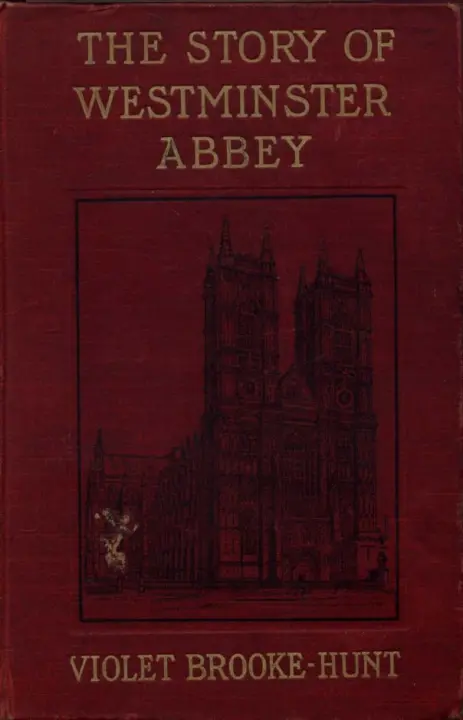
"The Story of Westminster Abbey" by Violet Brooke-Hunt is a historical account written in the early 20th century. This work delves into the rich history of Westminster Abbey, exploring its foundations, the builders, and the notable figures buried within its walls. The narrative aims to make the Abbey, a significant symbol of English heritage, more accessible and familiar to readers of all ages. The opening of the book introduces Geoffrey, a boy who has traveled and learned extensively about the Abbey and expresses a desire to document its stories so that others can understand its historical significance. Inspired by his own journey, Geoffrey feels that Westminster Abbey serves as a living textbook of England's history, filled with monuments and memories. Violet Brooke-Hunt sets out to weave together tales from the Abbey’s past, aiming to engage readers, especially young audiences, with themes of exploration, heritage, and the interconnectedness of history and personal identity. Thus, the introduction serves both as a prologue to the Abbey’s storied legacy and as a heartfelt urging to appreciate the cultural landmarks that define England.
Introduction adapted from the source catalogue; source summaries may be automatically generated.
Free to read · English · 93,380 words · No account needed
MAKE TIME FOR A GOOD BOOK
On by default. Untick to stop anonymous reading totals. Each page counts after 10 seconds in view. How this works.
Anonymous counting is on unless you have switched it off.
When Henry of Lancaster became king five years later, he doubled the pension, remembering how his father, just dead, had loved the poet; and so the cloud, which had been heavy enough while it lasted, passed away. But it is to those dark days that we owe the greatest of all Chaucer's work--his "Canterbury Tales"--work, it must be remembered, which rings and re-rings with cheerfulness, courage, sympathy, and kindliness. We know so little of Chaucer as a man but this one fact stands out, that he never allowed his own troubles or anxieties, or even his pressing poverty, to over-cloud his heart or his mind. For him the sun shone always, though he saw it not, and because of that sunshine no trace of bitterness or harshness is to be found in his work.
In the prologue to the "Tales" Chaucer explains his plot in the most natural and personal way. One day in the spring, he says, he was waiting at the Tabard Inn, to rest before continuing a pilgrimage he had set out to make to Canterbury, when twenty-nine other pilgrims, all bound for the same destination, arrived. He soon made friends with them, and, finding their company very entertaining, arranged to join this party. Then came the proposal that each one should tell two tales to enliven the journey; a good supper at the end to be the reward of the pilgrim whose story found most favour. The jovial host of the inn decided to join them, and one morning in early spring the procession set out. What a motley crowd they were! Yet Chaucer, with his happy knack of describing people just as they appeared, has made them all so real to us, that it is easy to picture each one of them, and in so doing to get a vivid glimpse of the men and women whom the poet was accustomed to meet every day of his life. But for Chaucer we should know next to nothing about the people of his day. First came the knight, who "lovede chyvalrye," who had ridden far afield in his master's wars; a great soldier, but tender as a woman, "a verrey parfyte gentil knight." With him was his son, acting as his squire, great of strength, able to make brave songs, and to sit well his horse, handsomely dressed, yet in his manners "curteys, lowly, and servysable." His attendant was a yeoman, sunburnt and sturdy, who carried the sheaf of arrows, which he could dress right yeomanly. It seems likely that for a short while Chaucer served as a soldier in France, and if so, how familiar these three must have been to him. Then came the prioress, very "pleasant and semely," adopting court manners, and impressing every one with the idea that she was so compassionate and charitable that even to see a mouse in a trap made her weep. She had her own attendant nuns and priests. The monk was only interested in riding, but the friar, who was licensed to hear confessions, raise money, and perform the offices of the Church in a certain district, was merry, the good friend of all rich women, and reported to "hear confession very sweetly," being easy with the penances he ordered. Sometimes he lisped, "to make his English sweet upon the tongue," and when he sang to his guitar, "his eyes shone like stars on a frosty night." The merchant sat high on his horse, and talked loudly of his increased wealth, a great contrast to the poor clerk of Oxford, who looked hollow, wore a threadbare cloak, and had not been worldly enough to get a benefice. The sergeant-at-law, the landholder, the haberdasher, carpenter, weaver, dyer, tapestry-maker, the cook, the sailor, and the doctor, all had their special characteristics, but of these there is not space to speak. The wife of Bath had a bold face and wore bright clothes; had buried five husbands, all of whom she had ruled, and was quite willing to try a sixth. The poor parson, who was "a shepherd holy and vertuous, never despising sinful men, but teaching them the law of Christ, which he faithfully followed," was, I think, the pilgrim whom Chaucer most reverenced. The religion of the monks and friars revolted him, but those poor priests, leading their simple lives of work and worship, were to his eyes in very truth the servants of Christ, who witnessed loyally to their Master, in spite of the contempt with which their very poverty caused them to be treated. His brother, the ploughman, was in his way as good a man as the priest, for he was a true and honest labourer, who lived in charity with all, loved God, and would, for Christ's sake, "thresh, dyke, or delve for the poor widow's hire." The miller; the manciple, who bought the food for an Inn of Court; the reeve or steward; the summoner to the ecclesiastical courts; and the pardoner, with his packets of relics which he always sold successfully, made up the party; and all having agreed to the host's proposals as to the tales to be told, they drew lots to decide who should begin, the choice falling on the knight, whereat all rejoiced. "Tell us merry things," was the injunction of the host, who was rejoicing in a spell of freedom from his wife's sharp eyes and sharper tongue, and--
Your reading position is saved on this browser. Take it to another device with a library code. Reading pages adapt to text, rather than matching a printed edition.
BEHIND THE BOOK
This eBook is for the use of anyone anywhere in the United States and most other parts of the world at no cost and with almost no restrictions whatsoever. You may copy it, give it away or re-use it under the terms of the Project Gutenberg License included with this eBook or online at www.gutenberg.org. If you are not located in the United States, you will have to check the laws of the country where you are located before using this eBook. Read the source licence.
The original source file, including credits and licence, is retained by this library. Request an original-format copy at no charge. Please include the book title and Project Gutenberg identifier #55373.
KEEP YOUR CURIOSITY GOING
Cécile Tormay

Moritz Busch
John L. Ransom
Frances Wright
Cécile Tormay

Mabel Potter Daggett