THE CLASSIC COLLECTION✦An outlaw’s diary: the CommuneCLASSIC FREE BOOKS
An outlaw’s diary: the Commune
Cécile Tormay
THE CLASSIC COLLECTION · 1905
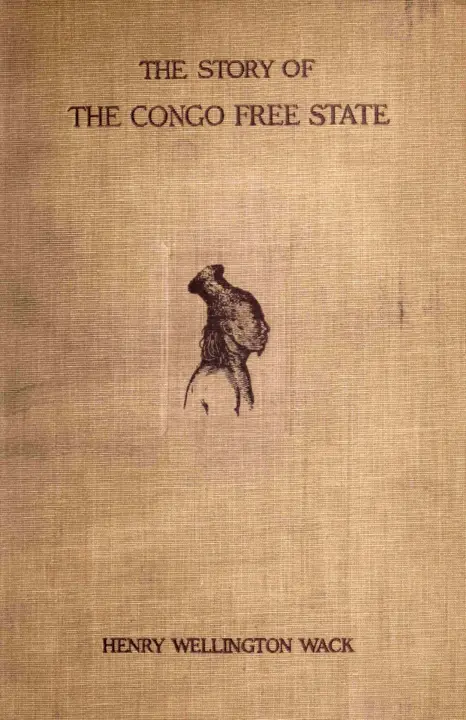
"The Story of the Congo Free State: Social, Political, and Economic Aspects of the Belgian System of Government in Central Africa" by Henry Wellington Wack is a historical account written in the early 20th century. This work delves into the intricate founding and operations of the Congo Free State, highlighting the perceived humanitarian motives behind King Leopold II's governance while addressing the ensuing controversies and criticisms. The book provides a comprehensive overview of the socio-political dynamics during this period of colonization. The opening of the book introduces Wack's motivations for writing, stating his aim to present a balanced and factual account of the Congo Free State amidst growing criticism of King Leopold II's regime. Wack recounts his observations of an organized campaign against the Congo government during his time in the UK and the United States, feeling an obligation to counter the negative narratives about the state. He describes gaining access to archival documents from King Leopold's administration to ensure the authenticity of his account, aiming to clarify the benevolent intentions attributed to the establishment of the Congo Free State. This introduction sets the stage for a detailed exploration of the complexities surrounding the administration of the area, tangled in both altruistic ambition and imperialistic pursuits.
Introduction adapted from the source catalogue; source summaries may be automatically generated.
Free to read · English · 200,810 words · No account needed
MAKE TIME FOR A GOOD BOOK
On by default. Untick to stop anonymous reading totals. Each page counts after 10 seconds in view. How this works.
Anonymous counting is on unless you have switched it off.
The power of the State in this connection is incontestable. That power is derived directly from the primary right and duty to maintain public order everywhere and under all circumstances. Nobody can deny the State the right of taking steps, for example, for the preservation of public safety. Government cannot be carried on without a judicial and administrative police system, and a State could not renounce that prerogative without laying itself open to a charge of incapacity in its primary and essential functions. Hence, such a renunciation could not be argued from mere presumptions or inductions.[9]
[Sidenote: The Free-Trade Policy.]
Amongst the innovations attempted by the Berlin Act was that which sought, by Article IV., to abolish all import and transit dues. Little serious account appears to have been taken—so far as the Act reveals—of the practical necessity for erecting and sustaining works of public utility to commerce, and the equity of imposing proper charges on the wares upon which the benefits of such works were bestowed. The absolute prohibition of import duties created great difficulties for the Free State which, but for the personal munificence of its Sovereign, would have wrecked a liberal undertaking, handicapped and fettered by the fanciful legislation of the Berlin Conference,—“Merchandise imported into those regions shall remain free from import and transit dues.” Fortunately the legislators of the Berlin Conference were not to become the practical governors of the Congo Free
[Sidenote: A Temporary Experiment.]
State, else they might have realised that the gravest body may enact farce and commit folly. It was the experiment of a new principle in colonial administrative economy which they aimed at, but there is a vast difference in substance between a mirage and a mountain. That there were misgivings in the mind of some members of the Conference as to the logic of driving traders into the Congo, on the one hand, utterly untaxed for the support of the Government and the security it afforded, while on the other the State was charged with the creation of public works and the maintenance of law and order without revenue, is manifested by that final clause of Article IV., which provides that “the Powers reserve to themselves to determine, after the lapse of twenty years, whether this freedom of import shall be retained or not.” In this case the Powers did not wait twenty years to revise their principle of free trade. Five years were sufficient to reveal its inapplicability to a new country, and the Second Brussels Conference, assembled in 1890, made of the free-trade clause of 1885 a clause allowing on merchandise other than spirituous liquors an impost not exceeding ten per cent. “It would never do,” said Baron de Courcel, at the Conference, “to renew the colonial experience gained in the sixteenth century, when colonies were brought to ruin by those who pretended to fix in Europe, from a purely metropolitan point of view, their financial and administrative system.” The experiment of prohibiting import duties proved, as already indicated, a serious hindrance to the economic life of the new State. That the experiment would not, however, be persisted in by the Powers, had been foreshadowed by the suggestion of Baron Lambermont at the Conference when he said: “It is experience which will then inspire the interested Powers with the most favourable resolutions for the development and commercial progress in their possessions.” There were, therefore, after all, men of practical political foresight at the Conference, whose assent to so radical a policy of free trade was accorded for the purpose of the moment only, and while the great question of civilising Central African tribes dominated their early aims even to the disadvantage of the correlated questions of commerce. Article III. of the General Act, therefore, provided that: “Wares of whatever origin, imported into these regions, under whatsoever flag, by sea or river, or overland, shall be subject to no other taxes than such as may be levied as fair compensation for expenditure in the interest of trade, and which for this reason must be equally borne by the subjects themselves and by foreigners of all nationalities.” The reasons actuating the Berlin Conference not to fix the rate of such taxation as it provided for at the Brussels Conference, are clearly indicated on page 85 of the protocols to the General Act, from which the following declaration is quoted:
Your reading position is saved on this browser. Take it to another device with a library code. Reading pages adapt to text, rather than matching a printed edition.
BEHIND THE BOOK
This eBook is for the use of anyone anywhere in the United States and most other parts of the world at no cost and with almost no restrictions whatsoever. You may copy it, give it away or re-use it under the terms of the Project Gutenberg License included with this eBook or online at www.gutenberg.org. If you are not located in the United States, you will have to check the laws of the country where you are located before using this eBook. Read the source licence.
The original source file, including credits and licence, is retained by this library. Request an original-format copy at no charge. Please include the book title and Project Gutenberg identifier #70280.
KEEP YOUR CURIOSITY GOING
Cécile Tormay

Moritz Busch
John L. Ransom
Frances Wright
Cécile Tormay

Mabel Potter Daggett