THE CLASSIC COLLECTION✦An outlaw’s diary: the CommuneCLASSIC FREE BOOKS
An outlaw’s diary: the Commune
Cécile Tormay
THE CLASSIC COLLECTION · 1905
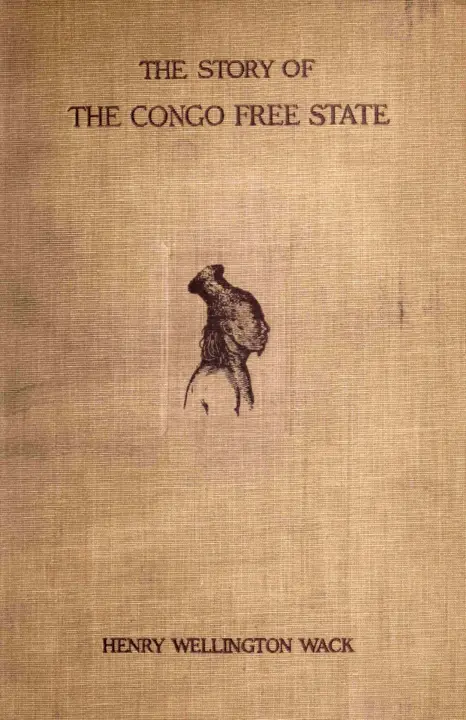
"The Story of the Congo Free State: Social, Political, and Economic Aspects of the Belgian System of Government in Central Africa" by Henry Wellington Wack is a historical account written in the early 20th century. This work delves into the intricate founding and operations of the Congo Free State, highlighting the perceived humanitarian motives behind King Leopold II's governance while addressing the ensuing controversies and criticisms. The book provides a comprehensive overview of the socio-political dynamics during this period of colonization. The opening of the book introduces Wack's motivations for writing, stating his aim to present a balanced and factual account of the Congo Free State amidst growing criticism of King Leopold II's regime. Wack recounts his observations of an organized campaign against the Congo government during his time in the UK and the United States, feeling an obligation to counter the negative narratives about the state. He describes gaining access to archival documents from King Leopold's administration to ensure the authenticity of his account, aiming to clarify the benevolent intentions attributed to the establishment of the Congo Free State. This introduction sets the stage for a detailed exploration of the complexities surrounding the administration of the area, tangled in both altruistic ambition and imperialistic pursuits.
Introduction adapted from the source catalogue; source summaries may be automatically generated.
Free to read · English · 200,810 words · No account needed
MAKE TIME FOR A GOOD BOOK
On by default. Untick to stop anonymous reading totals. Each page counts after 10 seconds in view. How this works.
Anonymous counting is on unless you have switched it off.
Schumacher, Dr. De, member of Court of Inquiry, 476, 478
Scott, Mr. G. A., 341
Sefu, 179, 181, 183, 184, 185, 186, 187, 189, 190
Semlika, boundary between British and Belgian possessions, 56
Semliki, 221
Seyyid Burghash, Sultan, 32
Shanu, British subject of Lagos, tries to induce Mr. Benedetti to join anti-Congo campaign, 377 et seq.
Sierra Leone, convictions for maltreatment of natives in, 582
Simba, his conflict with Mirambo, 36
Sir Bartle Frere. See Frere, Sir Bartle.
Sir Charles Dilke. See Dilke, Sir Charles.
Sir Frederic Goldsmid. See Goldsmid, Sir Frederic.
Sir Harry Johnston. See Johnston, Sir Harry.
Sir John Kirk. See Kirk, Sir John.
Sir Travers Twiss. See Twiss, Sir Travers.
Slavery in Central Africa, 5;
slavery defined, 83;
antiquity of, ibid.;
Christ the first liberationist, 84;
first awakening to infamy of slavery, ibid.;
England’s traffic in slaves, ibid.;
her retribution, 85;
America’s civil war to abolish, ibid.;
still extant in some countries, ibid.;
England’s efforts to suppress, 86;
horrors of, 87;
Baron Lambermont on, 89;
Pope Leo XIII.’s encyclical on, 90;
its strange uses before the founding of Congo Free State, 274;
Congo State accused of, 294;
declaration concerning, in General Act of Berlin Conference,
535 et seq.
Sleeping sickness, 225;
no known cure for, 266
Smallpox, 187, 221, 225, 266
Smet de Naeyer, Count de, 478
Soudan, migratory habit of its population, 226
South Africa, British punitive expeditions in, for collection of taxes
from natives, 607
Spain, King of, becomes President of National Committee of
International
Association for the Exploration and Civilisation of Central Africa,
13
Speke, Captain, discovers Lake Tanganyika, and sources of the Nile and
Lake Victoria, 4, 58
St. Paul de Loanda, 43
Standard, The, comments upon Lord Lansdowne’s dispatch of
August 8, 1903, 459
Stanley Falls, 46, 52, 179, 181, 194, 220, 221; fortnightly communication with Leopoldville, 251
Stanley, Henry Morton, Sir, discovers Dr. Livingstone, 4; says white man can live in Central Africa, 17; visits Congo in interest of King Leopold, 20; demonstrates importance of Congo River in letters to New York Herald and London Daily Telegraph, 39; founds and fortifies station at Vivi, 40; constructs road from Vivi to Isanghila, ibid.; founds a station at Manyanga, ibid.; learns of French founding Brazzaville, and replies by founding Leopoldville, ibid.; goes to Brussels to report progress, ibid.; returns to Central Africa, February, 1883; his achievements impossible without King Leopold’s aid, 65, 197; Boula Matari, native name for, note, 235; insists upon necessity of railroad round the thirty-two cataracts, 253, 262, 274, 275; on a common measure of civilisation, 277; writes introduction to book by Captain Guy Burrows, 347; the true motive of the anti-Congo campaign, 370; his opinion of Congo Free State Government, 397 et seq.; Congo Free State likely to fulfil his expectations, 447
Stanley Pool, 50, 252
Stanleyville, railroad from, to Great Lakes, 256
Stephanieville, treaty of, 490
Stokes, executed for selling arms to State’s enemies in time of war, originally Protestant missionary, 307, 373, 452
Storm, Lieut., founds station at Mpala, 37
Strauch, Colonel, President of the Comité d’Études du Haut-Congo,
29, 67
Sugar, 53, 272
Svensson, 218
Swanton, Mr., 341
Your reading position is saved on this browser. Take it to another device with a library code. Reading pages adapt to text, rather than matching a printed edition.
BEHIND THE BOOK
This eBook is for the use of anyone anywhere in the United States and most other parts of the world at no cost and with almost no restrictions whatsoever. You may copy it, give it away or re-use it under the terms of the Project Gutenberg License included with this eBook or online at www.gutenberg.org. If you are not located in the United States, you will have to check the laws of the country where you are located before using this eBook. Read the source licence.
The original source file, including credits and licence, is retained by this library. Request an original-format copy at no charge. Please include the book title and Project Gutenberg identifier #70280.
KEEP YOUR CURIOSITY GOING
Cécile Tormay

Moritz Busch
John L. Ransom
Frances Wright
Cécile Tormay

Mabel Potter Daggett