THE CLASSIC COLLECTION✦An outlaw’s diary: the CommuneCLASSIC FREE BOOKS
An outlaw’s diary: the Commune
Cécile Tormay
THE CLASSIC COLLECTION · 1905
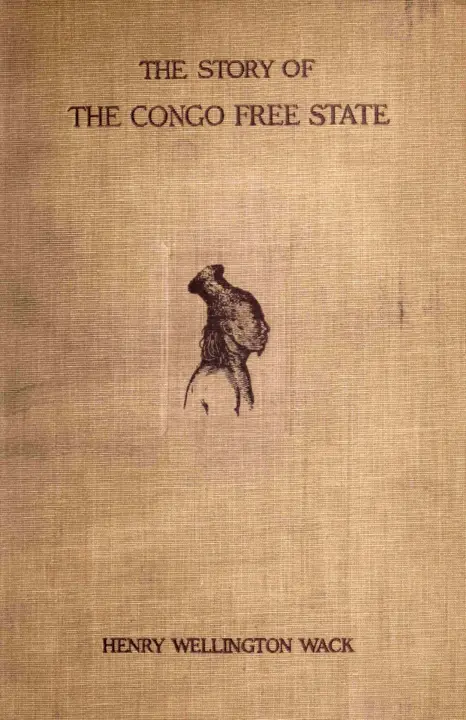
"The Story of the Congo Free State: Social, Political, and Economic Aspects of the Belgian System of Government in Central Africa" by Henry Wellington Wack is a historical account written in the early 20th century. This work delves into the intricate founding and operations of the Congo Free State, highlighting the perceived humanitarian motives behind King Leopold II's governance while addressing the ensuing controversies and criticisms. The book provides a comprehensive overview of the socio-political dynamics during this period of colonization. The opening of the book introduces Wack's motivations for writing, stating his aim to present a balanced and factual account of the Congo Free State amidst growing criticism of King Leopold II's regime. Wack recounts his observations of an organized campaign against the Congo government during his time in the UK and the United States, feeling an obligation to counter the negative narratives about the state. He describes gaining access to archival documents from King Leopold's administration to ensure the authenticity of his account, aiming to clarify the benevolent intentions attributed to the establishment of the Congo Free State. This introduction sets the stage for a detailed exploration of the complexities surrounding the administration of the area, tangled in both altruistic ambition and imperialistic pursuits.
Introduction adapted from the source catalogue; source summaries may be automatically generated.
Free to read · English · 200,810 words · No account needed
MAKE TIME FOR A GOOD BOOK
On by default. Untick to stop anonymous reading totals. Each page counts after 10 seconds in view. How this works.
Anonymous counting is on unless you have switched it off.
Congo Free State, its evolution, 2;
conceived by King of the Belgians and Stanley, 22;
its flag, 26;
extent, 44;
boundary with North-eastern Rhodesia, 47;
its natural wealth, 51;
early legislation in, 66;
a properly organised government previous to General Act of Berlin
Congress, 67;
recognised as such by Powers previous to that Act, ibid.;
declaration concerning, by General Sanford, 79;
recognised as a friendly government by American Secretary of State
Frelinghuysen 80;
makes treaties with United States in 1884 and 1885, 92;
freedom of trade established in, by General Act of Berlin
Conference, ibid.;
treaties with various powers, 93;
attacked by Sir Charles Dilke in British Parliament, 96;
develops land, 115;
concessionaire companies in, 116;
alcohol in, 138;
import duties, 140;
cost of founding the State, 145;
bequeathed by Sovereign to Belgium, 149;
population, 151;
origin of races, 152 et seq.;
Public Force, 164;
prohibits trade in firearms, gunpowder, and other explosives, 200;
regulates contracts of service, ibid.;
creates volunteer corps to protect individual liberty, ibid.;
delimitation of its territory, 206;
its enemies, 223;
displacement of population, 225;
internal administration, 228;
nationality of its servants, 230;
Department of Justice, 231,
intrigues against, 235;
its means of communication with Europe, 249;
scientific stations in, 264;
climate, 265;
influx of Europeans and Americans, ibid.;
trade and revenue, 277;
receives from King Leopold annual subsidy of 1,000,000 francs, 278;
exports and imports, 280-286;
Herr Eberhard Von Schkopp on trade of, 287;
declining trade with England, 290;
discoveries of gold, coal, and copper in, 291;
revenue, 292;
expenditure, 294 et seq.;
monetary system, ibid.;
missions in, 299;
schools, 301;
origin of land system, 313;
unappropriated lands declared property of, 314;
dealings with foreign squatters upon lands in Congo Basin, 316;
adopts Torrens Act system of transferring land titles, 317;
appoints Land Commission, 318;
authorises natives to work mines on own account, 319;
recognises certain local customs as valid, 320;
its various land tenures, 322;
traders’ alleged grievances against, 330 et seq.;
domain of the crown, its extent, 335 et seq.;
its forests finest in the world, 336;
its mining laws, ibid. et seq.;
campaign against, begun in America, 387;
its value generally recognised, 447;
replies to Lord Lansdowne’s dispatch of August 8, 1903, 458;
reception of reply by British press, 460;
instructions respecting officials and natives, 569;
text of reply to British dispatch of August 8, 1903, 577 et seq.;
official correspondence with Great Britain, 590;
notes on Mr. Casement’s report, 591 et seq.;
concessionaires, private firms, and trading companies therein,
616 et seq.;
principal officials in Brussels, 617;
principal local officials, ibid.
Congo, Lower, 201;
charted by buoys, 250, 252
Congo, Middle, 46, 201
Congo Question, 3
Congo Reform Association (of Liverpool), its specious arguments, 315; letter to, from editor of Catholic Herald, note, 371, 374, 452; establishes its American headquarters at Boston, 467
Your reading position is saved on this browser. Take it to another device with a library code. Reading pages adapt to text, rather than matching a printed edition.
BEHIND THE BOOK
This eBook is for the use of anyone anywhere in the United States and most other parts of the world at no cost and with almost no restrictions whatsoever. You may copy it, give it away or re-use it under the terms of the Project Gutenberg License included with this eBook or online at www.gutenberg.org. If you are not located in the United States, you will have to check the laws of the country where you are located before using this eBook. Read the source licence.
The original source file, including credits and licence, is retained by this library. Request an original-format copy at no charge. Please include the book title and Project Gutenberg identifier #70280.
KEEP YOUR CURIOSITY GOING
Cécile Tormay

Moritz Busch
John L. Ransom
Frances Wright
Cécile Tormay

Mabel Potter Daggett