THE CLASSIC COLLECTION✦An outlaw’s diary: the CommuneCLASSIC FREE BOOKS
An outlaw’s diary: the Commune
Cécile Tormay
THE CLASSIC COLLECTION · 1905
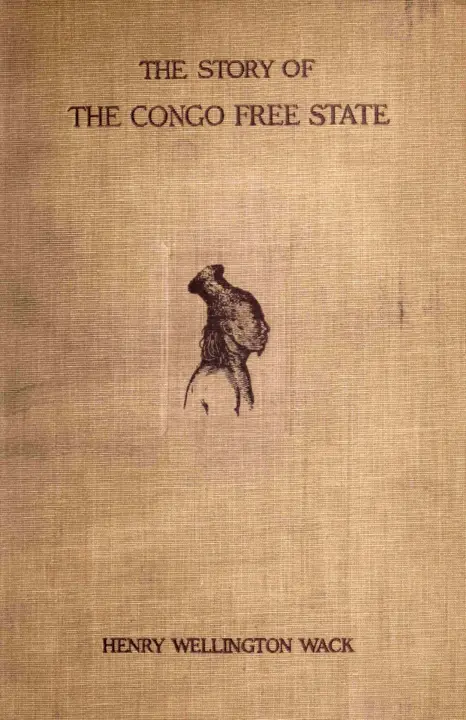
"The Story of the Congo Free State: Social, Political, and Economic Aspects of the Belgian System of Government in Central Africa" by Henry Wellington Wack is a historical account written in the early 20th century. This work delves into the intricate founding and operations of the Congo Free State, highlighting the perceived humanitarian motives behind King Leopold II's governance while addressing the ensuing controversies and criticisms. The book provides a comprehensive overview of the socio-political dynamics during this period of colonization. The opening of the book introduces Wack's motivations for writing, stating his aim to present a balanced and factual account of the Congo Free State amidst growing criticism of King Leopold II's regime. Wack recounts his observations of an organized campaign against the Congo government during his time in the UK and the United States, feeling an obligation to counter the negative narratives about the state. He describes gaining access to archival documents from King Leopold's administration to ensure the authenticity of his account, aiming to clarify the benevolent intentions attributed to the establishment of the Congo Free State. This introduction sets the stage for a detailed exploration of the complexities surrounding the administration of the area, tangled in both altruistic ambition and imperialistic pursuits.
Introduction adapted from the source catalogue; source summaries may be automatically generated.
Free to read · English · 200,810 words · No account needed
MAKE TIME FOR A GOOD BOOK
On by default. Untick to stop anonymous reading totals. Each page counts after 10 seconds in view. How this works.
Anonymous counting is on unless you have switched it off.
“‘ARTICLE 1.—The Government alone has the right to take possession of vacant lands in the limits of the German sphere of influence in East Africa fixed by the Anglo-German Convention of 1st July, 1890, excepting for the length of the coast strip which was formerly part of the Zanzibar sultanate, and in the provinces of Usambara, Nguru, Usegua, Ukami, and the island of Mafia.’
“By the prior arrangement of 20th November, 1890, between the Imperial Government and the Deutsch Ostafrikanische Gesellschaft, the vacant lands of these latter regions were already found to be assigned to that Company. The produce of the exploitation of the forests throughout these territories, in the terms of Article 4 of the contract of 5th February, 1894, was to be shared in equal halves between the [German] Government and the Company.
“The [German] regulation of the 26th November, 1895, readmits the
principle:
“‘ARTICLE 1.—Under reserve of the rights of property, or of other real rights that individuals or judicial persons, native chiefs or villages, may advance, as well as rights of occupation by third parties resulting from contracts effected with the Imperial Government, all vacant land in German East Africa belongs to the Crown.’
“The circular of the Imperial Governor von Liebert, dated 29th April,
1900, explains that:
“‘By the transference to the Empire of the sovereignty, all pretensions to landed property derived from the sovereign rights, real or apparent, of chiefs, sultans, etc., have passed to the Empire. All land which has not been proved to be the private property of an individual, or of a community, is to be considered as the property of the Crown.’
“Under the powers of the regulations of 1895, concessions have been granted in the terms taken, for example, from the acts of the concession for the Urangi Society (1896) and the Gold Syndicate of Usinja (1899):
“‘The Society receives the right to acquire under the prescriptions of the land regulation of 26th November, 1895, a superficies of 100 square kilometres, either by contract with the natives, or by taking provisional possession of vacant lands.’
“In the Cameroons, the south-east portion of which forms part of the zone of liberty of commerce, there exists a regulation of the German Emperor of 15th June, 1896, the first article of which is identical with the first article of the regulation of 26th November, 1895, for German East Africa.
“The Society of the South Cameroons has obtained there, 16th January, 1899, a charter of concession which grants it the property of the domain lands situated between the 12th degree of West longitude, the 4th degree of North latitude, and the political frontiers of the Cameroons to the South and to the East.
Your reading position is saved on this browser. Take it to another device with a library code. Reading pages adapt to text, rather than matching a printed edition.
BEHIND THE BOOK
This eBook is for the use of anyone anywhere in the United States and most other parts of the world at no cost and with almost no restrictions whatsoever. You may copy it, give it away or re-use it under the terms of the Project Gutenberg License included with this eBook or online at www.gutenberg.org. If you are not located in the United States, you will have to check the laws of the country where you are located before using this eBook. Read the source licence.
The original source file, including credits and licence, is retained by this library. Request an original-format copy at no charge. Please include the book title and Project Gutenberg identifier #70280.
KEEP YOUR CURIOSITY GOING
Cécile Tormay

Moritz Busch
John L. Ransom
Frances Wright
Cécile Tormay

Mabel Potter Daggett