THE CLASSIC COLLECTION✦An outlaw’s diary: the CommuneCLASSIC FREE BOOKS
An outlaw’s diary: the Commune
Cécile Tormay
THE CLASSIC COLLECTION · 1905
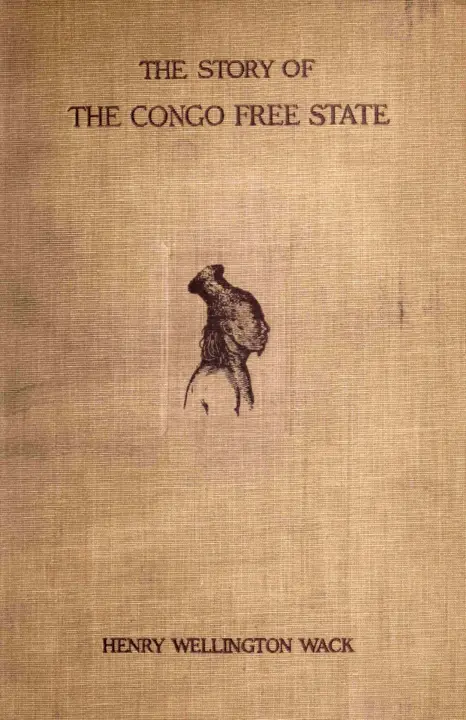
"The Story of the Congo Free State: Social, Political, and Economic Aspects of the Belgian System of Government in Central Africa" by Henry Wellington Wack is a historical account written in the early 20th century. This work delves into the intricate founding and operations of the Congo Free State, highlighting the perceived humanitarian motives behind King Leopold II's governance while addressing the ensuing controversies and criticisms. The book provides a comprehensive overview of the socio-political dynamics during this period of colonization. The opening of the book introduces Wack's motivations for writing, stating his aim to present a balanced and factual account of the Congo Free State amidst growing criticism of King Leopold II's regime. Wack recounts his observations of an organized campaign against the Congo government during his time in the UK and the United States, feeling an obligation to counter the negative narratives about the state. He describes gaining access to archival documents from King Leopold's administration to ensure the authenticity of his account, aiming to clarify the benevolent intentions attributed to the establishment of the Congo Free State. This introduction sets the stage for a detailed exploration of the complexities surrounding the administration of the area, tangled in both altruistic ambition and imperialistic pursuits.
Introduction adapted from the source catalogue; source summaries may be automatically generated.
Free to read · English · 200,810 words · No account needed
MAKE TIME FOR A GOOD BOOK
On by default. Untick to stop anonymous reading totals. Each page counts after 10 seconds in view. How this works.
Anonymous counting is on unless you have switched it off.
The above is an instance of those “punitive expeditions” to which the authorities are occasionally obliged to resort, as also of the native custom, which is not peculiar to the natives of the Congo, of moving into a neighbouring territory when they are seeking to evade the operation of the law. Whether in the process of collecting native taxes there have been cases in the Congo, amongst those mentioned by the Consul, in which the limits of a just and reasonable severity have been overstepped is a question of fact which investigation on the spot can alone ascertain, and instructions to this effect will be given to the authorities at Boma.
We are also unable to accept, on the information at present before us, the conclusions of the Report in regard to the conduct of the forest guards in the employ of the A. B. I. R. and La Lulonga Companies. These subordinate officers are represented by the Consul as being exclusively employed in “compelling by force the collection of india-rubber or the supplies which each factory needed.”[140] It is true that another explanation has been given—though not, indeed, by a native—according to which the business of these same forest guards is to see that the india-rubber is harvested after a reasonable fashion, and especially to prevent the natives from cutting the plants.[141] It is, indeed, well known that the law has made rigorous provision for preserving the rubber zones, has regulated the manner in which they are to be worked, and has made planting and replanting obligatory, with a view to avoiding the complete exhaustion of the rubber plant, which has occurred, for instance, in North-Eastern and Western Rhodesia.[142] A heavy responsibility in this direction lies on the companies and private persons engaged in developing the country, and it is obvious that they are bound to exercise the most careful superintendence over the way in which the harvest is collected. The object for which these forest guards are employed, therefore, may well be quite different from that alleged by the Consul; in any case, the complaints which have been made on this head will form a subject for inquiry in the Congo, as also the other remark of the Report that the manner in which these forest guards are armed is excessive, and liable to abuse. It is here to be observed that in calculating the number of these forest guards the Consul is obliged to rely on hypothesis,[143] and that he himself admits “I have no means of ascertaining the number of this class of armed men employed by the A. B. I. R. Company.”[144] He mentions that the gun of one of these men was marked on the butt “Depôt 2210.” But it is evident that such a mark can only have the significance which the Consul would like to see in it in so far as it can be proved that it refers to the numbering of the arms used in the Concession, and such is not the case, since this particular mark “Depôt” is not used either by the officials of the State or those of the Company, and it would seem that it is an old manufactory or store mark. In regard to the manner of arming the capitas, the Consul can hardly be ignorant that the higher authorities have always given great attention to the matter, which is, indeed, one surrounded with difficulties, seeing that while on the one hand it is necessary to consider the question of the personal protection of the capita, on the other the possibility of the arms in question being used for improper purposes must not be lost sight of. It is not only in the Circular of the 20th October, 1900, which the Consul has reprinted, that this question is dealt with; there is a whole collection of Circulars on the subject, among which may be mentioned those of the 12th March, 1897, 31st May and 28th November, 1900, and 30th April, 1901. Copies of them are annexed as proof of the fixed determination of the Government to see that the law relating to this question is strictly enforced (Annex V.). Yet, in spite of all these precautions, the Consul has ascertained that several capitas were not provided with permits (perhaps they might have been found at the head office), and that two of them were furnished with arms of precision.[145] But these few infractions of the rule are obviously not enough to prove the existence of a sort of vast armed organisation destined to strike terror into the natives. On the contrary, the Circular of the 7th September, 1903, printed in Annex VII. of the Consul’s Report, is a proof of the care taken by the Government that the regular black troops should always be under the control of European officers.[146]
Your reading position is saved on this browser. Take it to another device with a library code. Reading pages adapt to text, rather than matching a printed edition.
BEHIND THE BOOK
This eBook is for the use of anyone anywhere in the United States and most other parts of the world at no cost and with almost no restrictions whatsoever. You may copy it, give it away or re-use it under the terms of the Project Gutenberg License included with this eBook or online at www.gutenberg.org. If you are not located in the United States, you will have to check the laws of the country where you are located before using this eBook. Read the source licence.
The original source file, including credits and licence, is retained by this library. Request an original-format copy at no charge. Please include the book title and Project Gutenberg identifier #70280.
KEEP YOUR CURIOSITY GOING
Cécile Tormay

Moritz Busch
John L. Ransom
Frances Wright
Cécile Tormay

Mabel Potter Daggett