THE CLASSIC COLLECTION✦An outlaw’s diary: the CommuneCLASSIC FREE BOOKS
An outlaw’s diary: the Commune
Cécile Tormay
THE CLASSIC COLLECTION · 1905
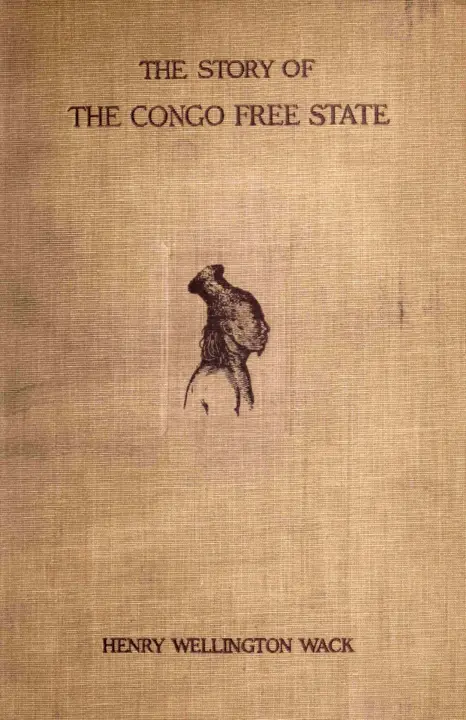
"The Story of the Congo Free State: Social, Political, and Economic Aspects of the Belgian System of Government in Central Africa" by Henry Wellington Wack is a historical account written in the early 20th century. This work delves into the intricate founding and operations of the Congo Free State, highlighting the perceived humanitarian motives behind King Leopold II's governance while addressing the ensuing controversies and criticisms. The book provides a comprehensive overview of the socio-political dynamics during this period of colonization. The opening of the book introduces Wack's motivations for writing, stating his aim to present a balanced and factual account of the Congo Free State amidst growing criticism of King Leopold II's regime. Wack recounts his observations of an organized campaign against the Congo government during his time in the UK and the United States, feeling an obligation to counter the negative narratives about the state. He describes gaining access to archival documents from King Leopold's administration to ensure the authenticity of his account, aiming to clarify the benevolent intentions attributed to the establishment of the Congo Free State. This introduction sets the stage for a detailed exploration of the complexities surrounding the administration of the area, tangled in both altruistic ambition and imperialistic pursuits.
Introduction adapted from the source catalogue; source summaries may be automatically generated.
Free to read · English · 200,810 words · No account needed
MAKE TIME FOR A GOOD BOOK
On by default. Untick to stop anonymous reading totals. Each page counts after 10 seconds in view. How this works.
Anonymous counting is on unless you have switched it off.
“In view of the fact that all the natives who brought these charges against Kalengo, whether before His Britannic Majesty’s Consul or Lieutenant Braeckman, on being summoned by us, the Acting Public Prosecutor, took to flight, and all efforts to find them have been fruitless; that this flight obviously throws doubt on the truth of their allegations;
“That all the witnesses whom we have questioned during the course of our inquiry declare ... that Epondo lost his left hand from the bite of a wild boar;
“That Epondo confirms these statements, and admits that he told a lie at the instigation of the natives of Bossunguma and Ikondja who hoped to escape collecting rubber through the intervention of His Britannic Majesty’s Consul, whom they considered to be very powerful;
“That the witnesses, almost all inhabitants of the accusing villages, admit that such was the object of their lie;
“That this version, apart from the unanimous declaration of the witnesses and the injured parties, is also the most plausible, seeing that every one knows that the natives dislike work in general and having to collect rubber, and are, moreover, ready to lie and accuse people falsely;
“That it is confirmed by the clearly stated opinion of the English missionary Armstrong, who considers the natives to be “capable of any plot to escape work, and especially the labour of collecting rubber”;
“That the innocence of Kalengo having been thoroughly established, there is no reason for proceeding against him;
“On the above-mentioned grounds, we, the Acting Public Prosecutor, declare that there are no grounds for proceeding against Kalengo, a forest guard in the service of the La Lulonga Company, for the offences mentioned in Articles 2, 5, 11, and 19 of the Penal Code.
“(Signed) BOSCO,
“Acting Public Prosecutor.
“MAMPOKO, October 9, 1903.”
We have dealt at length with the above case because it is considered by the Consul himself as being one of the utmost importance, and because he relies upon this single case for accepting as accurate all the other declarations made to him by natives.
“In the one case I could alone personally investigate,” he says,[98] “that of the boy II., I found this accusation proved on the spot without seemingly a shadow of doubt existing as to the guilt of the accused sentry.”
And further on:
“I had not time to do more than visit the one village of R——, and in that village I had only time to investigate the charge brought by II.”[99]
And elsewhere:
“It was obviously impossible that I should ... verify on the spot, as in the case of the boy, the statements they made. In that one case the truth of the charges preferred was amply demonstrated.”[100]
Your reading position is saved on this browser. Take it to another device with a library code. Reading pages adapt to text, rather than matching a printed edition.
BEHIND THE BOOK
This eBook is for the use of anyone anywhere in the United States and most other parts of the world at no cost and with almost no restrictions whatsoever. You may copy it, give it away or re-use it under the terms of the Project Gutenberg License included with this eBook or online at www.gutenberg.org. If you are not located in the United States, you will have to check the laws of the country where you are located before using this eBook. Read the source licence.
The original source file, including credits and licence, is retained by this library. Request an original-format copy at no charge. Please include the book title and Project Gutenberg identifier #70280.
KEEP YOUR CURIOSITY GOING
Cécile Tormay

Moritz Busch
John L. Ransom
Frances Wright
Cécile Tormay

Mabel Potter Daggett