THE CLASSIC COLLECTION✦An outlaw’s diary: the CommuneCLASSIC FREE BOOKS
An outlaw’s diary: the Commune
Cécile Tormay
THE CLASSIC COLLECTION · 1905
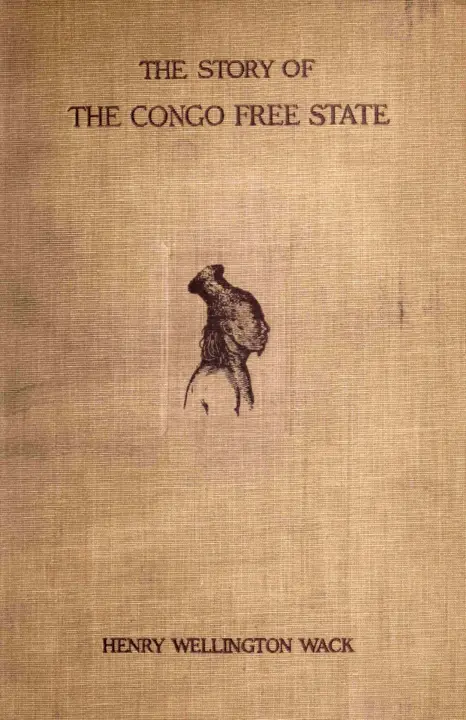
"The Story of the Congo Free State: Social, Political, and Economic Aspects of the Belgian System of Government in Central Africa" by Henry Wellington Wack is a historical account written in the early 20th century. This work delves into the intricate founding and operations of the Congo Free State, highlighting the perceived humanitarian motives behind King Leopold II's governance while addressing the ensuing controversies and criticisms. The book provides a comprehensive overview of the socio-political dynamics during this period of colonization. The opening of the book introduces Wack's motivations for writing, stating his aim to present a balanced and factual account of the Congo Free State amidst growing criticism of King Leopold II's regime. Wack recounts his observations of an organized campaign against the Congo government during his time in the UK and the United States, feeling an obligation to counter the negative narratives about the state. He describes gaining access to archival documents from King Leopold's administration to ensure the authenticity of his account, aiming to clarify the benevolent intentions attributed to the establishment of the Congo Free State. This introduction sets the stage for a detailed exploration of the complexities surrounding the administration of the area, tangled in both altruistic ambition and imperialistic pursuits.
Introduction adapted from the source catalogue; source summaries may be automatically generated.
Free to read · English · 200,810 words · No account needed
MAKE TIME FOR A GOOD BOOK
On by default. Untick to stop anonymous reading totals. Each page counts after 10 seconds in view. How this works.
Anonymous counting is on unless you have switched it off.
... It is, therefore, both manifest and notorious that the African tribes who inhabit the coast-line claimed by Portugal, between 5° 12´, and 8th degree south latitude, are in reality independent, and that the right acquired by Portugal from priority of discovery at the end of the fifteenth century has for a long time been suffered to lapse, owing to the Portuguese Government not having occupied the country so discovered. In the presence of these facts the undersigned must repeat the declaration of Her Majesty’s Government that the interests of commerce imperatively required it to maintain the right of unrestricted intercourse with that part of the coast of Western Africa extending between 5°, 12´, and the 8th degree of south latitude....
I have the honour to be, my lord, your lordship’s obedient, very
humble servant,
JOHN SLAGG,
President.
(From Earl Granville’s reply to Lord Mount Temple in the House of
Lords, March 9, 1883.)
... The labours of men like Livingstone, Stanley, and others have given us a knowledge of the physical character of Central Africa, and of the populations which inhabit it, showing that there are great capabilities for the development of trade, and of the civilising effects which are the result of commerce. The work of the philanthropic International Association, in which the King of the Belgians takes a great interest, the mission of M. de Brazza, the increasing trade in different degrees, of the English, the Portuguese, the French, the Germans, the Dutch, and the Belgians, on the Congo and its banks, are acting as a stimulus and afford grounds why no reasonable endeavours should be neglected to insure freedom of commerce and navigation, and to anticipate possible jealousies, which so easily check trade, and which, under the pretence of securing peculiar advantages to some, are really injurious to all....
[66] Heffter, par. 7, p. 14: “With respect to non-Christian states, which are not yet regularly admitted into the bosom of the European family, the application of the same law is entirely free, and founded upon a purely conventional reciprocity. Relations with them are formed according to the exigencies of policy and morality.”
[67] Droit de gens moderne, par. 20.
[68] Einleitung in das positive europaïsche Völkerrecht, Gottingen,
1796, p. 1.
[69] Droit des gens moderne, par. 21.
[70] Droit des gens moderne, par. 23.
[71] Einleitung in das positive europaïsche Völkerrecht, par. 31.
[72] Droit des gens moderne de l’Europe, par. 25.
[73] See Charles Calvo, Manuel du droit international public et privé, par. 49, p. 85; also his Droit international theorique et pratique, vol. i., p. 320.
[74] Précis du droit des gens, Paris, 1877, No. X., p. 23.
[75] See on this point, International Law, by Edward W. Hall, M.A., barrister-at-law, Oxford, 1880, par. 35, p. 100.
[76] Bancroft’s History of the United States, vol. i., pp. 342-350.
Your reading position is saved on this browser. Take it to another device with a library code. Reading pages adapt to text, rather than matching a printed edition.
BEHIND THE BOOK
This eBook is for the use of anyone anywhere in the United States and most other parts of the world at no cost and with almost no restrictions whatsoever. You may copy it, give it away or re-use it under the terms of the Project Gutenberg License included with this eBook or online at www.gutenberg.org. If you are not located in the United States, you will have to check the laws of the country where you are located before using this eBook. Read the source licence.
The original source file, including credits and licence, is retained by this library. Request an original-format copy at no charge. Please include the book title and Project Gutenberg identifier #70280.
KEEP YOUR CURIOSITY GOING
Cécile Tormay

Moritz Busch
John L. Ransom
Frances Wright
Cécile Tormay

Mabel Potter Daggett