THE CLASSIC COLLECTION✦An outlaw’s diary: the CommuneCLASSIC FREE BOOKS
An outlaw’s diary: the Commune
Cécile Tormay
THE CLASSIC COLLECTION · 1905
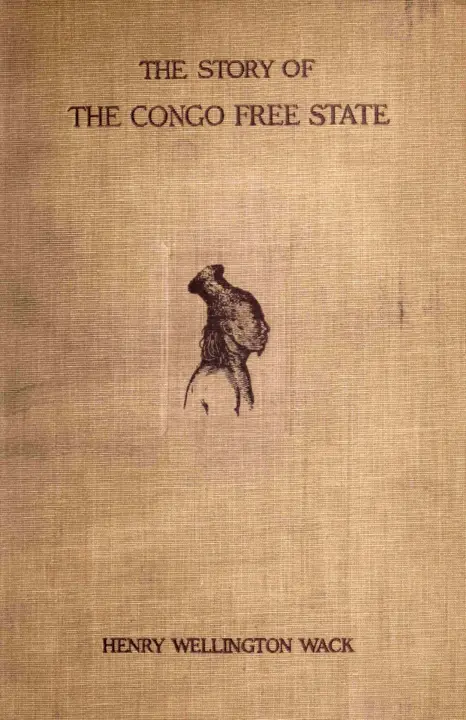
"The Story of the Congo Free State: Social, Political, and Economic Aspects of the Belgian System of Government in Central Africa" by Henry Wellington Wack is a historical account written in the early 20th century. This work delves into the intricate founding and operations of the Congo Free State, highlighting the perceived humanitarian motives behind King Leopold II's governance while addressing the ensuing controversies and criticisms. The book provides a comprehensive overview of the socio-political dynamics during this period of colonization. The opening of the book introduces Wack's motivations for writing, stating his aim to present a balanced and factual account of the Congo Free State amidst growing criticism of King Leopold II's regime. Wack recounts his observations of an organized campaign against the Congo government during his time in the UK and the United States, feeling an obligation to counter the negative narratives about the state. He describes gaining access to archival documents from King Leopold's administration to ensure the authenticity of his account, aiming to clarify the benevolent intentions attributed to the establishment of the Congo Free State. This introduction sets the stage for a detailed exploration of the complexities surrounding the administration of the area, tangled in both altruistic ambition and imperialistic pursuits.
Introduction adapted from the source catalogue; source summaries may be automatically generated.
Free to read · English · 200,810 words · No account needed
MAKE TIME FOR A GOOD BOOK
On by default. Untick to stop anonymous reading totals. Each page counts after 10 seconds in view. How this works.
Anonymous counting is on unless you have switched it off.
These ideas have prevailed with jurisconsults and publicists, have permeated their doctrines, and happily have guided their practices. Savage tribes, although living in very imperfect communities, as well as their territories, are no longer regarded to-day as things without a master, and belonging to the first occupier, that is, to the first comer stronger than themselves. Want of civilisation can no longer serve as a pretext to civilised nations to put them under subjection, or to control them by violence.
The law of nations is a science still imperfectly moulded or stereotyped, and especially is it a science which ought not to be, and cannot be, formulated a priori. Its fundamental principle is, no doubt, philosophy, but it has its positive base in the facts of history and authoritative doctrine.
What are the conditions to enable a state to exist, as such, and to
qualify it to treat?
“A certain number of men and families, who, being united, in a country, and having fixed their abode there, associate and submit themselves to a common chief, with the intention of providing for the safety of all, form a state,” says Klüber,[67] and to the same effect says G. F. Von Marten.[68]
“Sovereignty [continues Klüber[69]] in this extended sense consists in the ensemble of rights belonging to a state, independent as regards its object. It comprises, first, the entire independence of the state in the face of foreign nations; second, legitimate power of the Government or of the authority which the purpose of the state demands.”
The same author says[70]:
“Sovereignty is acquired by a state either at its foundation or when it separates itself legitimately from the dependence under which it was. To be valid, it does not need to be recognised or guaranteed by any foreign power whatever, provided its possession is not faulty (vicieuse).”
It is useless to multiply extracts. The principles summarised by Klüber on the sovereignty, the independence, and the equality of states, from the legal point of view, are equally professed by all authors. We will limit ourselves to the following: Heffter, par. 15, 16, pp. 32-34; par. 23, pp. 42, 43; par. 26, 27, pp. 47-49. Wheaton, vol. i., pp. 32, 43. Vattel, lib. i., chap. i., sec. 4. W. E. Hall, International Law, par. 2, 4, pp. 16-20; par. 6-8, pp. 34-37; par. 9, 10, pp. 39-42. Calvo, Droit international, par. 39-41, pp. 143-147.
Tribes inhabiting determined territory, represented by their chiefs, form, therefore, independent states.
Your reading position is saved on this browser. Take it to another device with a library code. Reading pages adapt to text, rather than matching a printed edition.
BEHIND THE BOOK
This eBook is for the use of anyone anywhere in the United States and most other parts of the world at no cost and with almost no restrictions whatsoever. You may copy it, give it away or re-use it under the terms of the Project Gutenberg License included with this eBook or online at www.gutenberg.org. If you are not located in the United States, you will have to check the laws of the country where you are located before using this eBook. Read the source licence.
The original source file, including credits and licence, is retained by this library. Request an original-format copy at no charge. Please include the book title and Project Gutenberg identifier #70280.
KEEP YOUR CURIOSITY GOING
Cécile Tormay

Moritz Busch
John L. Ransom
Frances Wright
Cécile Tormay

Mabel Potter Daggett