THE CLASSIC COLLECTION✦An outlaw’s diary: the CommuneCLASSIC FREE BOOKS
An outlaw’s diary: the Commune
Cécile Tormay
THE CLASSIC COLLECTION · 1905
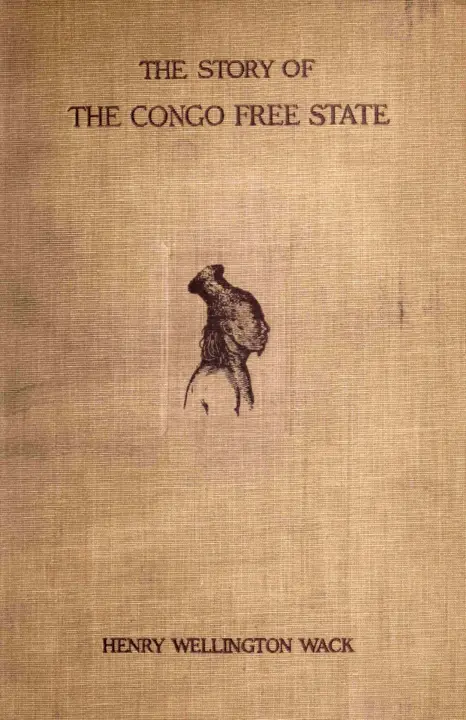
"The Story of the Congo Free State: Social, Political, and Economic Aspects of the Belgian System of Government in Central Africa" by Henry Wellington Wack is a historical account written in the early 20th century. This work delves into the intricate founding and operations of the Congo Free State, highlighting the perceived humanitarian motives behind King Leopold II's governance while addressing the ensuing controversies and criticisms. The book provides a comprehensive overview of the socio-political dynamics during this period of colonization. The opening of the book introduces Wack's motivations for writing, stating his aim to present a balanced and factual account of the Congo Free State amidst growing criticism of King Leopold II's regime. Wack recounts his observations of an organized campaign against the Congo government during his time in the UK and the United States, feeling an obligation to counter the negative narratives about the state. He describes gaining access to archival documents from King Leopold's administration to ensure the authenticity of his account, aiming to clarify the benevolent intentions attributed to the establishment of the Congo Free State. This introduction sets the stage for a detailed exploration of the complexities surrounding the administration of the area, tangled in both altruistic ambition and imperialistic pursuits.
Introduction adapted from the source catalogue; source summaries may be automatically generated.
Free to read · English · 200,810 words · No account needed
MAKE TIME FOR A GOOD BOOK
On by default. Untick to stop anonymous reading totals. Each page counts after 10 seconds in view. How this works.
Anonymous counting is on unless you have switched it off.
Treaties and Districts ceded: Vivi, Yellala, Sala Kidougo, Ganghila, Sadika Banzi, Ingha, N’Sanda, Kionzo, N’Bambi M’bongo, Talaballa, Issanghila, Ndambi M’bongo, M’Kelo, Fua na Sondy, Konimovo M’Bongo, Yanga, Kamsalou, M’binda, Sakali Boadi, Tchouma Ranga, Tombukile, Ngoma, N’Zadi, Tchincala, Banza ngombi, Manyanga, Bandanga, Banza, M’bou, Sello, Loufountchou, Kimbanda, Ngombi, Leopoldville, Kimpoko, Kinshassa, Kintambou, Souvoulou, M’bala, Woutimi (south), Woutimi (north), Msuata, Bolobo, Matchibouga, Tchissanga, Kitabi, Zientu, Mengo, Franktown, Goudou, Ganda, Fouindoukifout, Makouba Banga, Sitambe, Bieba, Moyby, Matalila, N’Zombo, Ganda Kobombo, Mabuka, Chinnifor, Mudenda, Nyange, Lubu, Zoa, N’Gewlla Chunikonbo, M’Gwella, Sangha, Charli, Mikasse, Moulangas, Mackanga, Ludema, Ungoonga, Buconzo, Matenda, Tanga Dibiconga, Licarnga, Bumianga, Chibanda N’Kuni, Kingi, Anversland, Buda, Towha, Gideemba, Sushwangi.
March 26, 1884—Ordered to be printed
Mr. Morgan, from the Committee on Foreign Relations, submitted the
following
(To accompany S. Res. 68 and Mis. Doc. 59)
The Committee on Foreign Relations, to whom were referred Senate Mis. Doc. No. 59 and Senate Joint Resolution 68, relating to the occupation of the Congo Country, in Africa, have had the same under consideration, and report a substitute for the same, and recommend its passage.
The President, in his annual message to this Congress, expresses the sentiment of the people of the United States on the subject of our future relations with the inhabitants of the valley of the Congo, in Africa.
Our attitude towards that country is exceptional, and our interest in its people is greatly enhanced by the fact that more than one-tenth of our population is descended from the negro races in Africa.
The people of the United States, with but little assistance from the Government, have established a free republic in Liberia, with a constitution modelled after our own, and under the control of the negro race. Its area is 14,300 square miles; its population is about 1,200,000 souls; its commerce is valuable; its government is successful, and its people are prosperous.
The necessity for a negro colony in Liberia was suggested by the fact that slaves found in vessels captured for violations of the slave-trade laws and treaties were required to be returned to Africa when that was practicable, and it was impossible, and it would have been useless and cruel, to send them back to the localities where they were first enslaved. Humanity prompted certain private citizens of the United States to organise the American Colonisation Society in aid of the return of captured slaves to Africa and to find a congenial asylum and home for negroes who were emancipated in the United States.
Your reading position is saved on this browser. Take it to another device with a library code. Reading pages adapt to text, rather than matching a printed edition.
BEHIND THE BOOK
This eBook is for the use of anyone anywhere in the United States and most other parts of the world at no cost and with almost no restrictions whatsoever. You may copy it, give it away or re-use it under the terms of the Project Gutenberg License included with this eBook or online at www.gutenberg.org. If you are not located in the United States, you will have to check the laws of the country where you are located before using this eBook. Read the source licence.
The original source file, including credits and licence, is retained by this library. Request an original-format copy at no charge. Please include the book title and Project Gutenberg identifier #70280.
KEEP YOUR CURIOSITY GOING
Cécile Tormay

Moritz Busch
John L. Ransom
Frances Wright
Cécile Tormay

Mabel Potter Daggett