THE CLASSIC COLLECTION✦An outlaw’s diary: the CommuneCLASSIC FREE BOOKS
An outlaw’s diary: the Commune
Cécile Tormay
THE CLASSIC COLLECTION · 1905
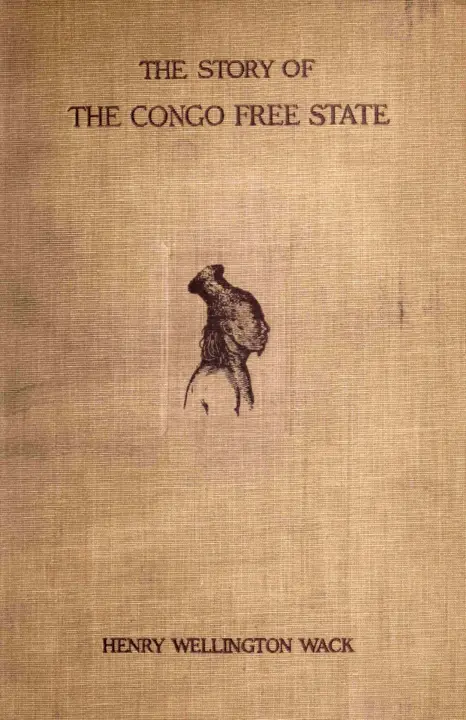
"The Story of the Congo Free State: Social, Political, and Economic Aspects of the Belgian System of Government in Central Africa" by Henry Wellington Wack is a historical account written in the early 20th century. This work delves into the intricate founding and operations of the Congo Free State, highlighting the perceived humanitarian motives behind King Leopold II's governance while addressing the ensuing controversies and criticisms. The book provides a comprehensive overview of the socio-political dynamics during this period of colonization. The opening of the book introduces Wack's motivations for writing, stating his aim to present a balanced and factual account of the Congo Free State amidst growing criticism of King Leopold II's regime. Wack recounts his observations of an organized campaign against the Congo government during his time in the UK and the United States, feeling an obligation to counter the negative narratives about the state. He describes gaining access to archival documents from King Leopold's administration to ensure the authenticity of his account, aiming to clarify the benevolent intentions attributed to the establishment of the Congo Free State. This introduction sets the stage for a detailed exploration of the complexities surrounding the administration of the area, tangled in both altruistic ambition and imperialistic pursuits.
Introduction adapted from the source catalogue; source summaries may be automatically generated.
Free to read · English · 200,810 words · No account needed
MAKE TIME FOR A GOOD BOOK
On by default. Untick to stop anonymous reading totals. Each page counts after 10 seconds in view. How this works.
Anonymous counting is on unless you have switched it off.
During the palabre held at Manyanga the 12th of August, 1882, it is agreed between the members hereinafter designated of the Expedition of the Upper Congo:
Dr. Edward Pechuel Loesche, chief of the Expedition; Capt. Edmund Hanssens, chief of the division of Leopold-Manyanga; Lieut. Arthur Niles, chief of Manyanga; First Lieut. Orban, deputy chief of Manyanga; Edward Ceris, assistant of Pechuel, representing the Comité of the Upper Congo;
and the chiefs hereafter named of Manyanga—
Makito, of Kintamba;
Nkosi, of Kintamba;
Filankuni, of Kintamba;
Maluka, of Kintamba;
Kuakala, of Kintamba;
Mankatula, of Kintamba-Kimbuku;
Luamba, of Kintamba;
In the name of their subjects.
ARTICLE I.—Hereafter the territory of Manyanga, heretofore belonging to the chiefs before cited, situated north and south of the river, and bounded on the west by the stream Luseto, and by the stream Msua Mungua on the east, shall be the sole property of the Comité d’Études of the Upper Congo.
ART. II.—The chiefs and their subjects, their villages, their plantations, their domestic animals, and fishing apparatus shall be placed under the protection of the Expedition.
ART. III.—In all political affairs of the populations of the district protected and acquired, their quarrels, differences, elections of chiefs, shall be submitted to the decision of the member of the Expedition who shall be present at the station.
If the people of Manyanga shall be attacked by neighbouring tribes, the Expedition shall defend their women and children and their property by all the means in their power. If the Expedition shall be attacked by another tribe, the men shall be bound to defend the station.
ART. IV.—In consequence of the rights acquired and protection afforded, no stranger whatsoever can build or open a road or carry on commerce in the territory of Manyanga.
ART. V.—At the request of the chief of the station, the chief of the district shall put at his disposition the necessary number of labourers, men or women, for the work of the station and the service of the caravans.
ART. VI.—Besides the sum stipulated, which has been remitted in goods to the assembled chiefs in payment for their territories, and for which they have given a receipt, the chiefs shall receive monthly presents on condition that they remain true friends and voluntarily perform the services asked of them.
ART. VII.—The first chief of Manyanga, Makito, residing at Kintamba, receives the flag of the Expedition, which he will raise in his village in sign of the protection exercised by the Expedition.
[Here follow the crosses and signatures.]
29th of April, 1883.
Your reading position is saved on this browser. Take it to another device with a library code. Reading pages adapt to text, rather than matching a printed edition.
BEHIND THE BOOK
This eBook is for the use of anyone anywhere in the United States and most other parts of the world at no cost and with almost no restrictions whatsoever. You may copy it, give it away or re-use it under the terms of the Project Gutenberg License included with this eBook or online at www.gutenberg.org. If you are not located in the United States, you will have to check the laws of the country where you are located before using this eBook. Read the source licence.
The original source file, including credits and licence, is retained by this library. Request an original-format copy at no charge. Please include the book title and Project Gutenberg identifier #70280.
KEEP YOUR CURIOSITY GOING
Cécile Tormay

Moritz Busch
John L. Ransom
Frances Wright
Cécile Tormay

Mabel Potter Daggett