THE CLASSIC COLLECTION✦An outlaw’s diary: the CommuneCLASSIC FREE BOOKS
An outlaw’s diary: the Commune
Cécile Tormay
THE CLASSIC COLLECTION · 1905
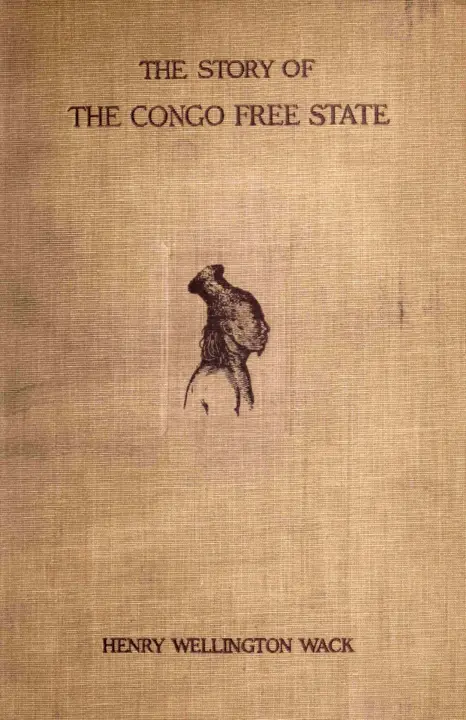
"The Story of the Congo Free State: Social, Political, and Economic Aspects of the Belgian System of Government in Central Africa" by Henry Wellington Wack is a historical account written in the early 20th century. This work delves into the intricate founding and operations of the Congo Free State, highlighting the perceived humanitarian motives behind King Leopold II's governance while addressing the ensuing controversies and criticisms. The book provides a comprehensive overview of the socio-political dynamics during this period of colonization. The opening of the book introduces Wack's motivations for writing, stating his aim to present a balanced and factual account of the Congo Free State amidst growing criticism of King Leopold II's regime. Wack recounts his observations of an organized campaign against the Congo government during his time in the UK and the United States, feeling an obligation to counter the negative narratives about the state. He describes gaining access to archival documents from King Leopold's administration to ensure the authenticity of his account, aiming to clarify the benevolent intentions attributed to the establishment of the Congo Free State. This introduction sets the stage for a detailed exploration of the complexities surrounding the administration of the area, tangled in both altruistic ambition and imperialistic pursuits.
Introduction adapted from the source catalogue; source summaries may be automatically generated.
Free to read · English · 200,810 words · No account needed
MAKE TIME FOR A GOOD BOOK
On by default. Untick to stop anonymous reading totals. Each page counts after 10 seconds in view. How this works.
Anonymous counting is on unless you have switched it off.
In the documents you will find the passages to which I have now come, which are contained in this: “Flogging a native by order of De Keyser. At Basoko, the headquarters station of the district of the Aruwimi, where the notorious De Keyser [meaning thereby the Plaintiff], of hand-cutting fame, was in command, women were daily flogged for the most trivial offences, etc.” This, you will notice, is stated to have occurred in November, 1897. It was a time when Captain Burrows himself was not in the Congo State at all, but you will hear from Captain De Keyser that there is not the smallest ground for the allegation of cruelty that was made against him. It is true that a chief was taken down in the steamer on which Captain De Keyser was, but the suggestion that he was treated in that barbarous fashion is entirely untrue. The next passage which has to be read is with regard to Basoko, and as to Basoko, what I have told you is that at Basoko, for fourteen days only, Captain Burrows was at the place where Captain De Keyser had his command. “At Basoko, the headquarters station of the district of the Aruwimi, women used to be flogged almost daily for the most trivial offences. In one case five women were beaten for daring to go to a village a short way up the river to buy food without having previously informed the commandant.” Thus, after six and a half years, during which no breath of accusation has been made with regard to these matters by Captain Burrows, there comes this extraordinary attack: “De Keyser, of hand-cutting fame”; “De Keyser’s massacre”; De Keyser described as walking about the station where he was employed with his gun, and shooting with reckless cruelty at the natives—De Keyser, who is accused of taking a man prisoner and practically roasting him on the stack-pipe of the boat as he is going down the river. There was not only that, but the imputation of habitually flogging women at this place. These odious and appalling accusations, the echo of which follows a man through his whole life, are made against him, and made against him by whom? By a man who had been in the service of the Congo State itself, who, in the year 1897, as I have shown, made himself the defender of the administration of the Congo State, and declared in an article which was put in the interview which he had with L’Étoile Belge, that there was no foundation whatever for the accusations which had been made against the Belgian officers, and he was able to say so because he knew the truth. He attacked Captain Salusbury and disposed of that. This man, who in 1897 was taking that attitude, who afterwards leaves the service of the Congo State and feels himself aggrieved because he has not been so highly paid, because he has not had such distinction conferred upon him as others have had conferred,—he, seven years afterwards, enters into this—is it too much to call it a conspiracy? They are grave accusations, accusations which, if there had been any semblance of truth in them, or if there had been any honest reason for their being made, would have been made long before in different circumstances and in a different way. At the time when they are eventually made, they are made in a way which will not do public service, but will put money in Captain Burrows’ pocket and into the pockets of the publishers who are joining with him in publishing. It is perfectly impossible to misunderstand the correspondence with Commandant Liebrechts. If this had been an honest thing, honestly done by Captain Burrows in the performance of any public duty, do you think there would have been a going first to a publisher and then a letter from that publisher inviting the Belgian Government to consider what it would be worth their while to pay for the suppression of this book? There is no question as to the meaning of that letter. What do you think was the object of putting a crowd of names into the revise, some of which afterwards disappeared? Why, it was because the object was the illegitimate object of endeavouring to bring pressure upon the Belgian Government and to induce them to pay money to buy up this book. It was not for any public object at all, but because the mention of these names, showing that there was a list of persons formerly or at present in the Congo Company’s service against whom accusations might be brought, might make it worth the while of the Belgian Government to prevent a great scandal by procuring the suppression of this book. But the Congo Free State or the Belgian Government was not going to buy up the book in order to suppress it or in order to prevent its publication. As one of the witnesses, Commandant Liebrechts, said, “For the first time we found that we should be in a position to deal with specific statements.” It is all very well for people to be spreading over the world—I do not care whether they are in reports or interviews or anything else—general statements with regard to things that are done in the Congo Free State. Commandant Liebrechts says there had been complaints: “I had heard on more than one occasion of complaints being made as to conduct in the Congo. Whenever it was known, and found out, it was dealt with and it was punished. These allegations about maladministration of the Congo Free State had been spread about from time to time by interviews, suggestions, newspaper reports, and the like, but here we saw that there was an opportunity for the men who were personally attacked to come and vindicate themselves from the charges which were made against them.” Therefore, there was no attempt to buy this book, and the conspirators were disappointed who had been preparing this revise, and cramming it with an enormous amount of material which it was thought would frighten the Belgian Government from permitting it to be dealt with. I do not know what the price might have been which they would have asked for, but that there was a price they were thinking of you will see in a minute or two. What did they expect to get for it? We do not know. But we do know this, that there were two principals in the matter, and there was by way of being a subordinate. I speak of Mr. Leigh as a subordinate. I do not suggest in the least that he was associated with the attempt that was being made in Belgium, but what we know is, that he was doing a minor part of the work, that the manuscript was said to have been Captain Burrows’ manuscript, that the materials for this book were supposed to be Captain Burrows’ materials, and Captain Burrows therefore was the principal person, and Messrs. Everett had lent their name and their work, and were acting with Captain Burrows, and no doubt expected a very large share of the money that would be got from the Belgian Government. If Mr. Leigh, in his modest inconspicuous, and irresponsible position, was to get £500 for helping in putting together the materials for this book, what do you think that Captain Burrows and Mr. Everett thought that they might be able to extort from the fear of the Belgian Government that this thing would go all over the world?
Your reading position is saved on this browser. Take it to another device with a library code. Reading pages adapt to text, rather than matching a printed edition.
BEHIND THE BOOK
This eBook is for the use of anyone anywhere in the United States and most other parts of the world at no cost and with almost no restrictions whatsoever. You may copy it, give it away or re-use it under the terms of the Project Gutenberg License included with this eBook or online at www.gutenberg.org. If you are not located in the United States, you will have to check the laws of the country where you are located before using this eBook. Read the source licence.
The original source file, including credits and licence, is retained by this library. Request an original-format copy at no charge. Please include the book title and Project Gutenberg identifier #70280.
KEEP YOUR CURIOSITY GOING
Cécile Tormay

Moritz Busch
John L. Ransom
Frances Wright
Cécile Tormay

Mabel Potter Daggett