THE CLASSIC COLLECTION✦An outlaw’s diary: the CommuneCLASSIC FREE BOOKS
An outlaw’s diary: the Commune
Cécile Tormay
THE CLASSIC COLLECTION · 1905
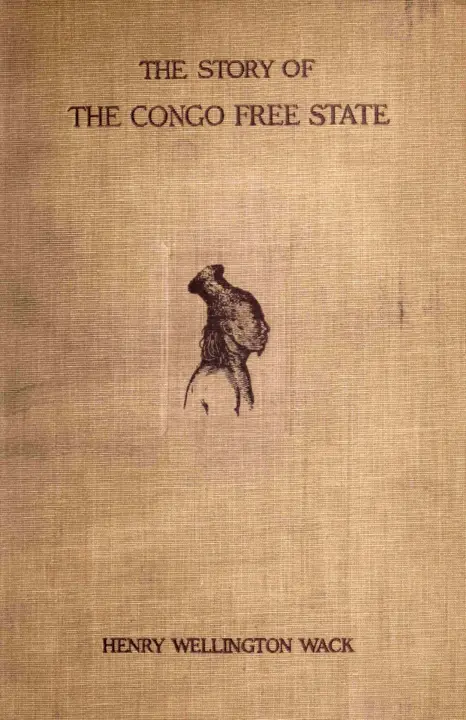
"The Story of the Congo Free State: Social, Political, and Economic Aspects of the Belgian System of Government in Central Africa" by Henry Wellington Wack is a historical account written in the early 20th century. This work delves into the intricate founding and operations of the Congo Free State, highlighting the perceived humanitarian motives behind King Leopold II's governance while addressing the ensuing controversies and criticisms. The book provides a comprehensive overview of the socio-political dynamics during this period of colonization. The opening of the book introduces Wack's motivations for writing, stating his aim to present a balanced and factual account of the Congo Free State amidst growing criticism of King Leopold II's regime. Wack recounts his observations of an organized campaign against the Congo government during his time in the UK and the United States, feeling an obligation to counter the negative narratives about the state. He describes gaining access to archival documents from King Leopold's administration to ensure the authenticity of his account, aiming to clarify the benevolent intentions attributed to the establishment of the Congo Free State. This introduction sets the stage for a detailed exploration of the complexities surrounding the administration of the area, tangled in both altruistic ambition and imperialistic pursuits.
Introduction adapted from the source catalogue; source summaries may be automatically generated.
Free to read · English · 200,810 words · No account needed
MAKE TIME FOR A GOOD BOOK
On by default. Untick to stop anonymous reading totals. Each page counts after 10 seconds in view. How this works.
Anonymous counting is on unless you have switched it off.
Gentlemen of the Jury, we have come now to January, 1902. There was an end of the negotiations, so to speak, between Captain Burrows and Commandant Liebrechts, and Captain Burrows found himself, to use his own expression, free to do as he chose.
During the early part of 1902, he began writing some things, and an advertisement appeared in the Wide World Magazine in which an announcement was made of “Life in the Congo Free State,” a series of articles which were to be published, written by Captain Guy Burrows. The advertisement reads: “Captain Burrows was recently in the employ of the Congo Free State Government, and in his official capacity has seen much of the misgovernment which prevails in that little-known territory. He has a good deal to say about the atrocities which have taken place in connection with the rubber industry, and the sworn testimony and photographic evidence which he holds will no doubt create a sensation in high circles. Captain Burrows’ articles in the Wide World will be illustrated with his own snapshots.” That was the advertisement that appeared. Why there was a mention of atrocities in it appears presently. The articles appeared in April, May, and June, in the Wide World. They are articles with regard to the Congo State, and there is not one syllable in them about any atrocity of any sort or kind. That is what he was doing in the early part or middle of the year 1902. In the latter part of this year an agreement was entered into between Captain Burrows as author, and E. A. Everett & Co., London, as publishers, for the publication of a work then entitled The Congo Free State. This was signed on November 17, 1902. On the 24th of November, 1902, this letter was written by Everett & Co. to the Secretary of State of the Congo Free State at Brussels: “Sir, we have recently concluded a contract with Captain Guy Burrows, well known to the English public as having served some years in the service [sic] of the Congo Free State, to publish an important work on the Congo Free State. The information contained in this book is of such a startling character, and contains so many revelations concerning the administration of the Congo Free State of Belgium, that we thought it well to advise you of its publication beforehand, and at the same time to enquire if we may have the honour of offering you the Belgian rights for publication in your country. We are arranging for simultaneous publication in Italy, Germany, France, Norway, and Sweden, and the United States of America. We need hardly say that the book will be well got up, and illustrated with a very large number of valuable and unique photographs taken on the spot by the author and others. If you wish to move in the matter of this offer, we should be glad if you would let us know at your earliest convenience....” That, written on the 24th to the Secretary General, was followed by a curious communication sent to the editor of the Independance Belge at Brussels, on the 27th November by Everett & Co.: “Dear Sir, We send you the advance notice of the enclosed valuable work, and trust you may find room to insert the same in your literary column. If you have an agent here, we could, perhaps, tell him of some of the marvellous revelations in this book, but which we could not put on paper.” On the 8th of December Commandant Liebrechts wrote to him: “I have received your letter of the 24th ulto., in which you inform me that you have agreed with Captain Guy Burrows for the publication of a work on the Congo State, and you offer me the rights of publication in Belgium. Before replying to your proposition I wish to see the manuscript or a proof of the book.” On the 9th Messrs. Everett & Co. wrote: “We are in receipt of your letter of the 8th inst., for which we have to thank you, and we much regret that we are unable to comply with your request in sending you the MSS. of this book, as we are under a contract with the author not to part with the MSS. under any consideration whatever. We should, however, be happy to send you the title and contents so as to give you some idea of the nature and scope of the book, and we should also be willing to show the MSS. to any of your accredited agents in London (by appointment). The MSS., signed documents, and photographs are of such vital importance that we should not care to put them through the post, for fear of loss. We understand that the author, Captain Burrows, was lately a District Commissioner for the Congo Free State, and is a Chevalier of the Order of the Lion of Belgium.” In consequence of their offer to show those documents to anybody who was sent over, Mr. Bigwood came over to this country, and he saw Messrs. Everett. He met them and had a conversation with them, and then there was shown to him the document of which this is a copy, called “The Curse of Central Africa.” It was the same document as had already been sent to the Independance Belge. At the end of chapter xxv., the very last chapter, there is this: “A Belgian’s treatment of a native chief—more bestial than human—goes unpunished.” That was afterwards applied to Captain De Keyser. Then comes a list of illustrations. At the end there is a list of Belgian officers and officials who, the author alleged, are responsible for the atrocities mentioned in this book; and a series of names included the name of Captain De Keyser.
Your reading position is saved on this browser. Take it to another device with a library code. Reading pages adapt to text, rather than matching a printed edition.
BEHIND THE BOOK
This eBook is for the use of anyone anywhere in the United States and most other parts of the world at no cost and with almost no restrictions whatsoever. You may copy it, give it away or re-use it under the terms of the Project Gutenberg License included with this eBook or online at www.gutenberg.org. If you are not located in the United States, you will have to check the laws of the country where you are located before using this eBook. Read the source licence.
The original source file, including credits and licence, is retained by this library. Request an original-format copy at no charge. Please include the book title and Project Gutenberg identifier #70280.
KEEP YOUR CURIOSITY GOING
Cécile Tormay

Moritz Busch
John L. Ransom
Frances Wright
Cécile Tormay

Mabel Potter Daggett