THE CLASSIC COLLECTION✦Paris and Its StoryCLASSIC FREE BOOKS
Paris and Its Story
Thomas Okey
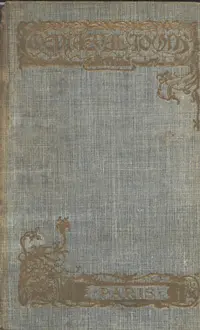
THE CLASSIC COLLECTION · 1906
"The Story of Paris" by Thomas Okey is a historical account written in the early 20th century. The book provides a comprehensive exploration of the evolution of Paris, from its origins in Gallo-Roman times through significant historical events that shaped the city and France. The narrative is infused with rich detail, bringing to life the cultural, political, and social dynamics that have defined Paris. The opening of this work sets the stage by discussing the ancient history of Paris, tracing its roots to the Gallo-Roman civilization. Okey introduces readers to the geographical advantages that made the settlement of Lutetia—a precursor to Paris—an essential hub for commerce and military strategy during the Roman conquest. The narrative transitions into the significance of the city during the early Christian era, including the legends of notable figures like St. Genevieve and the eventual establishment of Clovis as a major monarch. With references to the city’s legendary past and early Christian influence, the opening lays a foundation for understanding Paris's unique character and historical importance.
Introduction adapted from the source catalogue; source summaries may be automatically generated.
Free to read · English · 126,286 words · No account needed
MAKE TIME FOR A GOOD BOOK
On by default. Untick to stop anonymous reading totals. Each page counts after 10 seconds in view. How this works.
Anonymous counting is on unless you have switched it off.
Etienne Marcel--the English Invasions--The
Maillotins--Murder of the Duke of Orleans--Armagnacs and
Burgundians
With the three sons of Philip who successively became kings of France, the direct line of the Capetian dynasty ends: with the accession of Philip VI. in 1328, the house of Valois opens the sad century of the English wars--a period of humiliation and defeat, of rebellious and treacherous princes, civil strife, famine and plague, illumined only by the heroism of a peasant-girl, who, when king and nobles were sunk in shameless apathy or sullen despair, saved France from utter extinction. Pope after pope sought to make peace, but in vain: Hui sont en paix, demain en guerre ("to-day peace, to-morrow war") was the normal and inevitable situation until the English had wholly subjected France or the French driven the English to their natural boundary of the Channel.
Never since the days of Charlemagne had the French Monarchy been so powerful as when the Valois came to the throne: in less than a generation Crecy and Poitiers had made the English name a terror in France, and a French king, John the Good, was led captive to England. In 1346 Paris saw her faubourgs wasted, the palace of St. Germain and the fortress of Montjoie St. Denis[82] spoiled and burnt, and the English camp fires nightly glowing. Once again, as in the dark Norman times, she rose and determined to save herself. Etienne Marcel, the leader of the movement, whose statue now stands near the site of the Maison aux Piliers was a rich merchant prince of old family, a member of the great drapers' guild, and elected Provost of the Marchands d'Eau in 1355. He it was who bought for 2400 florins of gold the Maison des Dauphins, better known as the Maison aux Piliers or Hotel de Ville, on the Place de Greve and transferred thither the seat of the civic administration from the old Parloir aux Bourgeois, enclosed in the south wall of Paris. The Dauphin,[83] who had assumed the title of Lieutenant-General, convoked the States-General at Paris, but he was forced by Marcel and his party to grant some urgent reforms, and a Committee of National Defence was organised by the trade guilds and the provost, who became virtually dictator of Paris. Marcel's rule was however stained by the butchery of the Marshal of Champagne and the Duke of Normandy before the very eyes of the Dauphin in the palace of the Cite, who, horrified, fled to Compiegne to rally the nobles. During the ensuing anarchy the poor, dumb, starving serfs of France, in their hopeless misery and despair, rose in insurrection and swept like a flame over the land. Froissart, who writes from the distorted stories told him by the seigneurs, has woefully exaggerated the atrocities of the Jacquerie."[84] There was much arson and pillage, but barely thirty of the nobles are known to have perished. Of the merciless vengeance taken by the seigneurs there is ample confirmation: the wretched peasants were easily out-manoeuvred and killed like rats by the mail-clad nobles and their men-at-arms. Meanwhile the Dauphin was marching on Paris: Marcel seized the Louvre and set 3000 workmen to fortify the city. In less than a year the greater part of the northern walls, with gates, bastilles and fosses, was completed--the greatest feat, says Froissart, the provost ever achieved. A citizen army was raised, whose hoods of red and blue, the colours of Paris, distinguished them from the royal sympathisers. Marcel turned for support to the Jacques, and on their suppression essayed to win over Charles of Navarre. On 30th November 1357, Charles stood on the royal stage on the walls of the abbey of St. Germain des Pres, whence the kings of France were wont to witness the judicial combats in the Pres aux Clercs, and addressed an assembly of 10,000 citizens. Moult longuement he sermonised, says the Grandes Chroniques, so that dinner was over in Paris before he finished. After yet another harangue at the Maison aux Piliers on 15th June 1358, he was acclaimed by people with "Navarre! Navarre!" and elected the Captain of Paris. An obscure period of plot and counterplot followed which culminated in the ruin of Marcel and his followers. Froissart accuses the provost of a treacherous intent to open the gates of St. Honore and of St. Antoine to Navarre's English mercenaries at midnight on 31st July, and gives a dramatic story of the discovery of the plot and slaying of the provost by Jean Maillart, his friend and associate. We supplement his version from the Chronicle of St. Denis: on the last day of July, Marcel and his suite repaired to the bastille of St. Denis and ordered the guards to surrender the keys to Charles of Navarre's treasurer. Maillart, who had been won over by the Dauphin, had preceded him. The guard refused to hand over the keys and an angry altercation ensued between the former friends. Maillart mounted horse, seized a royal banner, sped to the Halles and to the cry of "Montjoie St. Denis!" called the royal partizans to arms: a similar appeal was made by Pepin des Essards. Meanwhile Marcel had reached the bastille of St. Antoine, where he was met by Maillart and the royal partizans. "Stephen, Stephen!" cried the latter, "what dost thou here at this hour?" "I am here," answered the provost, "to guard the city whose governor I am." "Par Dieu," retorted Maillart, "thou art here for no good," and turning to his followers, said, "Behold the keys which he holds to the destruction of the city." Each gave the other the lie. "Good people," protested Marcel, "why would you do me ill? All I wrought was for your good as well as mine." Maillart for answer smote at him, crying, "Traitor, a mort, a mort!" There was a stubborn fight, and Maillart felled the provost by a blow with his axe; six of the provost's companions were slain, and the remainder haled to prison. Next day the Dauphin entered Paris in triumph, and the popular leaders were executed on the Place de Greve. The provost's body was dragged to the court of the church of St. Catherine du Val des Ecoliers, naked, that it might be seen of all, on the very spot where the bodies of the Marshal of Champagne and the Duke of Normandy had been flung six months before: after a long exposure it was cast into the Seine. All the reforms were revoked by the king, but the remembrance of the time when the merchants and people of Paris had dared to speak to their royal lord face to face of justice and good government, was never obliterated.
Your reading position is saved on this browser. Take it to another device with a library code. Reading pages adapt to text, rather than matching a printed edition.
BEHIND THE BOOK
This eBook is for the use of anyone anywhere in the United States and most other parts of the world at no cost and with almost no restrictions whatsoever. You may copy it, give it away or re-use it under the terms of the Project Gutenberg License included with this eBook or online at www.gutenberg.org. If you are not located in the United States, you will have to check the laws of the country where you are located before using this eBook. Read the source licence.
The original source file, including credits and licence, is retained by this library. Request an original-format copy at no charge. Please include the book title and Project Gutenberg identifier #26450.
KEEP YOUR CURIOSITY GOING
Wilfrid Scawen Blunt
Wilfrid Scawen Blunt

E. W. (Edgar Watson) Howe
Cécile Tormay

Moritz Busch
John L. Ransom