THE CLASSIC COLLECTION✦Paris and Its StoryCLASSIC FREE BOOKS
Paris and Its Story
Thomas Okey
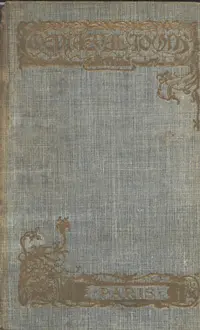
THE CLASSIC COLLECTION · 1906
"The Story of Paris" by Thomas Okey is a historical account written in the early 20th century. The book provides a comprehensive exploration of the evolution of Paris, from its origins in Gallo-Roman times through significant historical events that shaped the city and France. The narrative is infused with rich detail, bringing to life the cultural, political, and social dynamics that have defined Paris. The opening of this work sets the stage by discussing the ancient history of Paris, tracing its roots to the Gallo-Roman civilization. Okey introduces readers to the geographical advantages that made the settlement of Lutetia—a precursor to Paris—an essential hub for commerce and military strategy during the Roman conquest. The narrative transitions into the significance of the city during the early Christian era, including the legends of notable figures like St. Genevieve and the eventual establishment of Clovis as a major monarch. With references to the city’s legendary past and early Christian influence, the opening lays a foundation for understanding Paris's unique character and historical importance.
Introduction adapted from the source catalogue; source summaries may be automatically generated.
Free to read · English · 126,286 words · No account needed
MAKE TIME FOR A GOOD BOOK
On by default. Untick to stop anonymous reading totals. Each page counts after 10 seconds in view. How this works.
Anonymous counting is on unless you have switched it off.
[Footnote 34: It must be admitted, however, that the poet's uncouth diction is anything but Virgilian.]
Abbo now pauses to bewail the state of France: no lord to rule her, everywhere devastation wrought by fire and sword, God's people paralysed at the advancing phalanx of death, Paris alone tranquil, erect and steadfast in the midst of all their thunderbolts, polis ut regina micans omnes super urbes, a queenly city resplendent above all towns. The second attack begins with redoubled fury. After battering the walls of the north tower, monstrous machines on sixteen wheels are advanced and the besiegers strive to fill the fosse. Trees, shrubs, slaughtered cattle, wounded horses, the very captives slain before the eyes of the besieged, are cast in to fill the void. Bishop Gozlin brings down the Norman chieftain, who had butchered the prisoners, by a well-aimed arrow: his body, too, is flung into the fosse. The enemy cover the plain with their swords and the river with their bucklers; fireships are loosed against the bridge. In the city women fly to the sanctuaries; they roll their hair in the dust, beat their breasts and rend their faces, calling on St. Germain: "Blessed St. Germain, succour thy servants." The fighters on the walls take up the cry; Bishop Gozlin invokes the Virgin, Mother of the Redeemer, Star of the Sea, bright above all other stars, to save them from the cruel Danes.
On February 6th, 886, a sudden flood sweeps away the Petit Pont, and its tower, with twelve defenders, is isolated. With shouts of triumph the Northmen cross the river and surround it. The twelve refuse to yield, and fire is brought. The warriors (a touching detail) fearing lest their falcons be stifled, cut them loose. There is but one vessel wherewith to quench the flames and that soon drops from their hands; the little band rush forth; they set their backs against the ruins of the bridge, their faces to their foes and fought a hopeless fight. The walls of the city are lined with their kinsmen and friends impotent to help; the enemies of God, doomed one day to dine at Pluto's cauldron, press upon them; they fight till Phoebus sinks to the depths of the sea, so great is the courage of despair. The survivors are promised their lives if they will yield, they are disarmed, then treacherously slain, and their souls fly to heaven. But one, Herve, of noble bearing and of great beauty, deemed a prince, is spared for ransom. With thunderous voice he refuses to bargain his life for gold, falls unarmed on his foes and is cut to pieces. "These things," writes Monk Abbo, "I saw with mine eyes," and he gives the names of the heroic twelve who went to receive the palm of martyrdom: Ermenfroi, Herve, Herland, Ouacre, Hervi, Arnaud, Seuil, Jobert, Hardre, Guy, Aimard, Gossuin. Their names are inscribed on a little marble tablet over the Place du Petit Pont,[35] near the spot where they fell. Hail to the brave who across twelve centuries thrill our hearts to-day! They were examplars to the land; they helped to make France by their desperate courage and noble self-sacrifice, and to win for Paris the hegemony of her cities. The city is at length revictualled by Henry of Saxony and again the Parisians are left to themselves. On the sixth of April Bishop Gozlin, their shield, their two-edged axe, whose shaft and bow were terrible, passes to the Lord. On May 12th, Eudes steals away to implore further help from the emperor, and as soon as he sees the imperialists on the march returns and hews his way into Paris, to share the terrors of the siege. Henry the Saxon again appears, but is ambushed and slain and his army melts away. Yet again Paris is abandoned by her emperor and seeks help of heaven, for the waters are low, the besiegers are able to get footing on the island, set fire to the gates and attack the walls. The body of St. Genevieve, which had been transferred to the Cite, is borne about, and at night the ghostly figure of St. Germain is seen by the sentinels to pass along the ramparts, sprinkling them with holy water and promising salvation. Charles the Fat, the Lord's anointed, now appears with a multitude of a hundred tongues and encamps on Montmartre, but while the Parisians are preparing to second him in crushing their foes, they learn that the cowardly emperor has bought them off with a bribe and permission to winter in Burgundy. The Parisians, however, refused to give them passage and by an unparalleled feat of engineering they transported their ships overland for two miles and set sail again above the city. Next year, as Gozlin's successor, Bishop Antheric, was sitting at table with Abbot Ebles, a fearful messenger brought news that the acephali[36] were again in sight. Forgetting the repast, the two churchmen seized their weapons, called the city to arms, hastened to the ramparts, and the abbot slew their pilot with a well-aimed shaft. The Normans are terrified, and at length a treaty is made with their leaders, who promised not to ravage the Marne and some even entered Paris. But the ill-disciplined hordes were hard to hold in and bands of brigands, as soon as the ramparts were passed, began to plunder and slew a score of Christian men. The Parisians in their indignation sought out and--Hurrah! cries Abbo--found five hundred Normans in the city and slew them. But the bishop protected those that took refuge in his palace, instead of killing them as he ought to have done--potius concidere debens. For a time Paris had respite; cowardly Charles the Fat was deposed, and in 887 Count Eudes was acclaimed king of France after his return from Aquitaine, whose duke he had brought to subjection. He counselled a gathering of all the peoples outside Paris to make common cause against the Normans, and Abbo saw the proud Franks march in with heads erect, the skilful and polished Aquitaines, the Burgundians too prone to flight. But nought availed: the motley host soon melted away.
Your reading position is saved on this browser. Take it to another device with a library code. Reading pages adapt to text, rather than matching a printed edition.
BEHIND THE BOOK
This eBook is for the use of anyone anywhere in the United States and most other parts of the world at no cost and with almost no restrictions whatsoever. You may copy it, give it away or re-use it under the terms of the Project Gutenberg License included with this eBook or online at www.gutenberg.org. If you are not located in the United States, you will have to check the laws of the country where you are located before using this eBook. Read the source licence.
The original source file, including credits and licence, is retained by this library. Request an original-format copy at no charge. Please include the book title and Project Gutenberg identifier #26450.
KEEP YOUR CURIOSITY GOING
Wilfrid Scawen Blunt
Wilfrid Scawen Blunt

E. W. (Edgar Watson) Howe
Cécile Tormay

Moritz Busch
John L. Ransom