THE CLASSIC COLLECTION✦Paris and Its StoryCLASSIC FREE BOOKS
Paris and Its Story
Thomas Okey
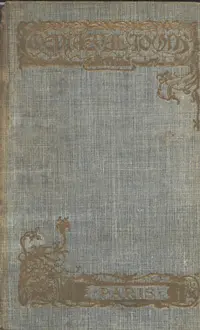
THE CLASSIC COLLECTION · 1906
"The Story of Paris" by Thomas Okey is a historical account written in the early 20th century. The book provides a comprehensive exploration of the evolution of Paris, from its origins in Gallo-Roman times through significant historical events that shaped the city and France. The narrative is infused with rich detail, bringing to life the cultural, political, and social dynamics that have defined Paris. The opening of this work sets the stage by discussing the ancient history of Paris, tracing its roots to the Gallo-Roman civilization. Okey introduces readers to the geographical advantages that made the settlement of Lutetia—a precursor to Paris—an essential hub for commerce and military strategy during the Roman conquest. The narrative transitions into the significance of the city during the early Christian era, including the legends of notable figures like St. Genevieve and the eventual establishment of Clovis as a major monarch. With references to the city’s legendary past and early Christian influence, the opening lays a foundation for understanding Paris's unique character and historical importance.
Introduction adapted from the source catalogue; source summaries may be automatically generated.
Free to read · English · 126,286 words · No account needed
MAKE TIME FOR A GOOD BOOK
On by default. Untick to stop anonymous reading totals. Each page counts after 10 seconds in view. How this works.
Anonymous counting is on unless you have switched it off.
A curious early fifteenth-century rhyme is associated with this charnel-house. One morning, two bourgeoises of Paris, the wife of Adam de la Gonesse and her niece, went abroad to have a little flutter and eat two sous' worth of tripe in a new inn. On their way they met Dame Tifaigne, the milliner, who recommended the tavern of the "Maillez," where the wine was excellent. Thither they went and fared not wisely but too well. When fifteen sous had already been spent, they determined to make a day of it, and ordered roast goose with hot cakes. After further drinking, gauffres, cheese, peeled almonds, pears, spices and walnuts were called for, and the feast ended in songs. When the bad quarter of an hour came, their sum of sous proving inadequate, they parted with some of their finery to meet the score, and at midnight left the inn dancing and singing--
"Amours au vireli m'en vois."
The streets of Paris, however, at midnight were unsafe even for sober ladies, and these soon fell among thieves, were stripped of the rest of their clothing, then taken up for dead by the watch and flung into the mortuary in the cemetery of the Innocents; but, to the terror of the gravedigger, were found lying outside the next morning, singing--
"Druin, Druin, ou es allez?
Apporte trois harens salez
Et un pot de vin du plus fort."
Pursuing our way N. by the Rue St. Denis we pass (R.) the restored fourteenth-century church of St. Leu and St. Gilles, and on our L. two old reliefs of St. Peter and St. Andrew embedded in the corner of a modern house at the corner of the Rue St. Denis and the Rue Etienne Marcel. Near by stood the Painters' Gate of the Philip Augustus wall. We turn L. by the latter street and soon sight on our R. the massive machicolated Tower of Jean sans Peur (p. 133). It was at the Hotel de Bourgogne that the Confreres de la Passion de Jesus Christ were performing in the sixteenth century, and where in 1548 they were forbidden by royal decree to play the mystery of the Passion any longer, and limited to profane, decent and lawful plays. From 1566-1576 the comediens of the Hotel de Bourgogne continued their performances, which at length became so gross that complaints were made of the blasphemes et impudicites enacted there, and that not a farce was played that was not orde, sale et vilaine. Repeated ordinances were levelled at the actors, aiming at the purification of the stage and preventing words of double entente. It was here, too, that the most exalted and noble masterpieces of Corneille and Racine--Le Cid, Andromaque and Phedre--were first enacted. We turn R. by the Rue Francaise, again R. by the Rue Tiquetonne, then L. by the curious Rue Dussoubs to the new Rue Reamur, where on the opposite side, to the L., is the narrow passage between Nos. 100 and 102 that leads to the once notorious Cour des Miracles, so vividly portrayed in Victor Hugo's Notre Dame. It was here that Jean Du Barry and his mistress, Jeanne Vaubernier, kept a gambling-hell. Jeanne, subsequently married to Jean's brother, was the daughter of a monk and formerly known as Mademoiselle Lange. She it was who became the famous Du Barry, mistress of Louis XV. Here also dwelt Hebert, editor of the foul Pere Duchesne. Both perished on the scaffold. We cross the Cour and leave by the Rue Damiette (L.), turn again L. and descend the Rue du Nil to the Rue des Petits Carreaux. This we follow to the L., and continue down it and the busy and picturesque Rue Montorgeuil, noting (L.) No. 78, the curious house at the sign of the Rocher de Cancale. 72-64 were part of the roomy sixteenth-century posting house of the Golden Compasses, and have quaint reliefs carved on their facades. We may enter at 64, the spacious old coaching yard, still used by market carts and waggons. The courtyard on the opposite side, No. 47, was the office of the old sedan-chair porters. We continue to descend, and at length sight the tall apse of the majestic church of St. Eustache, which towers over the Halles. Begun in 1532 by Pierre Lemercier, it was not completed until more than a century later by Jacques Lemercier, architect of the extended Louvre. We enter, by the side portal, the spacious, lofty and beautiful interior with its not unpleasing mingling of Gothic and Renaissance architecture. It was here that in 1587 a friar reciting the story of the execution of Mary Queen of Scots roused his hearers to such a tempest of passion that the whole congregation melted into a common paroxysm of tears. Here, too, on 4th April 1791 was celebrated, amid the gloom and sorrow of a whole people, the funeral of their "Sovereign-Man," Mirabeau. Not till five o'clock did the league-long procession reach the church in solemn silence, interrupted only by the sound of muffled drums and wailing music, "new clangour of trombones and metallic dirge-voice, amid the infinite hum of men." After the funeral oration a discharge of arms brought down some of the plaster from the vaultings of the church, and the body went--the first tenant--to the Pantheon of the heroes of the Fatherland. We leave by the west portal--a monstrous pseudo-classic pile, added 1775-1778. To our L. is the vast area once covered by a congeries of picturesque Halles and streets:--the Halle aux Draps; the Marche des Herborists, with their mysterious stores of simples and healing herbs and leeches; the potato and onion markets; the butter and cheese markets; the fish market; the queer old Rue de la Tonnellerie, under whose shabby porticoes, sellers of rags, old clothes, iron and furniture, crowded against the bread market; the Marche des Prouvaires, beloved of thrifty housewives--all swallowed up by the vast modern structure of iron and glass, known as Les Halles. The Halle au Ble, or corn market, last to disappear, was built on the site of the Hotel de la Reine which Catherine de' Medici had erected when frightened from the Tuileries by her astrologer Ruggieri. The site is now occupied by the Bourse de Commerce, but one curious decorated and channelled column, which conceals a stairway used by Catherine and her Italian familiar when they ascended to the roof to consult the stars, has been preserved.
Your reading position is saved on this browser. Take it to another device with a library code. Reading pages adapt to text, rather than matching a printed edition.
BEHIND THE BOOK
This eBook is for the use of anyone anywhere in the United States and most other parts of the world at no cost and with almost no restrictions whatsoever. You may copy it, give it away or re-use it under the terms of the Project Gutenberg License included with this eBook or online at www.gutenberg.org. If you are not located in the United States, you will have to check the laws of the country where you are located before using this eBook. Read the source licence.
The original source file, including credits and licence, is retained by this library. Request an original-format copy at no charge. Please include the book title and Project Gutenberg identifier #26450.
KEEP YOUR CURIOSITY GOING
Wilfrid Scawen Blunt
Wilfrid Scawen Blunt

E. W. (Edgar Watson) Howe
Cécile Tormay

Moritz Busch
John L. Ransom