THE CLASSIC COLLECTION✦Paris and Its StoryCLASSIC FREE BOOKS
Paris and Its Story
Thomas Okey
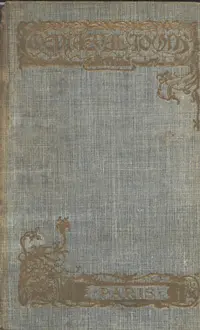
THE CLASSIC COLLECTION · 1906
"The Story of Paris" by Thomas Okey is a historical account written in the early 20th century. The book provides a comprehensive exploration of the evolution of Paris, from its origins in Gallo-Roman times through significant historical events that shaped the city and France. The narrative is infused with rich detail, bringing to life the cultural, political, and social dynamics that have defined Paris. The opening of this work sets the stage by discussing the ancient history of Paris, tracing its roots to the Gallo-Roman civilization. Okey introduces readers to the geographical advantages that made the settlement of Lutetia—a precursor to Paris—an essential hub for commerce and military strategy during the Roman conquest. The narrative transitions into the significance of the city during the early Christian era, including the legends of notable figures like St. Genevieve and the eventual establishment of Clovis as a major monarch. With references to the city’s legendary past and early Christian influence, the opening lays a foundation for understanding Paris's unique character and historical importance.
Introduction adapted from the source catalogue; source summaries may be automatically generated.
Free to read · English · 126,286 words · No account needed
MAKE TIME FOR A GOOD BOOK
On by default. Untick to stop anonymous reading totals. Each page counts after 10 seconds in view. How this works.
Anonymous counting is on unless you have switched it off.
[Footnote 226: All demolished (1911).]
[Footnote 227: Under process of demolition (1911).]
The Ville (N. of the Rue St. Antoine)--Tour St. Jacques--Rue St. Martin--St. Merri--Rue de Venise--Les Billettes--Hotels du Soubise,[228] de Hollande, de Rohan[229]--Musee Carnavalet[230]--Place Royale--Musee Victor Hugo[230]--Hotel de Sully.
[Footnote 228: Open Sundays, 12-3.]
[Footnote 229: Open Thursdays at 2 o'clock by a permit from the
Director.]
[Footnote 230: Open daily (except Monday) 10-4 or 5 (1 fr.). Thursdays and Sundays free. Closed till 12.30 Tuesdays.]
Two parallel historic roads named of St. Martin and of St. Denis cut northwards through the mass of houses that now crowd the Marais: the latter, the Grande Chaussee de Monseigneur St. Denis, to the shrine of the martyred saint of Lutetia, the former, the great Roman Street which led to the provinces of the north.
We set forth northwards from the Place du Chatelet, at the foot of the Pont au Change, where stood the massive pile of the Grande Chatelet, originally built to defend the bridge from the Norman pirates as the Petit Chatelet was to defend the Petit Pont. It subsequently became the official seat and prison of the Provost of Paris, where he held his criminal court and organised the City Watch, and was demolished in 1802. Below this festered an irregular maze of slums, the aggregation of seven centuries, the most fetid, insanitary and criminal quarter of Paris, known as the Vallee de Misere, which only disappeared in 1855. On our R. soars the beautiful flamboyant Gothic tower, all that remains of the great church of St. Jacques de la Boucherie. This fine monument was saved by the good sense of the architect Giraud who, when the church was sold to the housebreakers during the Revolution, inserted a clause in the warrant exempting the tower from demolition. It was afterwards used as a lead foundry and twice narrowly escaped destruction by fire. Purchased by the Ville, it seemed safe at last, but again it was threatened in 1853 by the prolongation of the Rue de Rivoli: luckily, however, the new street just passed by on the north. The statue of Pascal under the vaulting reminds the traveller that the great thinker conducted some barometrical experiments on the summit, and the statues of the patron saints of craftsmen in the niches, that under its shadow the industrial arts were practised. We ascend the Rue St. Martin from the N.E. corner of the Square, and on our R. find the late Gothic church of St. Merri, built on the site of the seventh-century Chapel of St. Pierre, where Odo Falconarius, one of the defenders of Paris in the siege of 886, is known to have been buried. We enter for the sake of the beautiful sixteenth-century glass in the choir and a curious old painting of the same epoch in the first chapel beyond the entrance to the sacristy, Ste. Genevieve and her Flock, with a view of Paris in the background. We continue to ascend the street, noting No. 122, an old fountain and some reliefs, and soon reach, R. and L., the quaint and narrow mediaeval Rue de Venise, formerly the Ruelle des Usuriers, home of the Law speculators (p. 242). At No. 27, L. of the Rue St. Martin and corner of the Rue Quincampoix, is the old inn of the Epee de Bois (now a l'Arrivee de Venise), where Prince de Hoorn and two other nobles assassinated and robbed a banker in open day and were broken alive on the wheel in the Place de Greve. Mirabeau and L. Racine, with other wits are said to have met there and Mazarin granted letters patent to a company of dancing masters who taught there, under the direction of the Roi des Violins: from these modest beginnings grew the National Academy of Dancing. We return E. along the Rue de Venise and pass to its end; then cross obliquely to the R. and continue E., along the Rue Simon le Franc, traversing the Rue du Temple, to the Rue des Blancs Manteaux. This we follow still eastward to its intersection with Rue des Archives. Turning down this street to the R. we cross, and at Nos. 24 or 26 enter the fifteenth-century cloister (restored) of the monastery of the Billettes, founded at the end of the thirteenth century to commemorate the miracle of the Sacred Host, which had defied the efforts of Jonathan, the Jew to destroy it by steel, fire and boiling water. The chapel, built on the site of the Jew's house in 1294, was rebuilt in 1754, and is now a Protestant church. The miraculous Host was preserved as late as the early eighteenth century in St. Jean en Greve, and carried annually in procession on the octave of Corpus Christi. We return northwards along the Rue des Archives, and reach at the corner of the Rue des Francs Bourgeois the fine pseudo-classic Hotel de Soubise, now the National Archives, erected in 1704 for the Princesse de Soubise on the site of the old Hotel of the Constable of France, Olivier de Clisson, where Charles VI., after his terrible vengeance on the revolted burgesses, agreed to remit further punishment, and where the Duke of Clarence established himself at the time of the English occupation. It became later (1553) the fortress of the Guises and rivalled the Louvre in strength and splendour. The picturesque Gothic portal (restored) of the old Hotel de Clisson still exists higher up the Rue des Archives. The lavishly decorated Hotel de Soubise, entered from the Rue des Francs Bourgeois, in which are exhibited historical documents and other objects of profound interest, though bereft of much of its former splendour is well worth a visit. The sumptuous chambers contain much characteristic and well-preserved decorative work by Boucher, Natoire, Carle Vanloo and others.[231] Opposite the hotel and between Nos. 59 and 57 may be seen a portion of a tower, repaired in brick, of the old Philip Augustus wall, and in the courtyard of the Mont de Piete (No. 55) the line of the wall is traced: a nearer view of the tower may be obtained from the courtyard to the R.
Your reading position is saved on this browser. Take it to another device with a library code. Reading pages adapt to text, rather than matching a printed edition.
BEHIND THE BOOK
This eBook is for the use of anyone anywhere in the United States and most other parts of the world at no cost and with almost no restrictions whatsoever. You may copy it, give it away or re-use it under the terms of the Project Gutenberg License included with this eBook or online at www.gutenberg.org. If you are not located in the United States, you will have to check the laws of the country where you are located before using this eBook. Read the source licence.
The original source file, including credits and licence, is retained by this library. Request an original-format copy at no charge. Please include the book title and Project Gutenberg identifier #26450.
KEEP YOUR CURIOSITY GOING
Wilfrid Scawen Blunt
Wilfrid Scawen Blunt

E. W. (Edgar Watson) Howe
Cécile Tormay

Moritz Busch
John L. Ransom