THE CLASSIC COLLECTION✦Paris and Its StoryCLASSIC FREE BOOKS
Paris and Its Story
Thomas Okey
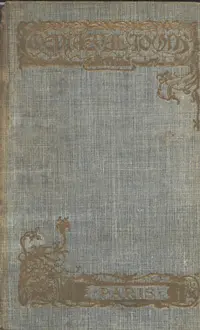
THE CLASSIC COLLECTION · 1906
"The Story of Paris" by Thomas Okey is a historical account written in the early 20th century. The book provides a comprehensive exploration of the evolution of Paris, from its origins in Gallo-Roman times through significant historical events that shaped the city and France. The narrative is infused with rich detail, bringing to life the cultural, political, and social dynamics that have defined Paris. The opening of this work sets the stage by discussing the ancient history of Paris, tracing its roots to the Gallo-Roman civilization. Okey introduces readers to the geographical advantages that made the settlement of Lutetia—a precursor to Paris—an essential hub for commerce and military strategy during the Roman conquest. The narrative transitions into the significance of the city during the early Christian era, including the legends of notable figures like St. Genevieve and the eventual establishment of Clovis as a major monarch. With references to the city’s legendary past and early Christian influence, the opening lays a foundation for understanding Paris's unique character and historical importance.
Introduction adapted from the source catalogue; source summaries may be automatically generated.
Free to read · English · 126,286 words · No account needed
MAKE TIME FOR A GOOD BOOK
On by default. Untick to stop anonymous reading totals. Each page counts after 10 seconds in view. How this works.
Anonymous counting is on unless you have switched it off.
[Footnote 209: The picture subsequently found its way to the apartments of Louis XVI., and followed him from Versailles to Paris. The vacillation of this ill-fated monarch towards his advisers, says Michelet, was much influenced by a fixed idea that Charles I. lost his head for having made war on his people, and that James II. lost his crown for having abandoned them.]
Enclosing this hall are a series of Cabinets XX.-XXXVI., containing a large and important collection of works by the Netherland painters. We ascend, turn R., and enter Room XX., which is devoted to Franz Hals and contains 2386 and 2387, superb portraits of Nicholas van Beresteyn and his wife; and 2388 the same, with their Family; 2383, Descartes. Room XXI., Cuyp, after whom the room is named, is seen in four typical works, 2341-2344; 2415 and 2414 are excellent Dutch Interiors by Peter de Hoogh. In Room XXII. reigns the jovial Van Steen: two characteristic paintings are here shown; 2578, Feast in an Inn, and 2580, Evil Company. 2587 is a masterly Terburg, The Amorous Soldier, and 2459 a similar subject treated by Gabriel Metsu. Room XXIII. is assigned to Van Goyen, and Room XXIV. to Adrian van Ostade, Hals' pupil. In the latter room, 2495, the so-called Family of the Painter, and 2496, The Schoolmaster, stand forth pre-eminent. 2509 and 2510, Travellers Halting and a Winter Scene, are by Adrian's brother, Isaac. Room XXV. is rich in landscapes by Ruysdael, of which 2557, The Forest, and 2558, Tempest near the Dykes of Holland, are masterpieces: 2588, The Music Lesson, is a fine Terburg. Room XXVI., dedicated to Hobbema, contains his fine landscapes: 2403, A Forest Scene, and 2404, The Mill, and another exquisite Terburg, 2589, The Concert. Some typical Paul Potters also hang here. We proceed round to Room XXIX., which holds a precious collection of Van Eycks and Memlings. 1986 is an exquisite little masterpiece painted by Jean with infinite patience and care, Virgin and Child and Donor. Fine Memlings are:--2024, The Baptist; 2025, The Magdalen; 2027, Marriage of St. Catherine; 2028, a Triptych--the Resurrection, St. Sebastian and the Ascension Here too are hung, 1957, Gerard Dow's Wedding at Cana; 2196, Van der Weyden's Descent from the Cross, and some excellent Flemish school paintings. Room XXX. is the Quentin Matsys Room: 2029 is the well-known Banker and his Wife, of which many replicas exist; 2030, by the same artist, Virgin and Child. The fine example of the fifteenth-century painter, known as the Master of the Death of Mary, 2738, hangs in this room. This profoundly reverent and sincere work consists of: a central panel, Descent from the Cross, below which is The Last Supper, and above, in the lunette, St. Francis receiving the Stigmata; Friar Leo is seen asleep against a rock. A remarkable work by Peter Brueghel, The Blind leading the Blind, will also arrest attention. Room XXXI., named after Anthony More, contains a miscellaneous collection, among which the artist's portraits (2481A) of Edward VI. of England, and of (2479) a Spanish Dwarf, and Peter Brueghel's Village, 1918, and a Country Dance, 1918B, are of chief interest. The Teniers Room, XXXII., shows some excellent works by the younger master: 2155, St. Peter denies his Lord; 2156, The Prodigal Son; 2157, Works of Charity; 2158, Temptation of St. Anthony. We next pass to three rooms in which are hung works by Netherland artists, formerly in the La Caze collection, among which, in Room XXXIII., are 2579, Van Steen's, Family Repast; and 2454, Nicholas Maes', Grace before Meat. In XXXIV. are two well-known works: 1916, Adrian Brouwer's, The Smoker; and 2384, The Gipsy, a masterpiece by Franz Hals. A fine Vandyck, 1979, Head of an Old Man; Rubens' portrait of Marie de' Medici, 2109; and a sketch in oils, 2122, Elevation of the Cross, are in Room XXXV. We return to the Salle Vandyck and the Grande Galerie, along which we retrace our steps and enter, at its further end, the
Your reading position is saved on this browser. Take it to another device with a library code. Reading pages adapt to text, rather than matching a printed edition.
BEHIND THE BOOK
This eBook is for the use of anyone anywhere in the United States and most other parts of the world at no cost and with almost no restrictions whatsoever. You may copy it, give it away or re-use it under the terms of the Project Gutenberg License included with this eBook or online at www.gutenberg.org. If you are not located in the United States, you will have to check the laws of the country where you are located before using this eBook. Read the source licence.
The original source file, including credits and licence, is retained by this library. Request an original-format copy at no charge. Please include the book title and Project Gutenberg identifier #26450.
KEEP YOUR CURIOSITY GOING
Wilfrid Scawen Blunt
Wilfrid Scawen Blunt

E. W. (Edgar Watson) Howe
Cécile Tormay

Moritz Busch
John L. Ransom