THE CLASSIC COLLECTION✦Paris and Its StoryCLASSIC FREE BOOKS
Paris and Its Story
Thomas Okey
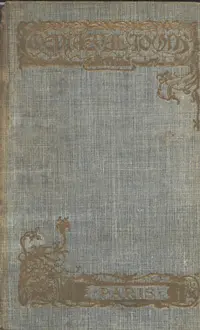
THE CLASSIC COLLECTION · 1906
"The Story of Paris" by Thomas Okey is a historical account written in the early 20th century. The book provides a comprehensive exploration of the evolution of Paris, from its origins in Gallo-Roman times through significant historical events that shaped the city and France. The narrative is infused with rich detail, bringing to life the cultural, political, and social dynamics that have defined Paris. The opening of this work sets the stage by discussing the ancient history of Paris, tracing its roots to the Gallo-Roman civilization. Okey introduces readers to the geographical advantages that made the settlement of Lutetia—a precursor to Paris—an essential hub for commerce and military strategy during the Roman conquest. The narrative transitions into the significance of the city during the early Christian era, including the legends of notable figures like St. Genevieve and the eventual establishment of Clovis as a major monarch. With references to the city’s legendary past and early Christian influence, the opening lays a foundation for understanding Paris's unique character and historical importance.
Introduction adapted from the source catalogue; source summaries may be automatically generated.
Free to read · English · 126,286 words · No account needed
MAKE TIME FOR A GOOD BOOK
On by default. Untick to stop anonymous reading totals. Each page counts after 10 seconds in view. How this works.
Anonymous counting is on unless you have switched it off.
The fourteenth-century Madonnas in these mediaeval rooms possess a peculiar, intimate character and mark the change of feeling which came over French artists of the time. The impersonal, unemotional and regal bearing of the thirteenth-century figures give way to a more naturalistic treatment. The Virgin's impassive features soften; they become more human; she turns to her child with a maternal smile (which later becomes conventionalised into a simper), or permits a caress. In Room X. are: 889, 890, two fifteenth-century statues, admirable and living portraitures of Charles V. and his queen, from the church of the Celestins, whose preservation is due to the excellent Lenoir--statues famous in their day, and mentioned by the contemporary Christine de Pisan as moult proprement faits; 892, a fifteenth-century statue in wood of St. John; 943, Eve, a fine example of the German school of the sixteenth century, painted and gilded; other works are temporarily placed in this room. We return to Room III., noting in passing (Room IX.) 875, a small thirteenth-century relief of St. Matthew writing his Gospel at the dictation of an angel.
The stubborn individuality of French sculptors who long resisted the encroaching advance of the Italian renaissance is well seen in Room III. by the works of Michel Colombe (? 1430-1570), after whom this hall is named. The exquisite relief on the L. wall, St. George and the Dragon, displays an art touched indeed by the new Italian life, but impressed with an intimate charm and spirit which are eminently French. The Virgin and Child, 143, and the tombs of Roberte Legendre and her husband have also been ascribed to this truly great master. The fine effigies of Philippe de Comines the annalist, and his wife, 126, are wrought in the traditional French manner, the decorations on the tomb being obviously by another and Italianised artist; the shells on the shields denote that the knight had made the pilgrimage to St. James of Compostella in Galicia. Beneath is the tomb of their daughter, Jeanne. The sixteenth-century Virgin of Ecouen, 144, is typically French in treatment; the large relief on the L. wall from the old church of St. Jacques de la Boucherie, 199, is an excellent example of transitional Franco-Italian sculpture; and the half-reclining bronze effigy of Prince Carpi from the great Franciscan church (the Cordeliers) of Paris, is wholly Italian in style. The gruesome figure, La Mort, in the embrasure of a window, from the old cemetery of Les Innocents, and a fine bust, 173, of John of Alesso, will also be noted. We pass to Room IV., dominated by the most eminent sculptor of the French renaissance, Jean Goujon (? 1520-1567), whose famous Diana and the Stag, from a fountain at Diana of Poitiers' chateau of Anet, marks the increasing influence of the Italians, and especially of Cellini, who were attracted to Fontainebleau by the patronage of Francis I. A more intimate example, however, of Goujon's genius will be seen in the beautiful bas-reliefs on the L. wall, Tritons and Nereids, from the Fontaine des Innocents, executed 1548-49, and those (R. wall) from the old choir screen of St. Germain l'Auxerrois in 1544, happily rescued from clerical vandals.[200] For sheer loveliness of form and poetry of outline, those reliefs are unsurpassed by any contemporary artist. His younger contemporary, Germain Pilon (1535-1590), is well represented in this room. The Three Graces (trois graces decentes), which Catherine de' Medici commissioned him to execute, to sustain an urn containing the heart of her royal husband at the Celestins, is an early work; the admirable kneeling bronze effigy, 257, of Rene of Birague, a maturer production. The four cardinal virtues in oak were executed for the abbey church of St. Genevieve: they were originally covered with stucco and held on high the saint's reliquary. The too lachrymose Madonna in terra-cotta, 256, already ushers in the decadence. Portrait busts of Henry II., 227, the vicious Henry III., 253, and of the feeble Charles IX., 252, are also to be noted. Pilon's pupil, Bart. Prieur (d. 1611), is responsible for the monument to the Constable Anne of Montmorency and Madeleine of Savoy, in the recess of a window, and the three bronze statues placed by the opposite wall. With Pierre Biard the elder, who about 1600 executed the elaborate choir-screen of St. Etienne du Mont, the French renaissance sinks to a not inglorious end. His Fame (224, bis), in Room III. and a copy of Giov. da Bologna's Mercury, made for the Duke of Epernon's tomb, hints at the impending pomposity and extravagance of the later French pseudo-classic school. Room V. affords an instructive comparison with some productions of the Italian renaissance. 332, Florentine school, is a charming bust of Beatrice d'Este, the girl bride of Lodovico il Moro, autocrat of Milan. The fine bas-relief, 386, Julius Caesar, was formerly ascribed to Donatello; 389, Virgin and Child, is also a school work; 403, the Child-Baptist, is a good example of Mino da Fiesole's sweet and tender style, as are some Madonna bas-reliefs in the embrasure of the first window. Here, too, and in the next window, are some well-wrought early renaissance reliefs in bronze (scenes in the life of a physician), by a Paduan artist, from the tomb of a celebrated professor of Verona, Marc'antonio della Torre. In the lunette of the R. wall is embedded Cellini's Nymph of Fontainebleau, and on either side of the noble portal from the Palazzo Stanza at Cremona, which forms the entrance to Room VI., stand the divine Michael Angelo's so-called Two Slaves, actually fettered Virtues intended for the unfortunate tomb of Pope Julius II. These priceless statues, given to Francis I. by Robert Strozzi, subsequently found their way to Richelieu's garden, and during the later years of the monarchy lay neglected in a stable in the Faubourg du Roule: when put up to auction in 1793 the vigilant and admirable Lenoir seized them for his Musee National at the Augustins. Among other objects we note, 396, a fine bust of Filippo Strozzi by Benedetto da Maiano. We enter Room VI. The excellent bust of the Baptist, 383, by Desiderio da Settignano is officially assigned to Donatello, and the coloured Virgin and Child in wood to the Sienese Jacopo della Quercia. Room VII. contains many beautiful specimens of della Robbia ware, and among the statues and busts we note Louis XII. by Lorenzo da Mugiano, of which the head has been restored. Provisionally placed in this room is a recently acquired relief in marble of the Madonna by Agostino di Duccio.
Your reading position is saved on this browser. Take it to another device with a library code. Reading pages adapt to text, rather than matching a printed edition.
BEHIND THE BOOK
This eBook is for the use of anyone anywhere in the United States and most other parts of the world at no cost and with almost no restrictions whatsoever. You may copy it, give it away or re-use it under the terms of the Project Gutenberg License included with this eBook or online at www.gutenberg.org. If you are not located in the United States, you will have to check the laws of the country where you are located before using this eBook. Read the source licence.
The original source file, including credits and licence, is retained by this library. Request an original-format copy at no charge. Please include the book title and Project Gutenberg identifier #26450.
KEEP YOUR CURIOSITY GOING
Wilfrid Scawen Blunt
Wilfrid Scawen Blunt

E. W. (Edgar Watson) Howe
Cécile Tormay

Moritz Busch
John L. Ransom