THE CLASSIC COLLECTION✦Paris and Its StoryCLASSIC FREE BOOKS
Paris and Its Story
Thomas Okey
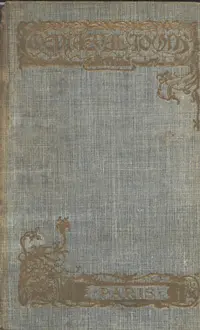
THE CLASSIC COLLECTION · 1906
"The Story of Paris" by Thomas Okey is a historical account written in the early 20th century. The book provides a comprehensive exploration of the evolution of Paris, from its origins in Gallo-Roman times through significant historical events that shaped the city and France. The narrative is infused with rich detail, bringing to life the cultural, political, and social dynamics that have defined Paris. The opening of this work sets the stage by discussing the ancient history of Paris, tracing its roots to the Gallo-Roman civilization. Okey introduces readers to the geographical advantages that made the settlement of Lutetia—a precursor to Paris—an essential hub for commerce and military strategy during the Roman conquest. The narrative transitions into the significance of the city during the early Christian era, including the legends of notable figures like St. Genevieve and the eventual establishment of Clovis as a major monarch. With references to the city’s legendary past and early Christian influence, the opening lays a foundation for understanding Paris's unique character and historical importance.
Introduction adapted from the source catalogue; source summaries may be automatically generated.
Free to read · English · 126,286 words · No account needed
MAKE TIME FOR A GOOD BOOK
On by default. Untick to stop anonymous reading totals. Each page counts after 10 seconds in view. How this works.
Anonymous counting is on unless you have switched it off.
In 1768 the poor abused and neglected queen, Marie Leczinska died. The court sank from bad to worse: void now of all dignity, all gaiety, all wit and all elegance, it drifted to its doom. Six years passed, when Louis was smitten by confluent small-pox and a few poor women were left to perform the last offices on the mass of pestiferous corruption that once was the fifteenth Louis of France.[154] None could be found to embalm the corpse, and spirits of wine were poured into the coffin which was carried to St. Denis without pomp and amid the half-suppressed curses of the people. Before the breath had left the body, a noise as of thunder was heard approaching the chamber of the Dauphin and Marie Antoinette: it was the sound of the courtiers hastening to grovel before the new king and queen. Warned that they had now inherited the awful legacy of the French monarchy, they flung themselves in tears on their knees, and exclaimed--"O God, guide and protect us! We are too young to govern."
[Footnote 154: Some conception of the insanitary condition of the court may be formed by the fact that fifty persons were struck down there by this loathsome disease during the king's illness.]
The degradation of the monarchy during the reign is reflected in the condition of the Louvre. Henry IV.'s great scheme, which Louis XIII. had inherited and furthered, included a colossal equestrian statue, which was to stand on a rocky pedestal in the centre of a new Place, before the east front of the Louvre, but the regency revoked the scheme, and for thirty years nothing was done. It had even been proposed under the ministry of Cardinal Fleury to pull the whole structure down and sell the site. The neglect of the palace during these years is almost incredible. Perrault's fine facade was hidden by the half-demolished walls of the Hotels de Longueville, de Villequier, and de Bourbon. The east wing itself was unroofed on the quadrangle side and covered with rotting boarding. Perrault's columns on the outer facade were unchannelled, the capitals unfinished, the portal unsculptured, and the post-office stabled its horses along the whole of the wing from the middle entrance to the north angle. The royal apartments of Anne of Austria in the Petite Galerie were used as stables; so, too, were the halls where now is housed the collection of Renaissance sculpture. The Infanta's garden was a yard where grooms exercised their horses; a colony of poor artists and court attendants were lodged in the upper floors, and over most of the great halls entresols were constructed to increase this kind of accommodation. The building was described as a huge caravanserai, where each one lodged and worked as he chose, and over which might have been placed the legend, "Ici on loge a pied et a cheval." Worse still, an army of squatters, ne'er-do-wells, bankrupts and defaulting debtors took refuge in the wooden sheds left by the contractors, or built others--a miserable gangrene of hovels--against the east facade. Perrault's base had been concealed by rubbish and apparently forgotten. Stove-pipes issued from the broken windows of the upper floors, the beautiful stone-work was blackened by smoke, cracked by frost and soiled by rusting iron clamps; the quadrangle was a chaos of uncut stone, rubbish and filth, in the centre of which, where the king's statue was designed to stand, the royal architect had built himself a large mansion; a mass of mean houses encumbered the Carrousel, and the almost ruined church of St. Nicholas was a haunt of beggars. Such a grievous eyesore was the building that the provost in 1751 offered, in the name of the citizens, to repair and complete the palace if a part were assigned to them as an Hotel de Ville. In 1754 Madame de Pompadour's brother, M. de Marigny, had been appointed Commissioner of Works, and Louis was persuaded to authorise the repair and completion of the Louvre. Gabriel being made architect set about his work in 1758 by clearing out the squatters and the accumulated rubbish in the quadrangle, and evicting the occupants of the stables. The ruins of the Hotels de Longueville, de Villequier, and de Bourbon were demolished and grass plots laid before Perrault's east front, which was restored and for the first time made visible. The west front, giving on the quadrangle, was then repaired and the third floor nearly completed, when funds were exhausted and it was left unroofed. An epigram, put into the mouth of the king of Denmark, who visited Paris in 1768, tersely describes the condition of the palace at this time:--
Your reading position is saved on this browser. Take it to another device with a library code. Reading pages adapt to text, rather than matching a printed edition.
BEHIND THE BOOK
This eBook is for the use of anyone anywhere in the United States and most other parts of the world at no cost and with almost no restrictions whatsoever. You may copy it, give it away or re-use it under the terms of the Project Gutenberg License included with this eBook or online at www.gutenberg.org. If you are not located in the United States, you will have to check the laws of the country where you are located before using this eBook. Read the source licence.
The original source file, including credits and licence, is retained by this library. Request an original-format copy at no charge. Please include the book title and Project Gutenberg identifier #26450.
KEEP YOUR CURIOSITY GOING
Wilfrid Scawen Blunt
Wilfrid Scawen Blunt

E. W. (Edgar Watson) Howe
Cécile Tormay

Moritz Busch
John L. Ransom