THE CLASSIC COLLECTION✦The Story of ChartresCLASSIC FREE BOOKS
The Story of Chartres
Cecil Headlam
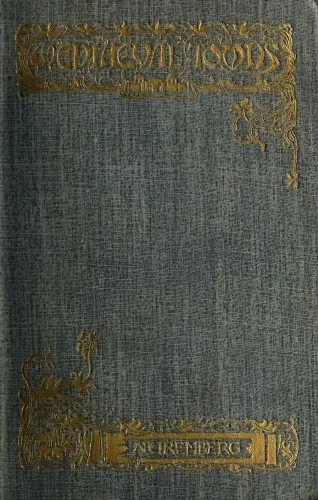
THE CLASSIC COLLECTION · 1899
"The Story of Nuremberg" by Cecil Headlam is a historical account written in the late 19th century. The book explores the rich history of Nuremberg, a medieval town renowned for its art and commerce, aiming to revive readers' affinity for this historic site and encourage visits. It discusses the evolution of the city, its significant figures like Albert Dürer, and its role in various historical events, providing insights into the cultural and architectural heritage of Nuremberg. The opening of the book sets the stage for a detailed exploration of Nuremberg, emphasizing its historical and aesthetic significance. It describes the city as both enchanting and complex, juxtaposed against its gradual transformation from a humble settlement to a bustling center of art and trade. Headlam hints at the vast scope of Nuremberg's past, touching upon the obscurity of its origins and the legends that weave through its history. Through a blend of anecdotal and factual narrative, the author captivates the reader's imagination, suggesting that Nuremberg's allure lies not only in its architectural beauty but also in the historical memories and associations that continue to resonate today.
Introduction adapted from the source catalogue; source summaries may be automatically generated.
Free to read · English · 79,975 words · No account needed
MAKE TIME FOR A GOOD BOOK
On by default. Untick to stop anonymous reading totals. Each page counts after 10 seconds in view. How this works.
Anonymous counting is on unless you have switched it off.
Hic de Francis genitus
Propinquos postergat,
Quamvis natus inclytus,
Ne in nefas vergat.
Merito Vincentiam
Eremum elegit,
Vincat ut malitiam
Se Deo subegit.
Paucos contubernio
Eremo assumit,
Vivit soli Domino
Abs quo nil præsumit.
Visitat miraculis
Hunc Deus frequenter
Notum fecit patulis
Factis pertinenter.
Famem patientibus
Fert refectionem,
Sitim sustinentibus
Miram potionem.
Aquam vertit in vinum
Diu duraturum
Panem opus alivinum
Præstat opportunum.
Mortuus deducitur
Rudibus jumentis
Nurnberg perducitur
Divinis fomentis.
Stant in loco humili
Nec abinde cedant,
Donec loci populi
Locum sacrum edunt.
Transferri se coeperat,
Nil per hoc secutum,
A Scotis redierat
Corpus revolutum.
Ad locum divinitus
Primum vehebatur,
Factum illud coelitus
Cunctis propalatur.
Illudentis facies
In plaga notatur
Mulieris species
Passa commutatur.
Or as Conrad Celtes has it in his hymn to the saint:--
Cumque jam longo fueras labore
Fessus, et sedes meritus beatas
Te senem nostras Deus impetrabat
Linquere terras,
Spiritus sanctos ubi liquit artus,
Mox boves corpus tulerant agrestes
Qua tuas sanctas modo personamus,
Carmine laudes.
Ergo jam coelo merito locatus
Hanc velis urbem, mediis arenis
Conditam, sanctis precibus juvare
Sedulus orans. etc.
[55] They and much of the rest of the church are now in course of
restoration.
[56] The Kirchner lives at No. 6 Burgstrasse.
[57] These will be shown you if you ask for them.
[58] See pp. 203-5. There is also a relief by Adam Krafft near the
south-east door.
[59] See p. 207.
[60] Geschichte von Deutschen Malerei.
[61] The clockworks at Prague, Strasburg and Wells tell the same tale.
[62] Recently renovated.
[63] The Kirchner (L. Burkman) lives in the far corner of the Gymnasium Hof, right of the church, in the house with a double flight of steps in front of it.
[64] Durer's grave, No. 649 (see p. 196). W. Pirkheimer, 1414; Hans Sachs, 503; Veit Stoss, 268; Lazarus Spengler, 1320; Wenzel Jamnitzer, 664; Konrad Grübel, 200.
[65] The best of these epitaphia, or grave-plates, are by Georg
Schweigger, e.g. No. 1484.
[66] All things have their origin and increase, but lo! the bull you
see never was a calf.
[67] I am inclined now to agree with those who attribute it to Peter Vischer's son and namesake. See my monograph on Peter Vischer, or Dr Seeger's P. Vischer der Jungere.
[68] To view a further collection apply to the Director.
[69] See pp. 59, 74.
[70] He occasionally used Koberger's type. "The Poggius of 1475 by Creussner and the Boethius of 1473 by Koberger are in the same type. Most of the early Nuremberg types are readily distinguished by the capital N, in which the cross stroke slants the wrong way."--Early Printed Books. E. Gordon Duff.
[71] See pp. 42, 72.
Typographical errors corrected by the etext transcriber:
Sakramentshaüslein=> Sakramentshäuslein {pg xii}
Haupt Thor=> Hauptthor {pg xii}
Schlusselfelderische, Schlusselfelder=> Schlüsselfelderische,
Schlüsselfelder {pg 22}
Goethe's Wilhelm Tell=> Schiller's Wilhelm Tell {pg 24}
Your reading position is saved on this browser. Take it to another device with a library code. Reading pages adapt to text, rather than matching a printed edition.
BEHIND THE BOOK
This eBook is for the use of anyone anywhere in the United States and most other parts of the world at no cost and with almost no restrictions whatsoever. You may copy it, give it away or re-use it under the terms of the Project Gutenberg License included with this eBook or online at www.gutenberg.org. If you are not located in the United States, you will have to check the laws of the country where you are located before using this eBook. Read the source licence.
The original source file, including credits and licence, is retained by this library. Request an original-format copy at no charge. Please include the book title and Project Gutenberg identifier #46401.
KEEP YOUR CURIOSITY GOING
Wilfrid Scawen Blunt
Wilfrid Scawen Blunt

E. W. (Edgar Watson) Howe
Cécile Tormay

Moritz Busch
John L. Ransom