THE CLASSIC COLLECTION✦The Story of ChartresCLASSIC FREE BOOKS
The Story of Chartres
Cecil Headlam
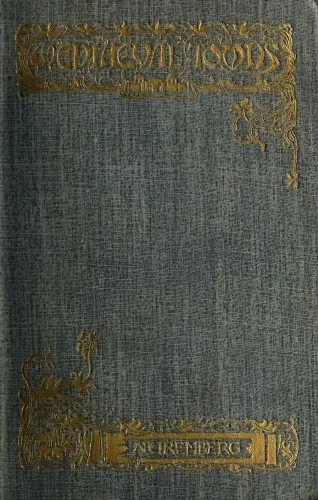
THE CLASSIC COLLECTION · 1899
"The Story of Nuremberg" by Cecil Headlam is a historical account written in the late 19th century. The book explores the rich history of Nuremberg, a medieval town renowned for its art and commerce, aiming to revive readers' affinity for this historic site and encourage visits. It discusses the evolution of the city, its significant figures like Albert Dürer, and its role in various historical events, providing insights into the cultural and architectural heritage of Nuremberg. The opening of the book sets the stage for a detailed exploration of Nuremberg, emphasizing its historical and aesthetic significance. It describes the city as both enchanting and complex, juxtaposed against its gradual transformation from a humble settlement to a bustling center of art and trade. Headlam hints at the vast scope of Nuremberg's past, touching upon the obscurity of its origins and the legends that weave through its history. Through a blend of anecdotal and factual narrative, the author captivates the reader's imagination, suggesting that Nuremberg's allure lies not only in its architectural beauty but also in the historical memories and associations that continue to resonate today.
Introduction adapted from the source catalogue; source summaries may be automatically generated.
Free to read · English · 79,975 words · No account needed
MAKE TIME FOR A GOOD BOOK
On by default. Untick to stop anonymous reading totals. Each page counts after 10 seconds in view. How this works.
Anonymous counting is on unless you have switched it off.
Incidents from the life of St. Vitus (Veit) and other saints form the subjects of the inner sides of the picture. Here again there is an inequality both of style and of excellence. The simple countenance of Mary, who holds on her knee a very animated Child, represents a type halfway between that of Rogier and that of Schongauer. The St. Luke, the character of whose head is well worked out, is attractive through his expression of earnestness. But there is far more dramatic power and "soul" in the scene from the legend of St. Bernard, according to which Christ came down from the Cross to his ardent worshipper. There the countenance of St. Bernard is made to exhibit a depth of feeling rarely to be found in Wolgemut; as if the artist's imagination had indeed been lit by something of the glow of the Saint's adoration.
The St. Christopher, who is walking through the stream with the Christ-child on his shoulder, is rough to the point of ugliness, whilst in the landscape, which is beautifully executed, there is a most intimate charm.
In the martyrdom of St. Sebastian, the Saint wears that almost inane expression which often does duty, however unintentionally, for the look of deep suffering in Wolgemut's work. The guard, however, are pleasingly and vividly portrayed. Evidently they are akin to the rabble which is found in the scenes of the Passion in Schongauer's works.
But it is when we come to the scenes from the legend of St. Vitus that we seem to trace only the faintest signs of Wolgemut's style. The composition here bears only a distant resemblance to his, and in the execution the assistant employed must surely have been he who painted the scene of St. Vitus denouncing the idols in the Lorenzkirche (see p. 254), and whose initials are R. F.
The pictures by Albrecht Durer in the Museum we have already
mentioned (pp. 188, 193-9).
(1) Hercules and the Stymphalian Birds, 205 Room 72 (2) Kaiser Maximilian, 209 " " (3) Pietà--Mourning over Christ's Body, 206 " 73 (4) Charlemagne, 207 " " (5) Kaiser Sigismund, 208 " "
Besides these originals there are several copies of the master's works, including the excellent copies of the Four Apostles (283, 284) by Johann Georg Fischer. The original inscriptions are retained. The Allerheiligen or Trinity picture, No. 210, is a bad copy in a worse frame.
Among other works by contemporaries or followers of Durer are:--
Bartholomew Zeitblom of Ulm, {145 Room 73 {178 " 73 Bernhard Strigel, {179, 181 " 71 {185, 186 " 72 Martin Schwarz of Rothenburg, 130, 133 " 71 Hans Holbein the Elder, {164, 167 " 71 {162, 163 " 72 Hans Friess of Freiburg, Room 71, 71 Hans Leonhard Schäuffelein, { 221, 223, 225 } " 73 { 226, etc. } Hans von Kulmbach, { 212 " 71 { 213, 214, 216 " 73 Albrecht Altdorfer, 245, 248 " 71, 72 Mathias Grünewald, 253 " 71 Hans Baldung Grien, 194-196 " 72 Lucas Cranach, { 259 " 72 { 262 Martin Schaffner, 191, 192 " 72 Hans Burgkmair, {171 " 72 {168-170 " 73 Georg Pencz, 272, 273 " 74
Your reading position is saved on this browser. Take it to another device with a library code. Reading pages adapt to text, rather than matching a printed edition.
BEHIND THE BOOK
This eBook is for the use of anyone anywhere in the United States and most other parts of the world at no cost and with almost no restrictions whatsoever. You may copy it, give it away or re-use it under the terms of the Project Gutenberg License included with this eBook or online at www.gutenberg.org. If you are not located in the United States, you will have to check the laws of the country where you are located before using this eBook. Read the source licence.
The original source file, including credits and licence, is retained by this library. Request an original-format copy at no charge. Please include the book title and Project Gutenberg identifier #46401.
KEEP YOUR CURIOSITY GOING
Wilfrid Scawen Blunt
Wilfrid Scawen Blunt

E. W. (Edgar Watson) Howe
Cécile Tormay

Moritz Busch
John L. Ransom