
The story of my struggles: the memoirs of Arminius Vambéry, Volume 2
Ármin Vámbéry
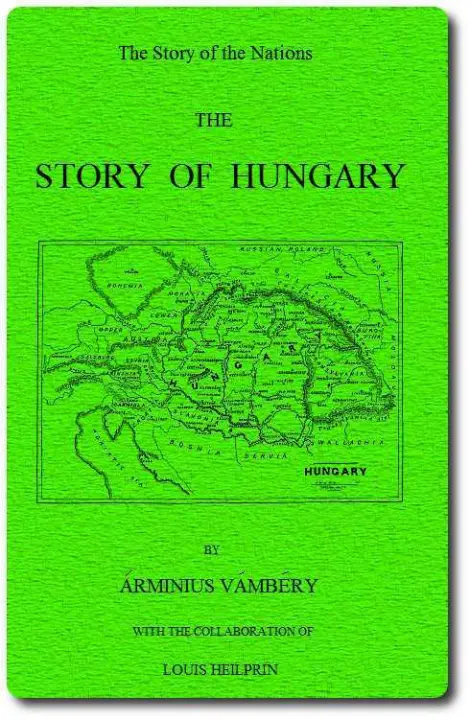
THE CLASSIC COLLECTION · 1886
"The Story of Hungary" by Ármin Vámbéry is a historical account written in the late 19th century. This work aims to introduce American and English readers to Hungary's rich history, outlining significant events, personalities, and episodes from its nearly thousand-year journey. It offers a narrative that highlights the culture and evolution of Hungary, providing insight into its national identity. The opening of the book sets the stage by detailing Hungary's geography and climate, showcasing its natural beauty as described through the words of poet Alexander Petőfi. It describes the Carpathian mountain range, the fertile plains, and the rivers that characterize the landscape, emphasizing the strategic importance of Hungary's topography. Vámbéry introduces the political structure of Hungary, noting its diverse population and the liberal nature of its constitution. As he begins to delve into the history, he prepares the reader for the exploration of Hungary's past, addressing the fusion of various cultures and the influence of geography on its development. This comprehensive introduction hints at a narrative that will combine myth and historical fact, setting the scene for Hungary's evolution from prehistoric times to the present.
Introduction adapted from the source catalogue; source summaries may be automatically generated.
Free to read · English · 112,865 words · No account needed
MAKE TIME FOR A GOOD BOOK
On by default. Untick to stop anonymous reading totals. Each page counts after 10 seconds in view. How this works.
Anonymous counting is on unless you have switched it off.
Dacia, province of, 20
Damjanics, 431
Danube Steam Navigation Company, 411
Debruzen, seat of government, 430
Deák, Francis, 414;
minister of justice, 424;
heads representative committee, 437
Diákovár, 179
Diet (1567) inveighs against the foreign soldiery, 341;
religious discussion in, prohibited by Rudolph, 345;
minority of Protestants in, 358;
relinquishes the people’s right, 360;
at Buda, 386-389;
removed to Presburg, 387;
reforms institutions of Hungary, 423;
removed to Buda-Pesth, 427;
driven to Dubreczen, 430;
declares the house of Hapsburg to have forfeited its right
to Hungary, 432;
dissolution of 437;
opened by the emperor, 438
Dobó, Stephen, commandant at Erlau, 307;
repulses the Turks, 311
Dobozy, Michael, flight and death of 293
Dózsa George, made leader of crusade, 270;
leads his men against the nobles, 271;
besieges Temesvár, is defeated and executed, 272
Drágfy, John, Chief-Justice, at the battle of Mohács, 287
Drégel, taken by the Turks under Ali Pasha, 300;
monumental chapel erected at, 301
Elizabeth, daughter of Andrew III., 151
Elizabeth, wife of Charles of Anjou, builds cathedral at Kassa, 162; goes to Naples in aid of her son Andrew, 162
Elizabeth, wife of Louis of Hungary, offers to Poland her daughter
Hedwig as queen, 176;
strangled, 179
Elizabeth, daughter of Sigismund, married to Albert of Austria, 186
Emeric, son of Stephen, 90;
education of, 90;
death of, 94
Emeric, son of Béla III., ascends the throne, 123;
defeated by Andrew, 123;
dies, 125
Emperor and Pope, rivalry of, 70
Eperjes, bloody tribunal of, 360
Erlau besieged by Ahmed Pasha, 308
Eugene, Duke of Savoy, assumes commandership of Hungarian forces, 333;
annihilates a Turkish army, 334;
defeats the Turks near Peterwardein, 335;
defeats the Turks, 359
Europe threatened by a new foe, 170
Ferdinand of Austria, elected king of Hungary 295;
king of Bohemia, 338
Ferdinand II., cousin of Matthias, King of Bohemia, 347
Ferdinand V., King of Hungary, 424
Field of Blood, 396
Fiume, city of, 7;
given to Hungary by Maria Theresa, 371
France, revolution in, 386
Francis I., of France, stirs up Solyman, 286
Francis I., crowned, 390;
persecutes enlightened men, 396;
arbitrary government, 398;
returns to constitutional government, 399
Francis, Joseph, enters into alliance with Czar of Russia, 432;
visits Hungary, 436
Frangepán Christopher, 267;
conspires against Leopold I., 355;
beheaded, 355
Frederic Barbarossa leads third crusade, 122
Frederic, Duke of Austria, defeated by Béla IV., 144;
dies, 144
French enter Hungary, 397;
defeat the Hungarians near Ráab, 398
Fuggers, the, 279
Fünfkirchen (Pécs), University of, 174
Galamböcz, siege of, 191
Galicia, campaign in, 126
Garay, palatine of Croatia, 176;
defends the queens and dies, 178
George of Brandenburg, appointed guardian to Louis, 276
Gepidæ, ruling people in Hungary, 24
Gerhard, St., death, 61
Germans, defeat of, 44;
victory of, 48;
in Hungary, 322
German confederation dissolved, 438
Gertrude, wife of Andrew II., 125
Geyza II., ascends throne, 109;
son of Béla, 118;
hostilities, 118;
dies, 118;
Stephen III., son of, 118
Gisella, wife of Stephen, 69
Golden Bull, 99;
rights granted by, relinquished by diet, 360
Görgei, commander-in-chief of the Hungarian army, 430;
surrenders, 433
Gran (Esztergom), capital of Hungary, 68
Gregory VII., claims submission from Ladislaus, 110
Your reading position is saved on this browser. Take it to another device with a library code. Reading pages adapt to text, rather than matching a printed edition.
Ármin Vámbéry

Ármin Vámbéry
Ármin Vámbéry
Ármin Vámbéry
BEHIND THE BOOK
This eBook is for the use of anyone anywhere in the United States and most other parts of the world at no cost and with almost no restrictions whatsoever. You may copy it, give it away or re-use it under the terms of the Project Gutenberg License included with this eBook or online at www.gutenberg.org. If you are not located in the United States, you will have to check the laws of the country where you are located before using this eBook. Read the source licence.
The original source file, including credits and licence, is retained by this library. Request an original-format copy at no charge. Please include the book title and Project Gutenberg identifier #50038.
KEEP YOUR CURIOSITY GOING
Cécile Tormay

Moritz Busch
John L. Ransom
Frances Wright
Cécile Tormay

Mabel Potter Daggett