
The story of my struggles: the memoirs of Arminius Vambéry, Volume 2
Ármin Vámbéry
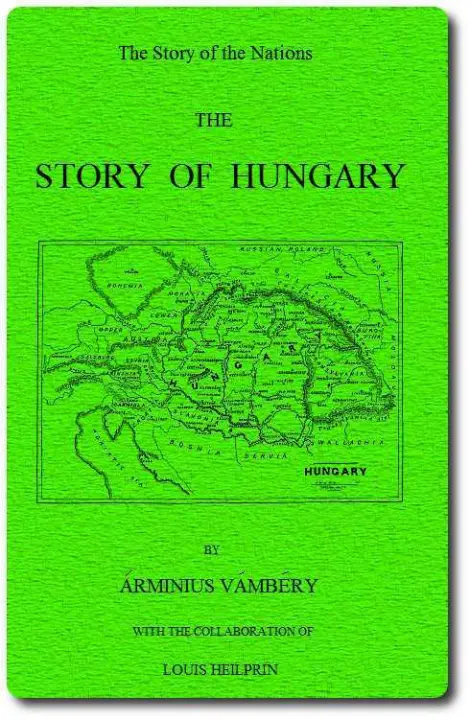
THE CLASSIC COLLECTION · 1886
"The Story of Hungary" by Ármin Vámbéry is a historical account written in the late 19th century. This work aims to introduce American and English readers to Hungary's rich history, outlining significant events, personalities, and episodes from its nearly thousand-year journey. It offers a narrative that highlights the culture and evolution of Hungary, providing insight into its national identity. The opening of the book sets the stage by detailing Hungary's geography and climate, showcasing its natural beauty as described through the words of poet Alexander Petőfi. It describes the Carpathian mountain range, the fertile plains, and the rivers that characterize the landscape, emphasizing the strategic importance of Hungary's topography. Vámbéry introduces the political structure of Hungary, noting its diverse population and the liberal nature of its constitution. As he begins to delve into the history, he prepares the reader for the exploration of Hungary's past, addressing the fusion of various cultures and the influence of geography on its development. This comprehensive introduction hints at a narrative that will combine myth and historical fact, setting the scene for Hungary's evolution from prehistoric times to the present.
Introduction adapted from the source catalogue; source summaries may be automatically generated.
Free to read · English · 112,865 words · No account needed
MAKE TIME FOR A GOOD BOOK
On by default. Untick to stop anonymous reading totals. Each page counts after 10 seconds in view. How this works.
Anonymous counting is on unless you have switched it off.
In 1765, Maria Theresa, in grateful acknowledgment of the cordially loyal support given her by her “faithful Hungarians” in the bitter struggle against Frederic the Great, initiated various most important reforms, while just a century later, under the convincing influence of the second great struggle with Prussia, the Austrian ruler again falls back on his Hungarian subjects as the chief support of his reorganized realm, and in the new dual empire of Austria-Hungary the ancient kingdom of the Magyars, whose wonderfully elastic national vitality had withstood so many vicissitudes and disasters, again takes a commanding place among the nations of Europe.
Abdi Pasha surrenders Buda to Duke Charles, 332
Academy of Sciences at Buda-Pesth founded, 407
Adalbert, St., Bishop of Prague, 56
Agram, Bishopric of, founded, 111
Ahmed Pasha, besieges Temesvár, 302;
takes fortress, 305;
besieges Erlau, 308;
is repulsed, 311
Albert, Emperor of Germany, comes to the assistance of Wenceslaus, 153
Albert, King of Hungary, dies, 210
Aladar and Csaba, sons of Attila, 30
Albert, Duke of Poland, lays waste Hungary, 262
Albrecht, Archduke, 438
Alföld (Lowland), taken by the Turks, 340;
colonized by the Servians, 361;
depopulated, 368
Ali Pasha of Buda, besieges Drégel, 299;
clemency to two youths, 300;
takes Drégel, 301;
generosity to remains of Szondi, 301
Aliportug, 315
Almos, first duke of the Huns, 36;
oath to, 36
Almos, brother of Coloman, rebellion of, 116;
defeated 116;
deprived of sight, 116;
rebels against Stephen II., 116;
dies, 117
Altai Mountains, cradle of Magyar race, 32
Anagarini, John, Papal envoy to Matthias, 236
Andrássy, Count, 439
Andrew, Prince, rebellion of, 60;
made king, 61;
issues rigorous laws, 61
Andrew I., King of Hungary, 102;
victories over pagan rebels, 103;
gives one third of his realm to Béla, 103;
son born, 104;
feud with Béla, 105;
defeated by Béla, 106
Andrew, brother of Emeric, 123;
defeats Emeric and proclaims himself Duke of Croatia, Dalmatia, Rama,
and Chulmia, 123;
captured by Emeric, 124;
made guardian of his nephew, 125
Andrew II., ascends the throne, 125;
under his wife’s dominion, 125;
weakness of, 126;
campaign in Galicia, 126;
goes to the Holy Land, 129;
grants “Golden Bull,” 129;
dies, 133
Andrew III., ascends the throne, 149;
death, 150
Andrew, son of Charles of Anjou, betrothed to Joanna of Naples, 164;
assassinated, 166
Anjou, house of—first king, 151
Anna, daughter of Uladislaus, 265;
betrothed to Ferdinand, son of Maximilian, 266
Anna, Duchess of Teschen, mother of Stephen Szapolyai, 265
Anna of Candal, wife of Uladislaus, dies, 276
Anna Pekry, wife of Losonczy, tries to raise money for her besieged
husband, 303
Apaffy, Prince of Transylvania, 357
Apors, 147
Apotheosis of Augustus, 18
Arnulph, King of Germany, 39
Árpád, first ruler of Hungary, 42;
death, 44;
house of, 97;
extinction of, 149
Astrik, mission to Rome, 76
Attila, pushes forward, 23;
death of, 24;
sons of, contend for possession of empire, 24;
Aladar and Csaba, sons of, 30
Augsburg, victory near, 48
Aurelian, withdraws legions, 32;
allows Goths to settle, 23
Your reading position is saved on this browser. Take it to another device with a library code. Reading pages adapt to text, rather than matching a printed edition.
Ármin Vámbéry

Ármin Vámbéry
Ármin Vámbéry
Ármin Vámbéry
BEHIND THE BOOK
This eBook is for the use of anyone anywhere in the United States and most other parts of the world at no cost and with almost no restrictions whatsoever. You may copy it, give it away or re-use it under the terms of the Project Gutenberg License included with this eBook or online at www.gutenberg.org. If you are not located in the United States, you will have to check the laws of the country where you are located before using this eBook. Read the source licence.
The original source file, including credits and licence, is retained by this library. Request an original-format copy at no charge. Please include the book title and Project Gutenberg identifier #50038.
KEEP YOUR CURIOSITY GOING
Cécile Tormay

Moritz Busch
John L. Ransom
Frances Wright
Cécile Tormay

Mabel Potter Daggett