THE CLASSIC COLLECTION✦The story of Keedon BluffsCLASSIC FREE BOOKS
The story of Keedon Bluffs
Charles Egbert Craddock
THE CLASSIC COLLECTION · 1914
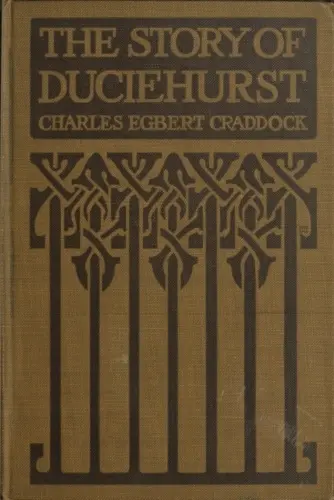
"The Story of Duciehurst: A Tale of the Mississippi" by Charles Egbert Craddock is a historical novel written in the early 20th century. The narrative is set against the backdrop of the Mississippi River and revolves around the stranded steamboat "Cherokee Rose" and the lives of several passengers, particularly focusing on the complicated relationships and tensions among them. The central characters presented include the affluent but discontented Mr. Floyd-Rosney, his wife, and the Ducie brothers, with themes of wealth, social status, and hidden pasts beginning to unfold. At the start of the novel, the "Cherokee Rose" finds itself stuck on a sand-bar in the Mississippi River, creating an atmosphere of tension and uncertainty among the passengers. The scene introduces Mr. Floyd-Rosney, whose discontent with the situation reflects deeper issues within his marriage as his wife, Mrs. Floyd-Rosney, reveals hints of a complicated backstory involving the Ducies. The young man, Adrian Ducie, encounters an old acquaintance across the deck as the conversations bring in light unexpected connections and tensions, particularly when the subject of past relationships and fortunes comes to the forefront. As passengers engage in spirited discussions amid their predicament, the stage is set for unraveling not just the physical challenges posed by the river but also the emotional and social dynamics among the characters.
Introduction adapted from the source catalogue; source summaries may be automatically generated.
Free to read · English · 119,640 words · No account needed
MAKE TIME FOR A GOOD BOOK
On by default. Untick to stop anonymous reading totals. Each page counts after 10 seconds in view. How this works.
Anonymous counting is on unless you have switched it off.
She fell back against the great newel of the staircase, laughing ecstatically, while all the idle group looked on with amused sympathy, save only the two Floyd-Rosneys. The wife’s face was disconcerted, almost wry, with the affected smile she sought to maintain, as she watched Ducie’s glowing expression of admiration, and the husband’s gravity was of baleful significance as he watched her.
“I have found silver! I have found silver! Now, Major, stand and deliver.” As the trembling fingers of the veteran obediently explored the pocket and produced several bits of money, they were hailed with acclamations by the discoverer, till she suddenly espied a coin with a hole in it. “Oh, Major,” she cried, in genuine enthusiasm. “Give me this dime!”
“Oh, Hildegarde,”--Mrs. Floyd-Rosney’s face assumed an expression of reprehension, but Mrs. Dean only laughed at the childish freak.
“I will have it,--it won’t make or break the Major--I want it--to wear as a bangle, to remind me of this lovely trip, and all that the Major and I have plotted, and contrived, and conspired together. Eh, Major? Oh,--thanks,--thanks,--muchly. You may have the rest, Major.” And she tucked the remaining coins back into his pocket, smiling brightly the while up into his sightless eyes.
Randal Ducie, with an air of sudden decision, turned about, seized his brother by the arm and together they stood before the joyous young beauty, who was obviously beginning to canvass mentally the next possibility of amusement under these unpropitious circumstances.
“Now, Miss Dean, be pleased to cast your eyes over us. I am not going to allow this fellow to deprive me of your valuable acquaintance.”
“Oh, pick me out, Miss Dean,” cried Adrian plaintively. “I am all mixed up. I don’t know if I am myself or my brother.”
Miss Dean stared from one to the other, her brilliant eyes wide with
wonder.
“How perfectly amazing!” she exclaimed. “Oh, Mrs. Floyd-Rosney, how did you distinguish and recognize one of them Thursday afternoon?”
Paula’s mind was so engrossed that, quick as she was always to discern the fluctuations of favor in her husband’s disposition toward her, she had not observed his peculiar notice of the fact of her retentive memory and keen perception in distinguishing the veiled identity of the man who had once been dear to her,--once?
“Oh, I saw the difference instantly,” she declared, with what her husband considered an undignified glibness, and an interest especially unbecoming in a matter so personal, which should be barred to her by the circumstances. “This is Randal, and this is Mr. Adrian Ducie.”
Your reading position is saved on this browser. Take it to another device with a library code. Reading pages adapt to text, rather than matching a printed edition.
Charles Egbert Craddock
Charles Egbert Craddock
Charles Egbert Craddock
Charles Egbert Craddock
BEHIND THE BOOK
This eBook is for the use of anyone anywhere in the United States and most other parts of the world at no cost and with almost no restrictions whatsoever. You may copy it, give it away or re-use it under the terms of the Project Gutenberg License included with this eBook or online at www.gutenberg.org. If you are not located in the United States, you will have to check the laws of the country where you are located before using this eBook. Read the source licence.
The original source file, including credits and licence, is retained by this library. Request an original-format copy at no charge. Please include the book title and Project Gutenberg identifier #56046.
KEEP YOUR CURIOSITY GOING
Cécile Tormay

Moritz Busch
Coulson Kernahan
John L. Ransom

Maurice Baring
Frances Wright