THE CLASSIC COLLECTION✦An outlaw’s diary: the CommuneCLASSIC FREE BOOKS
An outlaw’s diary: the Commune
Cécile Tormay
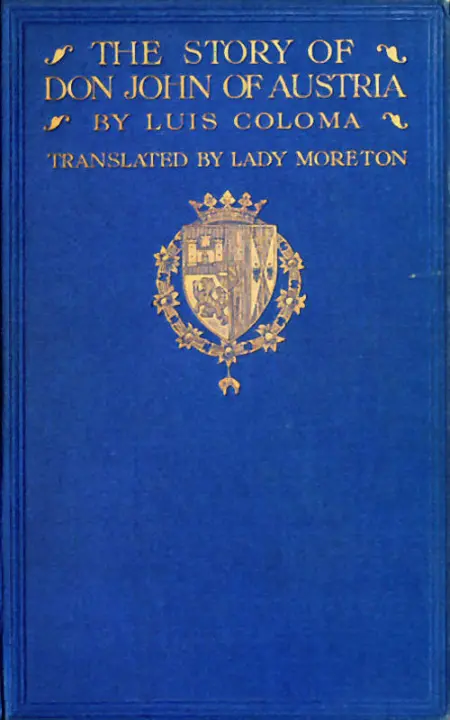
THE CLASSIC COLLECTION · 1912
"The Story of Don John of Austria" by Luis Coloma is a historical narrative that appears to have been written in the early 20th century. This work combines elements of novelistic storytelling and historical account, centering around the life of Jeromín, a child with a mysterious parentage. The tale captures his journey from a humble upbringing to his elevated status, posing themes of identity and nobility. The opening of the narrative introduces the young protagonist, Jeromín, who lives in the village of Leganés, Spain. The story begins with an incident that showcases his innocence and the curiosity of childhood when a stranger arrives in a peculiar carriage, seeking Ana de Medina, his caretaker. As the plot unfolds, Jeromín learns that he is actually the son of a nobleman, leading to a significant life change as he is taken under the wing of the esteemed Luis Quijada. This shift in his life sets the stage for Jeromín to navigate new environments, experiences, and responsibilities, gradually revealing the complexities of his heritage and forging connections that will shape his destiny.
Introduction adapted from the source catalogue; source summaries may be automatically generated.
Free to read · English · 154,072 words · No account needed
MAKE TIME FOR A GOOD BOOK
On by default. Untick to stop anonymous reading totals. Each page counts after 10 seconds in view. How this works.
Anonymous counting is on unless you have switched it off.
The best way of carrying this out, without scandal or dangerous resistance, was then discussed, and the King proposed his plan, which was naturally accepted. At midnight they all descended by an inside staircase, on tiptoe, in the dark, cautiously, not to arouse the guard, almost trembling, as justice has to tremble sometimes, to prevent and surprise crime.
The Duque de Feria went first, with a dark lantern in his hand; the King followed, very pale, a cuirass under his clothes, a naked sword under his arm, and an iron helmet on his head. Behind him came all the rest, with naked swords, more to inspire terror and respect than because there was need to use them. Two of the King's servants, Santoyo and Bernal, with nails and hammers, and twelve guards with their lieutenant, also came.
In the Prince's ante-room they met his two gentlemen, D. Rodrigo de Mendoza and the Conde de Lerma, who were on duty, and the King gave them orders to let no one pass.
The door of the room opened without resistance, because the King had
ordered the engineer de Foix secretly to make the Prince's springs
useless.
Ruy Gómez and the Duque de Feria approached the bed of D. Carlos with much caution; he was sleeping soundly, and without his knowing it they were able to put the arquebus and the unsheathed sword out of reach of his hand; the dagger they did not find.
D. Carlos then woke, and, sitting up frightened, called out in a sleepy,
startled voice:
"Who goes there?"
"The Council of State," replied Ruy Gómez.
The Prince then threw himself out of bed with great violence and wished to grasp his weapons; with this movement the dagger slipped down, and Ruy Gómez picked it up from the ground. At the same time the Duque de Feria opened his lantern, and the Prince found himself face to face with his father.
He threw himself back and cried, all beside himself, putting both hands to his head, "What is this? Does Y.M. wish to kill me?"
The King answered very quietly that he wished to do the Prince no harm, but that he wished him and all the kingdom well. Then he ordered the servants to bring lights, to nail up the windows, and take away all arms, even to the fire-irons.
The Prince then realised that he had let himself be arrested, and in his shirt, as he was, he threw himself on the King, crying, "Kill me, Y.M., but do not arrest me, because it is a great scandal for the kingdom; and, if not, I shall kill myself."
Your reading position is saved on this browser. Take it to another device with a library code. Reading pages adapt to text, rather than matching a printed edition.
BEHIND THE BOOK
This eBook is for the use of anyone anywhere in the United States and most other parts of the world at no cost and with almost no restrictions whatsoever. You may copy it, give it away or re-use it under the terms of the Project Gutenberg License included with this eBook or online at www.gutenberg.org. If you are not located in the United States, you will have to check the laws of the country where you are located before using this eBook. Read the source licence.
The original source file, including credits and licence, is retained by this library. Request an original-format copy at no charge. Please include the book title and Project Gutenberg identifier #53383.
KEEP YOUR CURIOSITY GOING
Cécile Tormay

Moritz Busch
Coulson Kernahan
John L. Ransom

Maurice Baring
Frances Wright