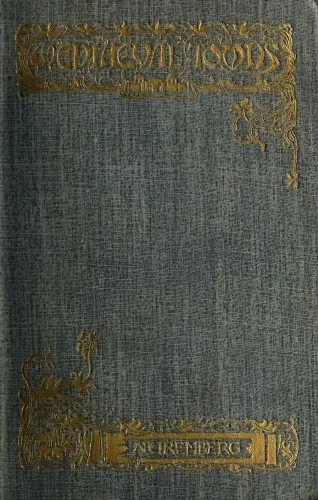
The Story of Nuremberg
Cecil Headlam
THE CLASSIC COLLECTION · 1902
"The Story of Chartres" by Cecil Headlam is a historical account written in the early 20th century. The book delves into the rich and intricate history of Chartres, particularly focusing on its renowned Cathedral, its religious significance, and the evolution of the city from ancient Druidic times through Roman rule and into the Middle Ages. At the start of the narrative, the author vividly describes the geographical setting of Chartres, nestled in the Beauce region, and highlights its significance as a spiritual center since antiquity. The opening chapter introduces the religious traditions associated with Chartres, tracing the lineage of worship from Druidic practices to early Christian establishments. Headlam draws connections between historical events and local legends, illustrating how the city's past has shaped its identity, particularly its veneration for the Virgin Mary, as seen through the veneration of the crypt under the Cathedral, which housed early Christian martyrs. This foundation sets the stage for an exploration of the various transformations and challenges the city faced throughout its storied history.
Introduction adapted from the source catalogue; source summaries may be automatically generated.
Free to read · English · 98,663 words · No account needed
MAKE TIME FOR A GOOD BOOK
On by default. Untick to stop anonymous reading totals. Each page counts after 10 seconds in view. How this works.
Anonymous counting is on unless you have switched it off.
Magenard, Abbot of S. Père, 61-63.
Maison du Médecin, 289.
Maison du Saumon, 268.
Malledegonde, Sister to S. Calétric, 36.
Marceau, General, 328, 335, 336.
Marot, 269-270.
Martyrium, or Chapel of S. Lubin, 23, 27, 28.
Mary Queen of Scots, reception at Chartres, 263, 265.
Mary and Gabriel, bells known as, 193, 306.
Mathurin Régnier, 286, 292-301.
Matilda, wife of Henry I., her gifts to Cathedral, 108.
Métier de la Rivière, 167, 168.
Michel Félibien, historian, 286.
Miles d’Illiers, Bishop of Chartres, 261.
Miracles wrought by Our Lady of Chartres, 143, 144, 146, 147, 148.
Modesta, martyr, 17, 18.
Mosaic glass, colours and manufacture of, 151-155.
Municipal Museum, 317, 318.
Nicholas de Thou, Bishop of Chartres, 310, 311, 321; assists at coronation of Henry IV., 313-316.
Nicolas Boisnet, appointed Bishop in place of M. de Lubessac, 328.
Notre-Dame-de-la-Brèche, 280, 306;
miraculous intervention of, 281, 282.
Notre-Dame-de-la-Brèche, chapel of, 5, 280, 282.
Notre-Dame-de-la-Victoire, 242.
Notre-Dame-de-Sous-Terre, 4, 5, 21, 28, 29, 30, 274;
burnt by Revolutionists, 335.
Notre-Dame-de-Sous-Terre, chapel of, 16, 25, 28, 65.
Old wooden houses in Chartres, 267, 268.
Orléans, sacked and burnt, 13;
named after Aurelian, 14;
besieged by Attila, 33.
Paix Fourrée, 253, 255.
Peace of Longjumeau, 279.
Peasants, amelioration of condition of, 84.
Pepin, 40.
Peter the Hermit, 96.
Philippe I., marriage of, opposed by S. Ives, 93.
Philippe Auguste, 233, 237.
Philippe-le-Bel, 238, 239, 242.
Philippe de Valois, 243.
Philip Delorme, 289.
Pierre, Abbot of Celles and S. Remy, Bishop of Chartres, 235.
Pierre Nicole, theologian, 286.
Pierre Plume, Canon of Notre-Dame, has folio missal printed, 286.
Pilgrims to Chartres and their offerings, 144, 145.
Place Billard, 54, 83.
Place de l’Étape au Vin, 83.
Porche Royal, 29, 98, 106, 126, 127 ff.
Porte Guillaume, 247.
Porte Neuve, and eight other gates, part of enclosure of cloister, 103.
Porte Royale, Porte Speciosa, Porte Triumphalis, 128.
Priscus, King of the Carnutes, 11.
Procession, annual, on anniversary of deliverance of town, 279, 280, 306.
Queen Bertha, 267, 268.
Queen Bertha’s staircase, 267.
Quirinus, 17, 22;
sudden death, 18.
Ragenfroi, Bishop of Chartres, 58, 59.
Reformation, the, and its supporters, 269.
Regnault de Mouçon, Bishop of Chartres, 140, 235.
Renaissance, influence of, 200, 201.
Revolution, 324 ff.
Robert, King, 72, 74;
Canticles composed by, 78.
Robert of Tours, Bishop of Chartres, Cardinal and Legate, 89.
Robert-le-Breton, Bishop of Chartres, 233.
Robert Pinaigrier, window painted by, 342.
Roger, architect, 139.
Rollo, 44, 49, 51.
Rose of France, window so called, 159, 183.
Rue de la Brèche, 279.
S. Aignan, 33, 39.
“ church of, 33, 34, 35, 83.
S. Albin, 15, 16.
S. André, church of, 282-284.
S. Anne, chapel of, 27.
“ head of, sent from Constantinople, 27, 212.
S. Aventin, first Bishop of Chartres, 18.
S. Bernard, preaches crusade, 232.
S. Calétric, Bishop of Chartres, 36, 37.
“ sarcophagus of, 26.
S. Chéron, 31.
“ abbey of, destroyed, 42;
restored, 50.
“ church of, destroyed, 273.
S. Chéron-du-Chemin, 31.
S. Clement, chapel of, 26, 65.
S. Denis, 31.
S. Denis, battle of, 271.
S. Eustace, 163.
S. Fiacre, chapel of, 248.
S. Fulbert; see Fulbert.
S. Fulbert, chapel of, 27.
S. Foy, church of, destroyed, 274;
rebuilt, 274.
S. Jean-en-Vallée, monastery of, 75.
S. John the Baptist, chapel of, 27.
S. Joseph, chapel of, 27.
Your reading position is saved on this browser. Take it to another device with a library code. Reading pages adapt to text, rather than matching a printed edition.
Cecil Headlam
BEHIND THE BOOK
This eBook is for the use of anyone anywhere in the United States and most other parts of the world at no cost and with almost no restrictions whatsoever. You may copy it, give it away or re-use it under the terms of the Project Gutenberg License included with this eBook or online at www.gutenberg.org. If you are not located in the United States, you will have to check the laws of the country where you are located before using this eBook. Read the source licence.
The original source file, including credits and licence, is retained by this library. Request an original-format copy at no charge. Please include the book title and Project Gutenberg identifier #46662.
KEEP YOUR CURIOSITY GOING
Cécile Tormay

Moritz Busch
John L. Ransom
Frances Wright
Cécile Tormay

Mabel Potter Daggett