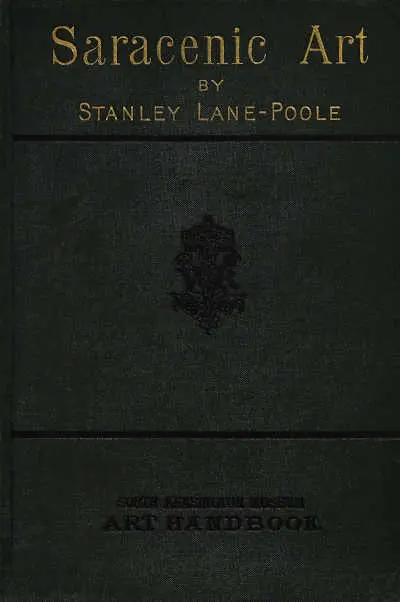
The art of the Saracens in Egypt
Stanley Lane-Poole
THE CLASSIC COLLECTION · 1906
The story of Cairo by Stanley Lane-Poole is a historical account written in the early 20th century. It traces Cairo’s making as a resolutely medieval Islamic city, interweaving urban growth, monuments, and daily life with art and architectural analysis. The focus moves from Fustat through Fatimid and Mamluk Cairo, contrasting the enduring “native” city with its newer European veneer.
The opening of the work presents Cairo as medieval in spirit despite modern reforms, voices the Cairene’s nostalgia for Mamluk days, and states the aim: to surround surviving buildings with the history and lives that gave them meaning rather than write a general history. It lists key Arabic sources, notes transliteration and illustration choices, and praises efforts to preserve Arab monuments. Chapter I contrasts European and Egyptian Cairo through street vignettes, wedding and circumcision processions, and bazars that evoke the Arabian Nights; it lingers on the conservative tradesman—his stall, bargaining rituals, and courtyard house with mashrabiyya screens, mandara, and segregated harim—then sketches men’s routines, women’s seclusion and visits, and festival life, especially the dazzling Molid of the Hasaneyn; a final panorama from the Citadel surveys domes, minarets, and the desert-pyramid horizon. At the start of Chapter II, the narrative outlines the city’s successive foundations (Fustat, al-‘Askar, al-Katai‘, al-Qahira), Saladin’s enclosing plan, and the Arab conquest eased by Coptic-Greek schism; it recounts Fustat’s “tent” legend, describes the austere origins and many rebuildings of the Mosque of ‘Amr, and notes that while Fustat lies in ruins, the Roman fortress of Babylon endures.
Introduction adapted from the source catalogue; source summaries may be automatically generated.
Free to read · English · 91,102 words · No account needed
MAKE TIME FOR A GOOD BOOK
On by default. Untick to stop anonymous reading totals. Each page counts after 10 seconds in view. How this works.
Anonymous counting is on unless you have switched it off.
Persia, Mongol khāns of, 203, 206.
Persian arch, 124, 138, 153; art, 133, 280; troops, 146.
Pharaoh’s Oven, 78; Seat, 90.
Physicians, 86, 120, 128.
Pictures, 53, 55, 133.
Pigeon post, 208; tower, 87.
Pilgrims, 22.
Plague, 117.
Planets, 273.
Plaster-work, 79, 85, 245.
Plato, 49.
Pococke, R., 41.
Poets, 98-101.
Polo, 76.
Pottery, 108.
Preacher, 170, 171, 297.
Professors, 97, 107, 124, 297, 300, 301.
Pulpit (minbar), 43, 57, 80, 283, 284, 299.
Punch (Ḳarāḳūsh), 25.
Quicksilver Lake, 87.
Raḥba (square), 271.
Rā’ik, Ibn, 93.
Rain, prayers for, 44.
Ram, Castle of the, 90.
Ramaḍān, fast, 44, 57, 94.
Ramla, er-, Peace of, 172.
Rashīd [Hārūn].
Rāshida, mosque at, 141.
Raṭly, Birkat-el-, 259.
Ravaisse, M., 128.
Red [Ḥamrā]; tower, 202; sea, 205.
Rents, 145, 195, 266, 270.
Restoration of mosques, 309-312.
Revenue, 59.
Review, 94.
Rhodes, 237; tiles, 56, 298.
Riwāḳs (partitions in Azhar), 291.
Rōḍa, er-, Island, 61, 65, 94-96, 109, 132, 157, 198.
Rogers, E. T., 206, 304.
Romans (Eastern Empire), 34, 35, 39, 58, 86.
Ruḍwān, Fāṭimid vezīr, 158.
Ruḍwān el-Gelfy, 290, 291.
Ruḳeyya, Seyyida, 163.
Rūm, Ḥārat-er-, 128, 145.
Rumeyla, 75, 179, 219, 253.
Ruzzīk, 159 [Ṭalāi‘].
Sa‘āda [Bāb].
Ṣafīya, Seyyida, mosque, 298.
Sāg (teak wood), 76.
Sa‘īd, Ibn, 44, 94, 96, 112, 262.
Sāḳiya (water-wheel), 258.
Saḳḳa (water carrier), 109, 299.
Saladin (Ṣalāḥ-ed-dīn), Ayyūbid sultan, 33, 159, 164-193, 198, 212,
216.
Sālār, Ibn es-, Fāṭimid vezīr, 158, 167.
Ṣalība (crossway) street, 288.
Ṣāliḥ, eṣ-, Ayyūb, 90, 198, 212, 217, 269; tomb, 212, 282.
Ṣāliḥ, eṣ- [Ṭalāi‘].
Ṣāliḥ, Abū-, 122, 153.
Salomonis opus, 280.
Sanctuary [Līwān].
Saphadin [‘Ādil].
Sarga, Abu-, 56.
Ṣarghitmish, Mamlūk emīr, 235; mosque, 224.
Ṣārim, Ibn, mosque, 259.
Sāriyat-el-Gebel, 185.
Sārūgā, mosque, 259.
Sawākin, 205, 215, 263.
Schefer, C., 107.
Schools or sects of Islām, 97, 190, 208, 300.
Screens, Coptic, 53-55, 57.
Sebīl (street fountain), 249, 253, 299.
Sebīl, khān of the, 270.
Sekīna, Seyyida, 299.
Selīm, ‘Othmānly sultan, 254.
Seljūḳs, sultans of western Asia, 164, 167, 190, 203.
Sennānīya, es-, mosque, 301.
Sengar el-Gāwaly, mosque, 224.
Sergius, St, 56.
Severus, bishop of el-Ushmūneyn, 121.
Seyf-ed-din, college, 185 [‘Ādil].
Seyfeyn, Abū-s-, 121.
Sha‘bān, el-Ashraf, Mamlūk sultan, 90.
Shāfi‘īs, 97, 185, 301.
Shāfi‘y, esh-, Imām, mosque, 184, 225, 296, 298, 300.
Sharā’iby family, 292.
Shāri‘ (street), 6.
Shāwar, Fāṭimid vezīr, 110, 159, 167-169.
Sheger-ed-durr, ‘Aṣmat-ed-dīn, Mamlūk queen, 198, 201, 202, 212.
Shem, son of Noah, muṣallā of, 129.
Sherbetly, 3.
Sheykh-el-beled, 288.
Sheykh-el-Islām, 236.
Sheykhū, Mamlūk emīr, 235; mosque, 224, 284.
Shī‘a, 113-120, 180-182.
Shibūk, 5, 288.
Shipbuilders’ island, 96.
Shīrkūh, 168-170.
Shops, 6-9, 24, 108, 145.
Shubrawy, esh-, Aḥmad, 295, 296.
Silversmiths, 272 ff.
Slaves, 197, 236, 269, 288.
Slavonians, 139.
Smoking, 288.
Spain, refugees from, 67.
Statues, 87.
Stone-work, 138, 139, 245, 284.
Strabo, 49, 50.
Streets of Cairo, 271.
Striped decoration, 50.
Striped Palace (Ḳaṣr-el-Ablaḳ), 223.
Stucco-work, 79, 85, 245, 284.
Sūdān trade, 108, 134; students, 299.
Sūdānīs, black troops, 75, 89, 127, 130, 143, 144, 146, 147, 148, 181.
Suez, 263.
Sūḳ (bazar, market), 271;—Sūḳ-en-Naḥḥāsīn, 93, 126, 185.
Sukkarīya (sugar bāzār), 159, 238.
Sun-dials, 296.
Sunnīs (orthodox Muslims), 113, 119.
Superstition, 297.
Surūgīya, 266.
Syria, 75, 89, 93, 137, 143, 144, 164-173, 175, 196, 203-207, 217, 301
[Damascus].
Syrian trade, 269, 270.
Ṭabary, eṭ-, historian, 95.
Ṭabāṭabā poets, 98.
Ṭabbākh, Ibn-eṭ-, mosque, 258.
Ṭāhir, Ibn, 43, 67.
Ṭalāi‘ ibn Rūzzīk, Fāṭimid vezīr, 158, 159; mosque, 163, 167.
Ṭamweyh, monastery, 61.
Ṭarsūs, 72, 75, 86.
Ṭawāshy, eṭ-, mosque, 258.
Taxes, 36, 60, 72, 134, 207, 216, 241, 253.
Ṭaybars, Mamlūk emīr, mosque, 217; medresa, 299.
Ṭaylasan, 170.
Templars, 158.
Ṭendunyās, 35.
Your reading position is saved on this browser. Take it to another device with a library code. Reading pages adapt to text, rather than matching a printed edition.
Stanley Lane-Poole
Stanley Lane-Poole
Stanley Lane-Poole & J. D. Jerrold (James Douglas Jerrold) Kelley
BEHIND THE BOOK
This eBook is for the use of anyone anywhere in the United States and most other parts of the world at no cost and with almost no restrictions whatsoever. You may copy it, give it away or re-use it under the terms of the Project Gutenberg License included with this eBook or online at www.gutenberg.org. If you are not located in the United States, you will have to check the laws of the country where you are located before using this eBook. Read the source licence.
The original source file, including credits and licence, is retained by this library. Request an original-format copy at no charge. Please include the book title and Project Gutenberg identifier #78916.
KEEP YOUR CURIOSITY GOING

Charles G. (Charles Griffith) Ross
Hannah Webster Foster

Emily Lawless
Edwin Hamlin Carr

Charles De Lano Hine
Andrew Ure