THE CLASSIC COLLECTION✦A dead man’s diaryCLASSIC FREE BOOKS
A dead man’s diary
Coulson Kernahan
THE CLASSIC COLLECTION · 1878
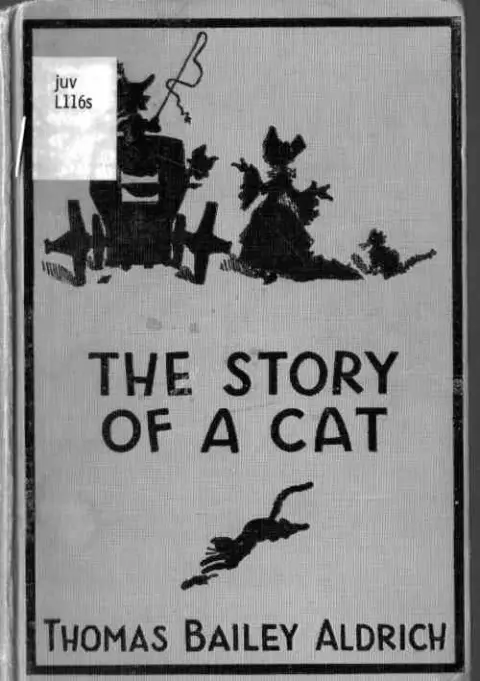
"The Story of a Cat" by Emile de La Bédollière is a charming children’s novel written in the late 19th century. The book tells the whimsical tale of a street cat who is rescued by a kind old countess named Madame de la Grenouillère. The narrative explores themes of compassion, loyalty, and the bond between humans and animals, showcasing how the cat, Moumouth, transforms from a pitiful creature into a beloved pet within the countess's household. The story begins with the countess saving Moumouth from a band of mischievous boys, after which she decides to adopt him, despite her doubts about his unappealing appearance. Under the tender care of her maid, Mother Michel, Moumouth flourishes, but he soon becomes the target of jealousy from Father Lustucru, the cunning steward. In a series of unfortunate events that include attempts against Moumouth’s life, the cat displays remarkable cleverness and survives various trials. Ultimately, the true loyalty and love of Mother Michel and the eventual return of the countess lead to Moumouth's triumphant survival and a happy life, concluding with an endearing legacy that celebrates the joy he brought to those around him.
Introduction adapted from the source catalogue; source summaries may be automatically generated.
Free to read · English · 13,993 words · No account needed
MAKE TIME FOR A GOOD BOOK
On by default. Untick to stop anonymous reading totals. Each page counts after 10 seconds in view. How this works.
Anonymous counting is on unless you have switched it off.
Several days passed in painful expectation; but the cat, like General Marlborough, did not come back. The despair of Madame de la Grenouillere was sincere, profound, and silent,--all the more intense because it was suppressed. She continually pictured to herself the charming ways of Moumouth, his natural goodness, his superior intelligence. No animal had ever displayed to her so many brilliant qualities; not one of her previous favorites had ever caused her such bitter regrets.
Generous in her misfortune, she did not reproach Mother Michel; on the contrary, the Countess sought to comfort that poor woman, who had given herself up wholly to grief. The Countess said to her one night:--
"What can you do against an irresistible calamity? The wisdom of man consists not in struggling with unhappiness, but in submitting himself to the will of Heaven."
"I am of your opinion," replied Mother Michel. "If I believed, like you, in the death of Moumouth, I would resign myself without a murmur. But I have the idea that he still lives; I picture him running through the streets, the victim of ill treatment, with saucepans, may be"--
"Go to, Mother Michel, you deceive yourself; Moumouth is dead, otherwise he would have come back to us."
"Something tells me that he is still in this world, and if Madame the
Countess wishes to have tidings of him, she has only to address
herself"--
"To whom?"
"To our neighbor, Madame Bradamor, that celebrated fortune-teller, who predicts the future, removes freckles, reads in the Book of Destinies, and charms away the toothache."
"Fie, Mother Michel! how can you, a sensible woman, have any confidence in the juggling of an adventuress?"
"But, madame, I am not alone; the most distinguished people go to Madame Bradamor; she is more learned and less dear than her rivals, and asks only ten crowns to make you behold the devil Astaroth."
"Enough, for pity's sake!" responded the Countess, dryly.
Mother Michel remained silent; but she had made up her mind, and, the first time she had a moment of liberty, she ran to the house of the necromancer.
The fortune-teller occupied a spacious apartment richly furnished, for she gained a great deal of money by cheating the public. Her consultation-room was draped with hangings of black velvet sprinkled with gilt stars; upon a square table, in the centre of the chamber, stood painted tin obelisks, jars of electricity, retorts, and divers mathematical instruments, of whose uses the pretended sorceress was quite ignorant, but which she had placed there in order to impose on the weak-minded persons who came to consult her.
Your reading position is saved on this browser. Take it to another device with a library code. Reading pages adapt to text, rather than matching a printed edition.
BEHIND THE BOOK
This eBook is for the use of anyone anywhere in the United States and most other parts of the world at no cost and with almost no restrictions whatsoever. You may copy it, give it away or re-use it under the terms of the Project Gutenberg License included with this eBook or online at www.gutenberg.org. If you are not located in the United States, you will have to check the laws of the country where you are located before using this eBook. Read the source licence.
The original source file, including credits and licence, is retained by this library. Request an original-format copy at no charge. Please include the book title and Project Gutenberg identifier #27472.
KEEP YOUR CURIOSITY GOING
Coulson Kernahan

Maurice Baring
Frances Wright
Cécile Tormay

Frederic Jesup Stimson

W. H. P. (William Henry Pope) Jarvis