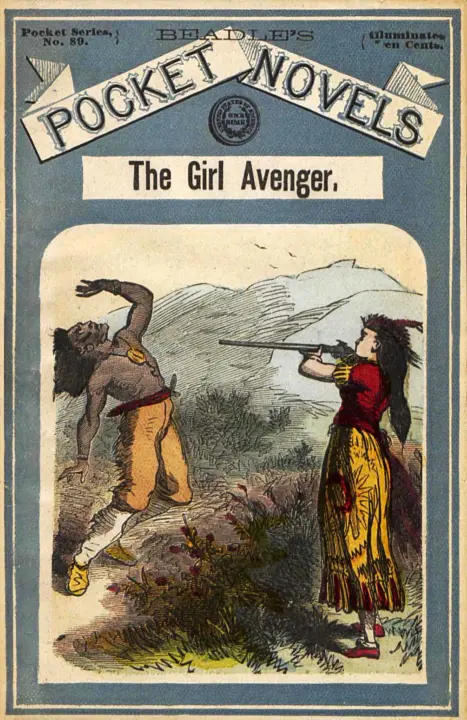
The Girl Avenger; or, The Beautiful Terror of the Maumee
T. C. (Thomas Chalmers) Harbaugh
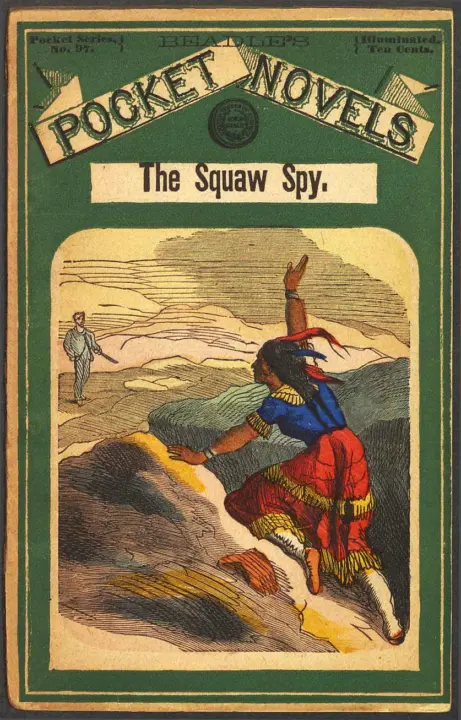
THE CLASSIC COLLECTION · 1884
"The Squaw Spy; or The Rangers of the Lava-Beds" by T. C. Harbaugh is a historical novel written in the late 19th century. The narrative is set against the backdrop of the Modoc War, focusing on themes of conflict, loyalty, and the dangers of treachery. Key characters include Kit South, a rugged scout; Artena, a spirited Modoc girl who plays a crucial role as a spy; and Captain Jack, the formidable Modoc chief at the center of the conflict. The book explores the intricate dynamics between Native Americans and U.S. soldiers, delivering an intense tale of warfare and personal struggles amidst chaos. The opening portion of the novel introduces readers to the aftermath of a brutal encounter between U.S. troops and the Modoc Indians. Kit South, a seasoned border man, and General Gillem await the return of Artena, who is both a spy and a vital link to intelligence about the Modoc troops. Their discussions reveal a recent loss of men in battle and the fleeting hope of capturing the elusive Captain Jack. As the night deepens, the urgency builds around a potential kidnapping plan aimed at turning the tide in their favor. Tension heightens when they detect the presence of an unknown spy, leading to actions that might endanger the lives of both soldiers and the Modoc girl, setting the stage for a gripping tale of betrayal and bravery in the wilderness.
Introduction adapted from the source catalogue; source summaries may be automatically generated.
Free to read · English · 32,607 words · No account needed
MAKE TIME FOR A GOOD BOOK
On by default. Untick to stop anonymous reading totals. Each page counts after 10 seconds in view. How this works.
Anonymous counting is on unless you have switched it off.
He spoke kinder than was his wont, and, stooping, gently touched her
arm, as he finished.
“I do not want rest,” she answered, involuntarily shrinking from his touch. “See, Rafe Todd, he is not dead.”
The white Indian started.
“’Reesa, you must be mistaken,” he said. “He is as dead as Canby.”
“Touch his pulse.”
She lifted Evan Harris right hand, and Rafe Todd tremblingly sought the
pulses.
“Well well,” he said, “he is not dead,” and then he turned to the
Indians.
“Miwah,” he called, and a giant Indian, known to readers of the Modoc war as the Curly-Headed Doctor, came forward.
“The pale fellow is not dead,” continued the deserter, addressing the medicine-man of his adopted people. “If you can get him up again, do so. He may be of service to us.”
As he spoke he gave Miwah a look, which said: “See that you kill him,” and then turned to ’Reesa again.
“Now, girl,” he said, “you will seek your chamber. I pledge my word of honor that if the spark of life in him can be fanned into a flame, it shall be done.”
The scout’s daughter smiled; the thought of Rafe Todd possessing honor was quite enough to provoke a smile; but she did not say any thing, and rose to her feet.
“We have visitors,” said the deserter, in a low voice, as he led the white girl--his blood-bought captive--toward the Klamaths. “They’re Klamaths,” and here his lips curled with a sneer of contempt, “and I was surprised to see them. Look! are they not fine-looking fellows, ’Reesa?”
The Indians, knowing that the deserter was conducting the girl to a smaller compartment, made way, and presently the twain found themselves face to face with the runners.
On the part of one runner--Wiaquil--the same immobility of countenance remained; but his companion started slightly when his eyes fell upon our white heroine.
Rafe Todd caught the dark eyes that shot from ’Reesa’s face to his, and
quickened his gait.
But Coquil suddenly stepped forward and clutched ’Reesa’s arm.
“Girl pretty,” he said, in the Klamath tongue. “Who she be?”
“She’s mine,” said the deserter, meeting the scout’s look of feigned inquisitiveness with a bold glance. “She belongs to Baltimore Bob.”
“What’ll Bob take for her?”
“Won’t sell her,” said the white Indian, jerking the girl’s arm from the red hand, and starting forward again.
“Did Mouseh give pale girl to Bob?” asked the runner, turning to the
Modoc chief.
“Yes.”
“She make good Klamath squaw. Coquil got no one to warm his lodge. He like to buy pale girl, for he got heaps yellow stones.”
Your reading position is saved on this browser. Take it to another device with a library code. Reading pages adapt to text, rather than matching a printed edition.
T. C. (Thomas Chalmers) Harbaugh
T. C. (Thomas Chalmers) Harbaugh
T. C. (Thomas Chalmers) Harbaugh
BEHIND THE BOOK
This eBook is for the use of anyone anywhere in the United States and most other parts of the world at no cost and with almost no restrictions whatsoever. You may copy it, give it away or re-use it under the terms of the Project Gutenberg License included with this eBook or online at www.gutenberg.org. If you are not located in the United States, you will have to check the laws of the country where you are located before using this eBook. Read the source licence.
The original source file, including credits and licence, is retained by this library. Request an original-format copy at no charge. Please include the book title and Project Gutenberg identifier #68102.
KEEP YOUR CURIOSITY GOING
Cécile Tormay

Moritz Busch
Coulson Kernahan
John L. Ransom

Maurice Baring
Frances Wright